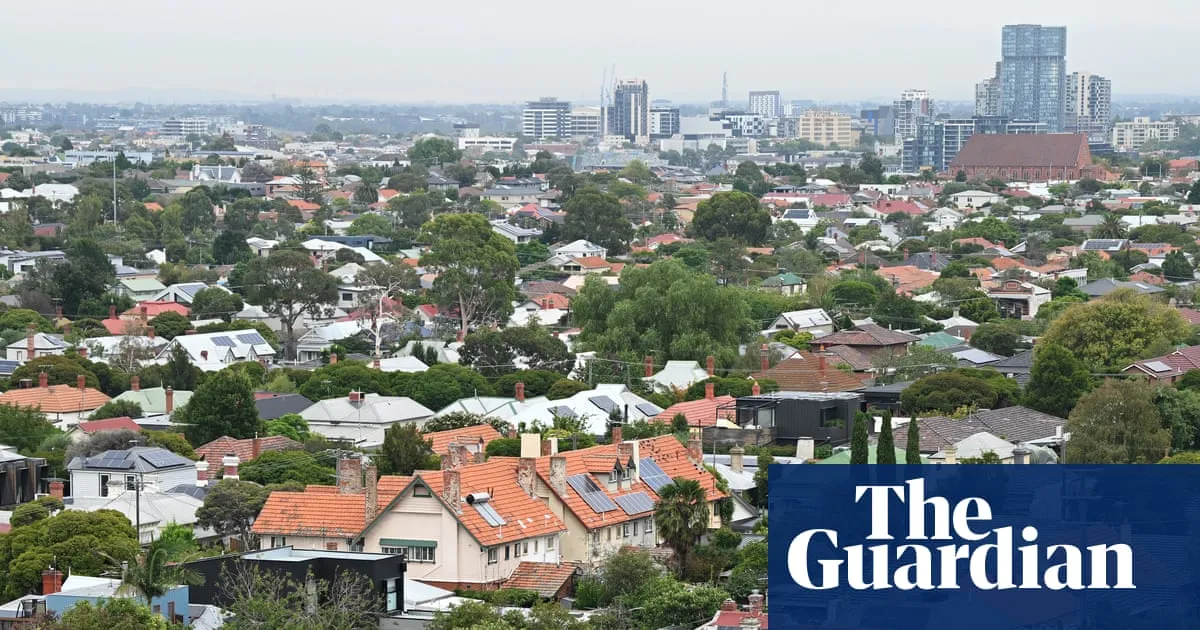
CBA has predicted a 12-13% drop in Melbourne property prices, while Cotality data revealed house prices are now falling in 90% of Australian suburbs. Photograph: James Ross/AAP View image in fullscreen CBA has predicted a 12-13% drop in Melbourne property prices, while Cotality data revealed house prices are now falling in 90% of Australian suburbs. Photograph: James Ross/AAP House prices head for historic 10% drop as fourth interest rate hike looms Cotality data reveals property prices are now falling in more than 90% of Australian suburbs, while analysts expect market downturn to continue Get our breaking news email, free app or daily news podcast The prospect of the steepest property market downturn in history will not stop the Reserve Bank from delivering a fourth interest rate hike as it battles to bring inflation back under control, economists say. New data from Cotality revealed house prices are now falling in more than 90% of Australian suburbs, amid a perfect storm of higher borrowing costs, a weak economy, and a once-in-a-generation change in the tax treatment of property investors. Shane Oliver, AMP’s chief economist, said average home values would continue falling for the next six to nine months, by which time property prices nationally would be about 10% down from their recent peak. “That would be the worst in the postwar period,” Oliver said, although the figure is not hugely out of line with previous property market corrections in the order of 8% – most recently in 2022-23. In response to the evidence of a more rapid and wider decline, CBA analysts predicted an eventual 12-13% drop in Sydney and Melbourne property prices alongside 8% falls in Brisbane, Perth and Adelaide. Even then, the losses will not put a dent in Australia’s chronically unaffordable housing, Oliver said. “In some ways this just takes us back to where we were a year ago for many cities across the country. And we were complaining about housing affordability then, so not much will change.” Michele Bullock, the Reserve Bank’s governor, told reporters at her post-meeting press conference on 11 August that the housing market downturn was “not the main game” when it came to rate decisions, and noted that property prices were still 50% higher than they were in 2020. Oliver said it was clear it would be a discussion point at upcoming RBA board meetings at the end of this month and in November. “I think they will think twice but they’ll continue to hike for the simple reason that the bigger problem right here, right now is inflation – and house prices have only just flicked off the top,” Oliver said. Jonathan Kearns, the chief economist at Challenger, agreed that the weakness in the property market would not be enough to prevent another interest rate hike, which, like Oliver, he believed would come at the meeting in early November. Kearns, a former senior RBA official, said while the property market correction was coming harder and faster than anticipated, “it’s not large enough for them to say we don’t need to hike”. Even as inflation remains too high for comfort, some experts warned that national accounts figures on Thursday morning could show the economy barely grew through the three months to June. Belinda Allen, CBA’s head of Australian economics, said she expected GDP to have expanded by just 0.1% in the most recent quarter, in what would be the weakest growth in two-and-a-half years. “If these numbers print as expected tomorrow [Thursday] it does show that the Australian economy has slowed, but inflation has not,” Allen said. “Rolling supply shocks, more Australians spending money domestically than offshore and weaker productivity growth are acting to keep inflation high and the RBA has more work to do.” Explore more on these topics Housing Australian economy Reserve Bank of Australia Banking Interest rates Business House prices news Share Reuse this content
SRCThe Guardian - World News
LANGEN
LEANCenter-Left
WORDS644
ENT12
TUE · 2026-09-01 · 15:00 GMTBRIEF NSR-2026-0901-108130
NSR-2026-0901-108130News Report·EN·Economic Impact
House prices head for historic 10% drop as fourth interest rate hike looms
Australian house prices are experiencing a significant downturn, with data showing falls in over 90% of suburbs. Analysts predict a potential 10% national drop from recent peaks, marking the steepest decline in the postwar period.
Patrick Commins Economics editorThe Guardian - World NewsFiled 2026-09-01 · 15:00 GMTLean · Center-LeftRead · 3 min
The Guardian - World NewsFIG 01
Reading time
3min
Word count
644words
Sources cited
4cited
Entities identified
12entities
Quality score
100%
§ 01
Briefing Summary
AI-generatedNEWSAR · AI
Australian house prices are experiencing a significant downturn, with data showing falls in over 90% of suburbs. Analysts predict a potential 10% national drop from recent peaks, marking the steepest decline in the postwar period. This market correction is attributed to a combination of rising borrowing costs, a weakening economy, and changes to property investor tax treatment. Despite this, economists believe the Reserve Bank of Australia (RBA) will proceed with a fourth interest rate hike to combat persistent inflation, as the housing market's decline is not considered the primary concern. Forecasts suggest Sydney and Melbourne could see price drops of 12-13%, while other major cities might experience 8% declines.
Confidence 0.90Sources 4Claims 5Entities 12
§ 02
Article analysis
Model · rule-basedFraming
Economic Impact
Tone
Mixed Tone
AI-assessed
CalmNeutralAlarmist
Factuality
0.70 / 1.00
Factual
LowHigh
Sources cited
4
Well sourced
FewMany
§ 03
Key claims
5 extracted01
Property prices are still 50% higher than they were in 2020.
statisticMichele Bullock (Reserve Bank Governor)
Confidence
0.95
02
House prices are now falling in more than 90% of Australian suburbs.
statisticCotality
Confidence
0.90
03
CBA analysts predicted an eventual 12-13% drop in Sydney and Melbourne property prices.
predictionCBA analysts
Confidence
0.85
04
The Reserve Bank is expected to deliver a fourth interest rate hike despite the property market downturn.
predictioneconomists
Confidence
0.80
05
Average home values will continue falling for the next six to nine months, with property prices nationally about 10% down from their recent peak.
predictionShane Oliver (AMP)
Confidence
0.80
§ 04
Full report
3 min read · 644 words§ 05
Entities
12 identifiedKey playerOppositionContextPositiveNeutralNegative
Organizations5
§ 06
Keywords & salience
10 termshouse prices
1.00
interest rate hike
0.90
property market downturn
0.90
inflation
0.80
housing affordability
0.70
reserve bank
0.60
economic downturn
0.50
borrowing costs
0.50
property investors
0.40
home values
0.40
§ 07
Topic connections
Interactive graph Network visualization showing 29 related topics
View Full Graph Person Organization Location Event|Click node to navigate|Edge numbers = shared articles