Hindered by poor infrastructure and climate challenges, farmers in Yemen cling to traditional methods to harvest dates.The Hajr district in Yemen's Hadramout is well known for its date palms [Saeed Al Batati/Al Jazeera]Published On 2 Sep 2026Hajr, Yemen – Under the scorching sun of eastern Yemen’s Hadramout region, locals – young and old – immerse themselves in the annual date harvest, working among dark mounds of freshly harvested fruit spread across stones.Farmers here in Hajr, about two hours west of Hadramout’s provincial capital of Mukalla, picked the dates about a week ago from vast palm groves nearby. They then brought them to this open ground so the dates can be dried, cleaned, and eventually sold, following traditional techniques that have endured for centuries.Recommended Stories list of 3 itemslist 1 of 3US pushes looser approach to AI regulation, while EU pushes new lawlist 2 of 3Why is piracy picking up off Somalia’s coast again?list 3 of 3Who are the economic winners and losers of the US-Israel war on Iran?end of listNabeel Ahmed and his family arrive before sunrise and head directly to their spot on the rocky ground, where their dates are spread out.“My wife, my brothers and I come here before sunrise and stay until the sun gets hot,” Nabeel tells Al Jazeera, as he runs his hands through a pile of dates and holds up a handful.Farmers and their families return every day to turn and sort the dates, removing rotten or damaged fruit before preparing the harvest for sale. Their aim is to make the dates as attractive as possible to buyers.“These rocky grounds are used to spread out the dates, clean them, and sell them to customers,” Nabeel says.As the farmers work, buyers move between the piles, inspecting the fruit in search of good-quality dates at the lowest possible prices. Nabeel is fortunate: someone eventually agrees to buy some of his harvest.“I harvest the dates and sell some of them, while keeping some for my family to eat. I put some into small bags for Ramadan and other days. We usually eat dates with coffee every day. This is my sole source of income,” he says, pointing to small bags filled with dates.Beyond providing an annual source of income, dates also offer a basic food safety net for some of Hajr’s poorest families. “If a farmer cannot provide food for his children, he gives them dates and coffee, because some families cannot even afford fish and rice,” Nabeel says.Sellers and buyers negotiate prices as they stand next to piles of dates at Hajr’s open-air market [Saeed Al Batati/Al Jazeera]A struggling districtHajr consists of scattered communities along a long valley filled with palm trees and traversed by a river. The main road connecting the district with other parts of Hadramout has deteriorated after years of poor maintenance, while roads linking its communities are largely unpaved and dusty. The district has no electricity, and mobile phone services are poor.It has also experienced repeated outbreaks of cholera, which locals and health officials attribute mainly to inadequate sanitation and a lack of access to clean water.Hajr might be far from Yemen’s front lines, but it is still suffering from the effects of more than a decade of war in the country, and the lack of a stable government that can alleviate poverty.It’s why Hajr’s vast date palm groves are a lifeline here, providing income and opportunities. There are no official figures on the number of palm trees or the district’s annual date production, but local officials told Al Jazeera that there are at least 2 million palm trees in the district.The palm trees are effectively the centre of Hajr’s economy.At the open-air drying ground, which turns into a temporary market during the harvest season, Rashed Mohammed, a father of four, has turned down offers from several buyers at prices he considered too low.But he worries that if he cannot sell his harvest during the few remaining days of the season, he will be unable to repay his debt to a local grocery shop.“I owe 1 million Yemeni riyals [$640] to the grocery, and I will not be able to pay it back if I don’t sell the dates,” Rashed says.Like many farmers in the district whose main source of income is selling dates, Rashed buys essential food for his family on credit throughout the year, promising to repay the shopkeeper after the harvest. Other farmers put off weddings, building houses or buying essential goods until they have harvested and sold their dates.At the end of the day, if no buyers arrive, family members return home while Rashed and other farmers stay behind, sleeping in makeshift shelters built from palm fronds. They remain partly to protect their harvest from thieves and stray dogs, but also to be available around the clock in case a buyer turns up.“The customer can come at any time, so I sleep here,” Rashed says.Rashed Mohammed, a father-of-four, hopes to sell his dates so he can pay off his debt to his local shopkeeper [Saeed Al Batati/Al Jazeera]Abject povertyFarmers say one reason they continue to market their dates at the open-air market is that they cannot afford to transport their harvest to larger markets elsewhere in Yemen. Poverty is so severe, they say, that some farmers do not have enough cash to pay drivers to transport their dates and instead compensate them with plastic crates filled with dates.Awadh Mubarak, a farmer and the head of a local farmers’ committee in Hajr’s Jawl region, says many farmers have abandoned agriculture for other jobs, including joining the security and military services, as palm trees die and date production dwindles.Farmers say floods a few months ago destroyed a small dam that diverted water from the river to their farms, significantly reducing the amount of water reaching their palm groves and contributing to the death of trees.The damage is visible along the road through Hajr, where numerous palms stand bare or nearly leafless, their dried fronds hanging from dead and dying trunks.Awadh says rebuilding the dam is the farmers’ most pressing demand.“Our primary demand is the reconstruction of the dam. The situation is extremely difficult. Many farmers have abandoned their palm groves and gone to other jobs, or emigrated,” Awadh says, showing Al Jazeera water flowing away from farmland instead of being diverted towards the groves.Farmers have also called on investors and the government to build a date-processing and packaging factory, saying it would save them time and help them market their produce.“We need a date-packaging factory to handle the large quantities of dates produced in the district,” Awadh says. “Instead of my family and me going out every day to clean the dates, for example, we could take them to the factory, where they could be processed in a day, saving us time and effort.”For buyers such as Omer Mohammed, who travelled from a mountainous village in Hadramout, the reputation of Hajr’s dates and their perceived health benefits make the long journey to the district worthwhile.“Hajr dates are the best in Hadramout because they are low in sugar,” says Omer, as he rests inside a makeshift shelter while workers pack the dates he has bought into bags.“Back in my school days, when doctors needed blood, they would take it from residents of Hajr because they ate dates,” he says, recalling a local belief about their health benefits.“I buy enough dates for myself and my relatives to last the entire year. If I have dates in my house, I feel food secure, even if I don’t eat them.”
SRCAl Jazeera
LANGEN
LEANCenter
WORDS1 256
ENT10
WED · 2026-09-02 · 13:29 GMTBRIEF NSR-2026-0902-108488
NSR-2026-0902-108488News Report·EN·Human Interest
In Yemen, dates provide lifeline for farmers with few economic options
In Yemen's Hadramout region, farmers in the Hajr district rely on traditional methods to harvest dates, their primary source of income and food security. Despite poor infrastructure and climate challenges, families work together to dry, clean, and sell dates from their extensive palm groves, which are central to the local economy.
Saeed Al BatatiAl JazeeraFiled 2026-09-02 · 13:29 GMTLean · CenterRead · 6 min
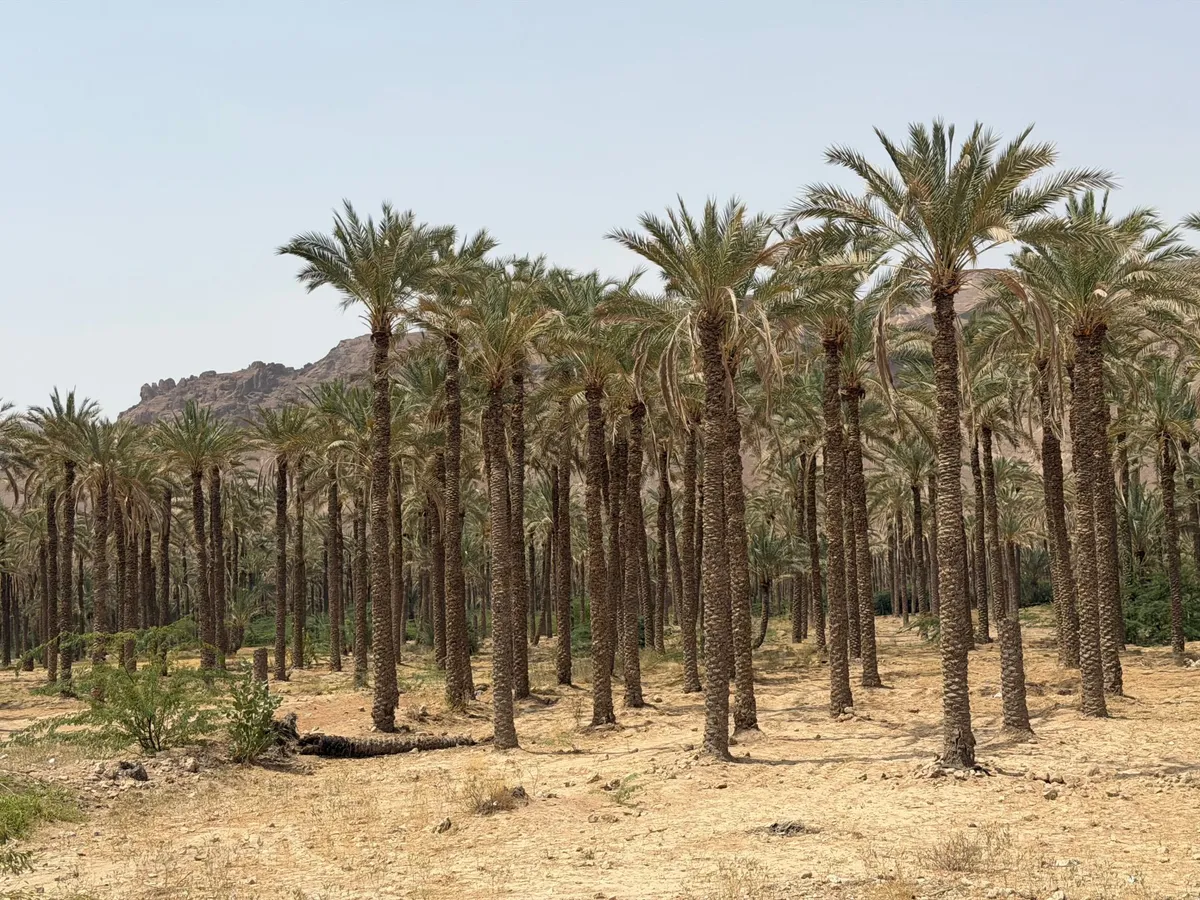
Al JazeeraFIG 01
Reading time
6min
Word count
1 256words
Sources cited
1cited
Entities identified
10entities
Quality score
100%
§ 01
Briefing Summary
AI-generatedNEWSAR · AI
In Yemen's Hadramout region, farmers in the Hajr district rely on traditional methods to harvest dates, their primary source of income and food security. Despite poor infrastructure and climate challenges, families work together to dry, clean, and sell dates from their extensive palm groves, which are central to the local economy. This annual harvest is crucial for farmers like Nabeel Ahmed, who uses the income for daily needs and to provide for his family, and Rashed Mohammed, who hopes to repay debts. The region's lack of electricity, poor roads, and limited access to clean water, exacerbated by years of war, make the date harvest a vital lifeline for these communities.
Confidence 0.90Sources 1Claims 4Entities 10
§ 02
Article analysis
Model · rule-basedFraming
Human Interest
Economic Impact
Tone
Measured
AI-assessed
CalmNeutralAlarmist
Factuality
0.70 / 1.00
Factual
LowHigh
Sources cited
1
Limited
FewMany
§ 03
Key claims
4 extracted01
The Hajr district in Yemen suffers from poor infrastructure, including deteriorated roads, lack of electricity, and poor mobile services.
factual
Confidence
1.00
02
Dates provide a basic food safety net for some of the poorest families in Hajr, Yemen.
quoteNabeel Ahmed
Confidence
1.00
03
The date harvest is a sole source of income for some farmers in Hajr, Yemen.
quoteNabeel Ahmed
Confidence
1.00
04
Farmers in Yemen's Hadramout region use traditional methods to harvest and process dates.
factual
Confidence
1.00
§ 04
Full report
6 min read · 1 256 words§ 05
Entities
10 identifiedKey playerOppositionContextPositiveNeutralNegative
Organizations1
Locations4
Events1
§ 06
Keywords & salience
8 termsyemen farmers
1.00
date harvest
1.00
economic options
0.90
traditional methods
0.80
food safety net
0.70
income source
0.60
climate challenges
0.50
hadramout region
0.40
§ 07
Topic connections
Interactive graph No topic relationship data available yet. This graph will appear once topic relationships have been computed.