Chasing a perfect sleep score? You could be making it worse BBCSleep scores, magnesium, white noise machines - what was once the simple act of sleeping has become a minefield.Trying to optimise sleep in this way is called "sleepmaxxing". Take it too far, and you could end up with "orthosomnia" - the clinical term for an obsession with achieving perfect sleep.While it's not formally recognised as a condition in the UK, doctors tell the BBC they've noticed signs of orthosomnia in their patients, with some bringing their sleep tracker data into appointments convinced, wrongly, that they have a sleep disorder. That fixation with sleep is actually making people's sleep worse, they warn.So how and why did sleep become so complicated? And if sleepmaxxing isn't the answer, what is the elusive secret to a good night's sleep?'Sleep scores are completely made up'The first commercial fitness tracker to incorporate sleep analysis was the Fitbit Classic in 2009. Since then, many others - including Garmin, Whoop and Apple - have integrated sleep trackers into wrist-worn devices, as have smart rings such as Oura, Ultrahuman and RingConn.These devices vary, but in general they all provide users with a report of their night, broken down by sleep stages - time awake, light sleep, deep sleep, and REM (rapid eye movement). Many also give users a "sleep score".But the concept of a sleep score is "completely made up", according to Dr Alanna Hare, consultant of sleep medicine at the Royal Brompton Hospital in London."There's nothing recognised in sleep science that is a 'sleep score'," she tells the BBC. "That's just been created by manufacturers."Hare says she's noticed trackers causing anxiety among her patients."I've noticed more patients coming to me with data from various trackers, with lots of questions about sleep that... is probably contributing to their sleep difficulties," she says.Even though some have had medical tests with reassuring results, this hasn't allayed their fears, she adds."It's great that there's more focus on sleep as part of wellness," she adds. "But sleep just does not respond well to attempts to perfect it."One proposed lawsuit against Oura, filed last month in San Francisco, alleges that Oura rings are unable to accurately measure sleep quality and sleep stages, and instead rely on AI-generated estimates that have "a coin flip's chance of being correct".In response, Oura told the BBC that it "stand[s] behind our science, research and accuracy claims"."We're committed to clearly communicating what Oura measures, what it estimates, and how members should use that information," the company added. Daytime impactStudies also show sleep trackers can affect how you function during the day, even if they're not accurate.In one study from the University of Oxford, participants were given sleep trackers which assigned them a sleep score. The scores were randomised, however, and had no relation to how the participants had actually slept.The next day participants rated their mood, fatigue levels and alertness, before tests checking their focus and reaction times.Researchers found that the people told they'd slept badly reported feeling more fatigued, and were less mentally alert - even though the sleep scores were all fake.'Cycle of worrying'This is something Jess Hill says she noticed in herself after getting a Garmin watch several years ago."I started to rely on the watch as my Bible for whether I slept well or not," the 32-year-old HR professional from London tells the BBC."I would think, 'I've had awful sleep so I'm going to really struggle today', even if I actually probably had okay sleep. If I'd slept really well, I'd be convinced I'd have to be on top - even though I was tired, I was pushing through things."Jess HillJess Hill was "obsessed" with her Garmin's sleep scores for about three yearsHer "obsession", as she describes it, with getting a high sleep score lasted three years, until earlier this year, when she started to notice the watch wasn't reflecting how she'd actually slept."I was awake the other week for four hours in the night, and my watch was like 'wow, great sleep!' - I literally was awake from 01:00 until 05:00," she says.The BBC has approached Garmin for comment.Jess's sleep scores weren't matching how she actually feltDr Neil Stanley, sleep expert and author of the book How to Sleep Well, argues that gamifying sleep is creating more disordered sleeping."The thing with tracking your sleep is that it gives you a number, and this means you have a target," he tells the BBC. "So you get into this cycle of worrying about your quality of sleep or the quantity of sleep based on figures."He says he carried out research into actigraphy - wrist-worn sleep trackers - around 40 years ago. Though commercial trackers now are a bit more sophisticated, they work in much the same way - by measuring your movement - and have the same limitations, he says."If you want to measure sleep, you have to measure the brain," Stanley adds. "Unless you're measuring the brain's activities, you're not measuring sleep."So how can we actually sleep well?Hare recommends:Keeping your bedroom cool, dark and quiet - within reason. "That doesn't mean it needs to be pitch black, exactly 16C or totally silent," she says. "It should be coolish, darkish and quietish."Seeing bright light in the morning, which is good for regulating your circadian rhythm - that is, your body's natural clock.Doing light exercise, and eating a "healthy, Mediterranean-style diet with plenty of plant variability".Above all, keeping it simple - "anything else, you don't need it".
SRCBBC News - World
LANGEN
LEANCenter
WORDS911
ENT12
THU · 2026-09-03 · 00:41 GMTBRIEF NSR-2026-0903-108714
NSR-2026-0903-108714News Report·EN·Public Health
Chasing a perfect sleep score? You could be making it worse
The pursuit of perfect sleep scores through devices like fitness trackers and smart rings, a practice termed "sleepmaxxing," can paradoxically lead to worse sleep and anxiety, a condition doctors are observing and calling "orthosomnia." Experts state that "sleep scores" are not scientifically recognized and are created by manufacturers. Studies suggest that even inaccurate sleep scores can negatively impact mood, fatigue, and alertness the following day.
6 hours agoShareSaveAdd as preferred on GoogleAshitha NageshBBC NewsBBC News - WorldFiled 2026-09-03 · 00:41 GMTLean · CenterRead · 4 min
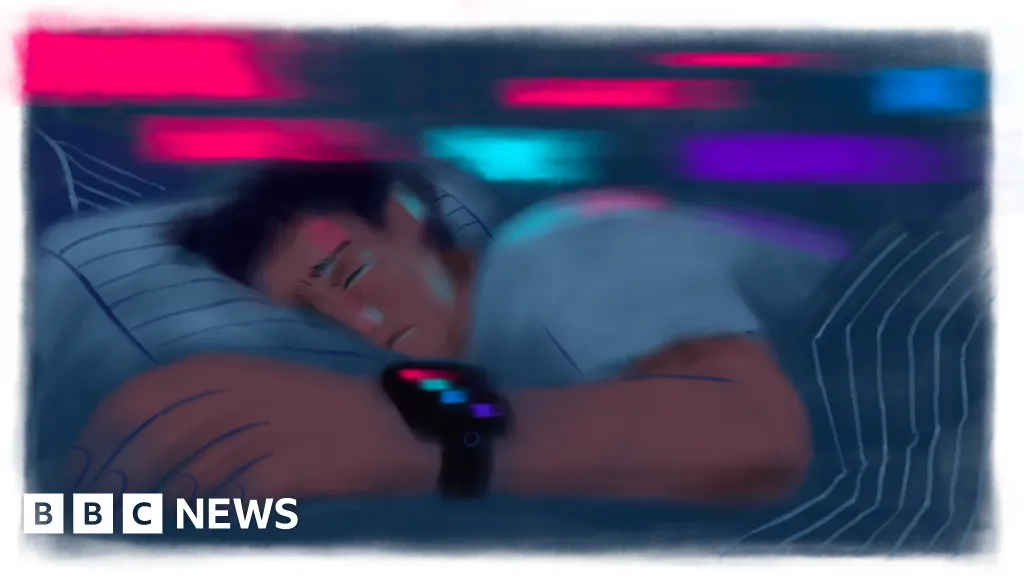
BBC News - WorldFIG 01
Reading time
4min
Word count
911words
Sources cited
3cited
Entities identified
12entities
Quality score
100%
§ 01
Briefing Summary
AI-generatedNEWSAR · AI
The pursuit of perfect sleep scores through devices like fitness trackers and smart rings, a practice termed "sleepmaxxing," can paradoxically lead to worse sleep and anxiety, a condition doctors are observing and calling "orthosomnia." Experts state that "sleep scores" are not scientifically recognized and are created by manufacturers. Studies suggest that even inaccurate sleep scores can negatively impact mood, fatigue, and alertness the following day. This fixation on tracking and achieving ideal sleep metrics can create a cycle of worry, hindering natural sleep patterns.
Confidence 0.90Sources 3Claims 5Entities 12
§ 02
Article analysis
Model · rule-basedFraming
Public Health
Technology
Tone
Measured
AI-assessed
CalmNeutralAlarmist
Factuality
0.70 / 1.00
Factual
LowHigh
Sources cited
3
Well sourced
FewMany
§ 03
Key claims
5 extracted01
The concept of a 'sleep score' is 'completely made up' and not recognized in sleep science.
quoteDr Alanna Hare
Confidence
1.00
02
Sleep trackers may cause anxiety and contribute to sleep difficulties, even when medical tests are reassuring.
factualDr Alanna Hare
Confidence
0.90
03
Chasing a perfect sleep score can lead to 'orthosomnia,' an obsession with achieving perfect sleep that worsens sleep quality.
factualdoctors
Confidence
0.90
04
Studies show sleep trackers can affect daytime functioning, even if their accuracy is questionable.
factualstudies
Confidence
0.80
05
A proposed lawsuit alleges Oura rings are inaccurate in measuring sleep quality and stages, relying on AI estimates.
factuallawsuit against Oura
Confidence
0.80
§ 04
Full report
4 min read · 911 words§ 05
Entities
12 identifiedKey playerOppositionContextPositiveNeutralNegative
People1
Organizations8
§ 06
Keywords & salience
10 termsorthosomnia
1.00
sleepmaxxing
1.00
sleep trackers
0.90
sleep scores
0.90
sleep quality
0.70
sleep stages
0.60
sleep optimization
0.50
anxiety
0.40
wellness
0.40
fitbit
0.40
§ 07
Topic connections
Interactive graph Network visualization showing 51 related topics
View Full Graph Person Organization Location Event|Click node to navigate|Edge numbers = shared articles