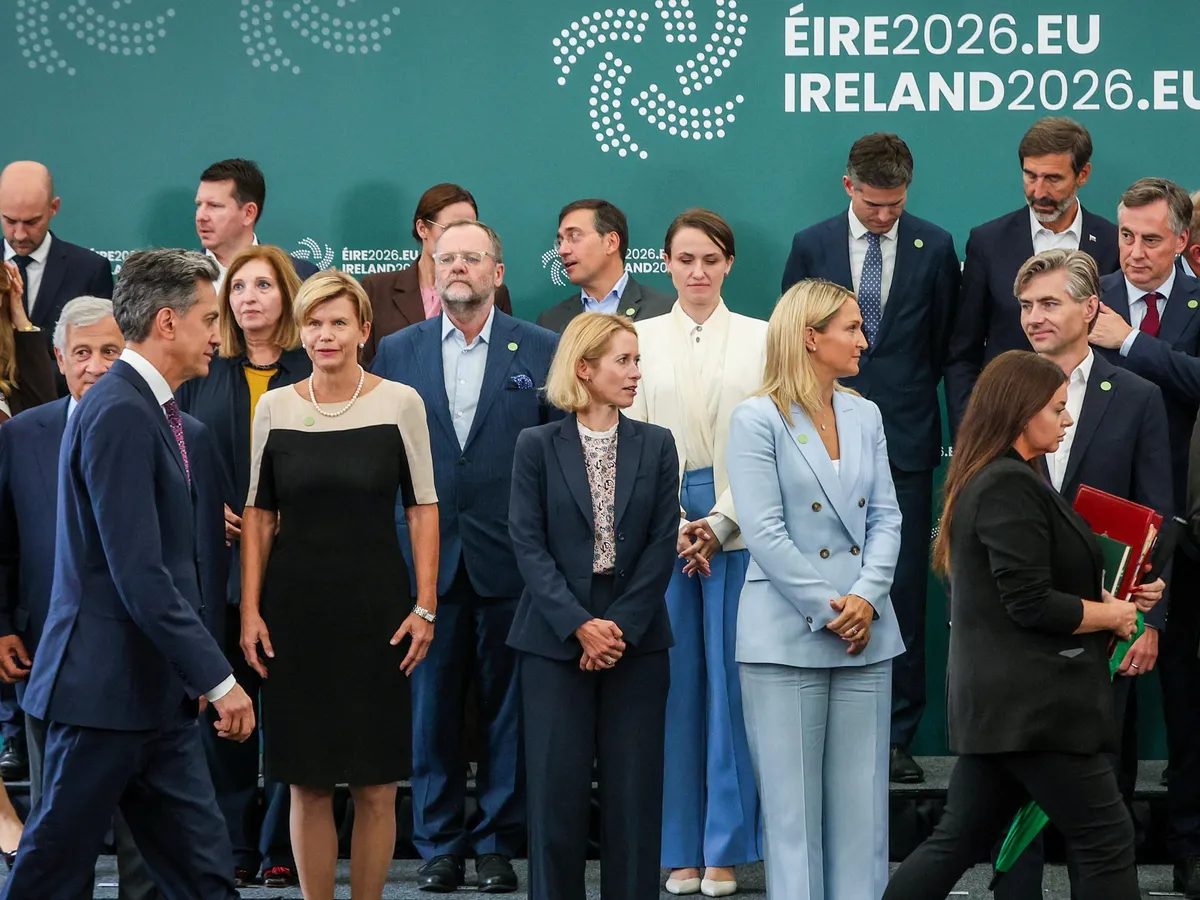
Irish Foreign Minister Helen McEntee says the bloc ‘should be moving collectively’ in upholding international law.European Union foreign ministers remain divided after talks on imposing trade sanctions against Israel amid increasing settler violence in the occupied West Bank.Ireland, the current holder of the EU council presidency, hosted an informal meeting of EU foreign ministers in Wicklow on Tuesday and Wednesday.Recommended Stories list of 4 itemslist 1 of 4Will the EU take action against Israel?list 2 of 4Two Palestinians killed as settlers, Israeli forces raid West Bank villagelist 3 of 4EU eyes more Russia sanctions after failed drone attack in Germanylist 4 of 4EU or Eurasia: Why Putin sparred with Armenia’s PMend of listReporting from Wicklow, Al Jazeera’s Peter Smith said Ireland and Spain, with the support of Belgium and the Netherlands, led the call for EU-wide restrictions against goods imported from illegal Israeli settlements at the meeting.He said that Germany, Austria, Czechia and Hungary are clear that they would oppose any attempts to sanction illegal settlements, saying such a move would upset diplomatic channels with Israel.Ireland was the first EU country to ban imported Israeli settlement goods. The country recognised a Palestinian state in 2024 amid Israel’s genocidal war against Palestinians in Gaza and continues to criticise Israel’s expansion of illegal settlements in the occupied West Bank.Ireland has also pushed for a review of the EU-Israel Association Agreement, a cooperation deal signed in 2000 that forms the basis for trade ties with Israel.The EU bloc is Israel’s largest trading partner as bilateral trade of goods reached nearly $50bn last year. The volume of trade has increased since 2023. EU exports to Israel increased from nearly $30bn to about $32bn in 2025.“We should be moving collectively … It is not credible for us to say we should uphold international law in one form and not do it in the other,” Irish Foreign Minister Helen McEntee told reporters after the meeting.Ireland’s Defence and Foreign Minister Helen McEntee takes part in a joint news conference following an informal meeting of EU foreign ministers [File: AFP]“We’re hearing that at the meetings of the foreign ministers in Wicklow this week, only Ireland raised the issue of the illegal settlements,” Irish Member of the European Parliament Lynn Boylan told Al Jazeera.
SRCAl Jazeera
LANGEN
LEANCenter
WORDS375
ENT12
THU · 2026-09-03 · 06:35 GMTBRIEF NSR-2026-0903-108754
NSR-2026-0903-108754News Report·EN·Diplomatic
EU remains divided over trade sanctions on illegal Israeli settlements
EU foreign ministers remain divided on imposing trade sanctions against goods from illegal Israeli settlements in the occupied West Bank. Ireland, currently holding the EU council presidency, hosted a meeting where it, along with Spain, Belgium, and the Netherlands, advocated for EU-wide restrictions.
Al Jazeera StaffAl JazeeraFiled 2026-09-03 · 06:35 GMTLean · CenterRead · 2 min
Al JazeeraFIG 01
Reading time
2min
Word count
375words
Sources cited
3cited
Entities identified
12entities
Quality score
100%
§ 01
Briefing Summary
AI-generatedNEWSAR · AI
EU foreign ministers remain divided on imposing trade sanctions against goods from illegal Israeli settlements in the occupied West Bank. Ireland, currently holding the EU council presidency, hosted a meeting where it, along with Spain, Belgium, and the Netherlands, advocated for EU-wide restrictions. However, Germany, Austria, Czechia, and Hungary oppose such measures, citing concerns about diplomatic relations with Israel. Irish Foreign Minister Helen McEntee emphasized the need for collective action in upholding international law. The EU is Israel's largest trading partner, with bilateral trade reaching nearly $50 billion last year. Ireland has previously banned settlement goods and recognized a Palestinian state.
Confidence 0.90Sources 3Claims 5Entities 12
§ 02
Article analysis
Model · rule-basedFraming
Diplomatic
Legal & Judicial
Tone
Measured
AI-assessed
CalmNeutralAlarmist
Factuality
0.70 / 1.00
Factual
LowHigh
Sources cited
3
Well sourced
FewMany
§ 03
Key claims
5 extracted01
Irish Foreign Minister Helen McEntee stated, 'We should be moving collectively … It is not credible for us to say we should uphold international law in one form and not do it in the other.'
quoteHelen McEntee
Confidence
1.00
02
The EU bloc is Israel’s largest trading partner, with bilateral trade of goods reaching nearly $50 billion last year.
statistic
Confidence
0.95
03
EU foreign ministers remain divided over imposing trade sanctions against Israel due to increasing settler violence in the occupied West Bank.
factual
Confidence
0.90
04
Germany, Austria, Czechia, and Hungary oppose sanctions on illegal settlements, fearing it would upset diplomatic channels with Israel.
factualPeter Smith (Al Jazeera)
Confidence
0.85
05
Ireland, Spain, Belgium, and the Netherlands support EU-wide restrictions against goods from illegal Israeli settlements.
factualPeter Smith (Al Jazeera)
Confidence
0.85
§ 04
Full report
2 min read · 375 words§ 05
Entities
12 identifiedKey playerOppositionContextPositiveNeutralNegative
Organizations1
§ 06
Keywords & salience
10 termsillegal israeli settlements
1.00
trade sanctions
1.00
european union
0.90
international law
0.80
settler violence
0.70
occupied west bank
0.70
eu-israel association agreement
0.60
ireland
0.50
eu foreign ministers
0.50
diplomatic channels
0.40
§ 07
Topic connections
Interactive graph Network visualization showing 51 related topics
View Full Graph Person Organization Location Event|Click node to navigate|Edge numbers = shared articles