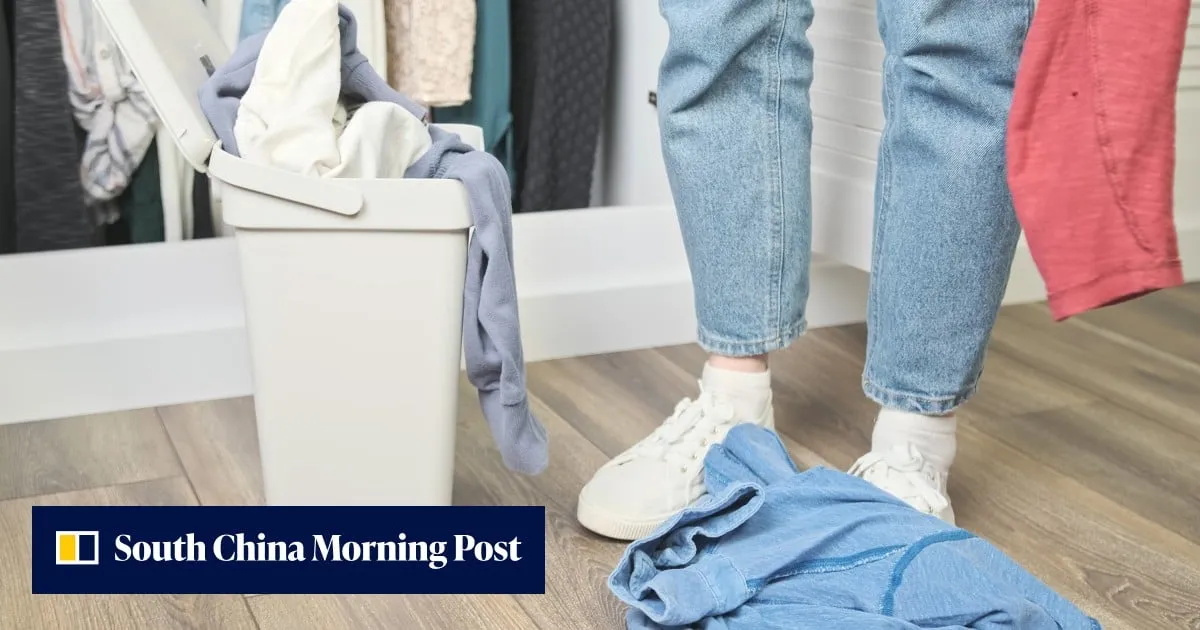
The trend of wearing disposable clothing while travelling gained popularity among Chinese internet users this summer, drawing criticism for its environmental impact.The term “disposable clothing” recently had gone viral on social media, with its hashtag accumulating 6.8 million views and 135,000 discussions on one platform.People shared their experiences of wearing disposable clothing on their trips, highlighting it as an economical choice. One individual noted that she bought five sets of clothes for her seven-day journey, spending no more than 200 yuan (US$30) in total.Disposal fashion shopping sites are mushrooming as demand has increased exponentially due to their affordable prices and convenience during travel. Photo: QQ.comAs the term implies, she had no intention of keeping the clothes after her travels.Most disposable garments are designed for social media appeal, including vibrant long skirts, cloaks, and outdoor jackets that are deemed unsuitable for everyday wear.A women’s apparel shop owner shared with the Chinese media outlet City Express that his store offers various clothing styles tailored to different occasions.For instance, he stocks photogenic skirts for seaside adventures in May, traditional hanfu attire for the Dragon Boat Festival, and exotic skirts for travellers heading to Xinjiang.The shop owner revealed that he sells around 15,000 items monthly, primarily to customers aged 18 to 30. His best-selling items range from 10 to 50 yuan (US$1.5 to US$7.5), comparable to the price of a budget meal.Most disposable garments are designed for social media appeal; while their designs and colours are vibrant and photogenic, they are considered unsuitable for everyday wear. Photo: ShutterstockHe noted that while most customers do not return, his shop consistently attracts new clientele.Some individuals dispose of the clothes upon returning from their trips, while others sell them on second-hand e-commerce platforms.Although some embrace the trend as a cost-effective option, disposable clothing has faced backlash for contributing to waste and potential health issues.“Disposable clothing is inexpensive, but it still undergoes all the stages of production, transportation, and sale. The more we discard, the more waste we generate,” commented one individual.According to the United Nations Environmental Programme, 92 million tonnes of textile waste are produced globally, with production rates doubling while the lifespan of textiles has decreased by 36 per cent from 2000 to 2015.Factories are gearing up production lines to satisfy the rising demand for disposable and fast fashion, increasing its impact on the environment. Photo: unsplashFurthermore, only eight per cent of textile fibres were sourced from recycled materials in 2023, and clothing and textiles account for 11 per cent of plastic waste.Further ReadingThese inexpensive disposable garments are often made of plastic, exacerbating the waste problem.Additionally, disposable clothing made from low-quality materials poses health risks.Cai Shangwei, professor and director of the Cultural Industry Research Centre at Sichuan University, informed Vista that disposable clothing sold on second-hand platforms may also have hygiene concerns.“It’s all about photogenicity. Disposable clothing exists solely for photos. Why can’t people simply enjoy the scenery on their journeys?” criticised one online observer.“The world is a vast photo studio,” commented another.
SRCSouth China Morning Post
LANGEN
LEANCenter-Right
WORDS497
ENT9
THU · 2026-09-03 · 10:05 GMTBRIEF NSR-2026-0903-108798
NSR-2026-0903-108798News Report·EN·Environmental
Disposable fashion trend among Chinese tourists sparks waste and health concerns
A trend of purchasing disposable clothing for travel has surged among Chinese tourists this summer, driven by its affordability and convenience for social media photo opportunities. This practice, which has gained significant traction online, involves buying inexpensive garments, often costing as little as 10 yuan, with the intention of discarding them after a trip.
Fran LuSouth China Morning PostFiled 2026-09-03 · 10:05 GMTLean · Center-RightRead · 2 min
South China Morning PostFIG 01
Reading time
2min
Word count
497words
Sources cited
2cited
Entities identified
9entities
Quality score
100%
§ 01
Briefing Summary
AI-generatedNEWSAR · AI
A trend of purchasing disposable clothing for travel has surged among Chinese tourists this summer, driven by its affordability and convenience for social media photo opportunities. This practice, which has gained significant traction online, involves buying inexpensive garments, often costing as little as 10 yuan, with the intention of discarding them after a trip. While popular with younger travelers seeking photogenic outfits, the trend is drawing criticism for its substantial environmental impact, contributing to textile waste and potential health concerns due to the low-quality, often plastic-based materials used. Experts highlight that the production and disposal of these garments generate significant waste, with clothing and textiles being a major source of plastic waste globally.
Confidence 0.90Sources 2Claims 5Entities 9
§ 02
Article analysis
Model · rule-basedFraming
Environmental
Economic Impact
Tone
Mixed Tone
AI-assessed
CalmNeutralAlarmist
Factuality
0.70 / 1.00
Factual
LowHigh
Sources cited
2
Limited
FewMany
§ 03
Key claims
5 extracted01
92 million tonnes of textile waste are produced globally, with production rates doubling while the lifespan of textiles has decreased by 36 per cent from 2000 to 2015.
statisticUnited Nations Environmental Programme
Confidence
1.00
02
One shop owner sells around 15,000 items monthly, primarily to customers aged 18 to 30, with best-selling items ranging from 10 to 50 yuan.
statisticshop owner
Confidence
1.00
03
The trend of wearing disposable clothing while travelling gained popularity among Chinese internet users this summer.
factual
Confidence
1.00
04
Clothing and textiles account for 11 per cent of plastic waste.
statistic
Confidence
0.90
05
Disposable fashion shopping sites are mushrooming as demand has increased exponentially due to their affordable prices and convenience during travel.
factual
Confidence
0.90
§ 04
Full report
2 min read · 497 words§ 05
Entities
9 identifiedKey playerOppositionContextPositiveNeutralNegative
Organizations3
§ 06
Keywords & salience
8 termsdisposable fashion
1.00
textile waste
0.90
environmental impact
0.80
fast fashion
0.70
social media appeal
0.60
consumer trends
0.50
health concerns
0.40
affordable prices
0.40
§ 07
Topic connections
Interactive graph Network visualization showing 51 related topics
View Full Graph Person Organization Location Event|Click node to navigate|Edge numbers = shared articles