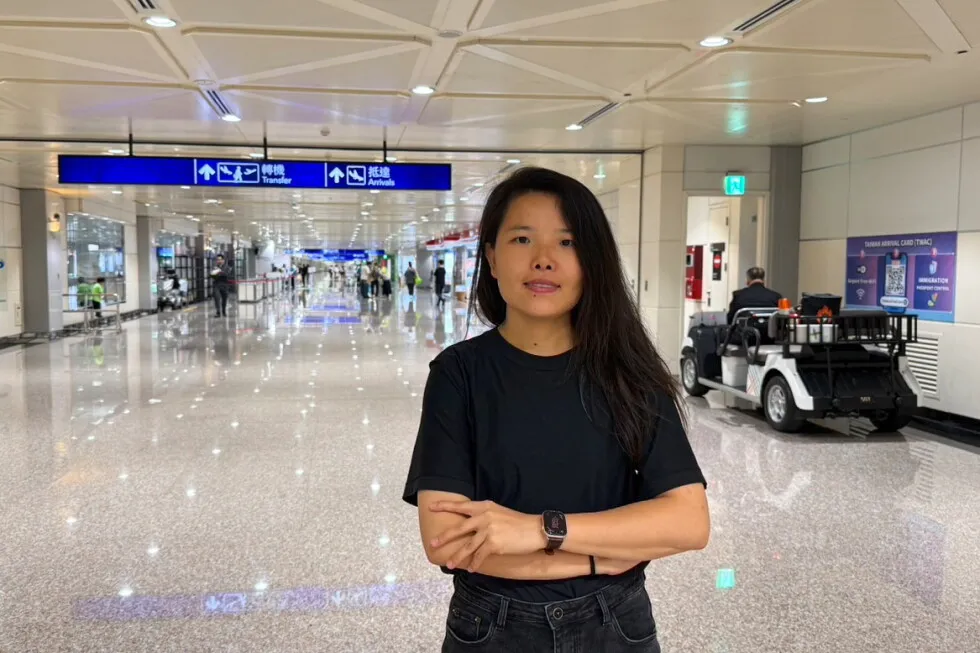
This photo provided by Ruth Wang shows her arriving at an airport in Taiwan on Wednesday, Sept. 2, 2026. (Ruth Wang via AP) By KANIS LEUNG and HUIZHONG WU Updated 1:51 PM MESZ, September 3, 2026 Add AP News on Google Add AP News as your preferred source to see more of our stories on Google. Share Share Facebook Copy Link copied Print Email X LinkedIn Bluesky Flipboard Pinterest Reddit HONG KONG (AP) — A Chinese lawyer who defended a prominent underground church in Beijing fled to Taiwan and is seeking help for resettlement, following mounting pressure from Chinese authorities on her firm and her colleagues. Ruth Wang, partner at VDoor Law Firm, is part of a legal team that has represented pastors and others from the Zion Church in Beijing since October 2025. In an exclusive interview with The Associated Press Thursday, Wang said she is now facing direct pressure from Chinese authorities. She said they told her that she and her colleagues must dissolve their firm or have it shut down by authorities. Last October, 18 members of the Zion Church in China, including its founder, pastor Ezra Jin, were arrested in one of China’s largest crackdowns on a single church in decades. Jin was freed two months ago, after U.S. President Donald Trump brought his case to his Chinese counterpart Xi Jinping during a May meeting. “If, as a partner in the firm, I don’t cooperate and sign to dissolve it, what will happen next?” Wang said in an online video interview from Taiwan, where she is in transit while seeking help on her next steps. “I believe it will definitely seriously affect my career development and other aspects of my life.” Her plight highlights how China’s pressure against the church and those affiliated with it continues, despite Jin’s release. Why Taiwan and the South China Sea matter to the US and the world 2 MIN READ 40 Taiwan proposes a record $35B defense budget for 2027 as China’s military pressure grows 1 MIN READ Taiwan kicks off annual military drills to counter a potential Chinese attack 1 MIN READ Zion Church, founded by Jin in 2007, is among the largest so-called underground or house churches that are unregistered with the Chinese authorities. They defy Chinese government restrictions requiring believers to worship only in registered congregations. Sean Long, a Chinese Zion Church pastor currently studying in the United States, told the AP last year that its membership includes over 5,000 people, with over 100 worship sites in apartments, restaurants, and even karaoke bars in around 40 cities across China. Under Beijing’s tightening grip, lawyers assisting those whom authorities viewed as dissidents also have faced pressure. Wang’s law firm has faced continued threats from Chinese authorities VDoor has recently encountered a series of challenges. The license of the firm’s founder and Wang’s mentor, Zhang Kai, was revoked, and he was barred from leaving the country; other lawyers at their firm were suspended from practicing for six months, Wang said. Judicial authorities have requested the firm’s lawyers to stop representing cases linked to Zion Church and leave the company, she said. When some of the firm’s lawyers wanted to switch to other firms, they faced restrictions, she added. While on summer vacation in Japan with her family last month, Wang said Chinese authorities called and asked her to come meet them in person. She told them she couldn’t as she was not in Beijing, and then decided not to go back. Bob Fu, founder of ChinaAid, a nonprofit human rights organization based in the U.S., said Wang’s case demonstrated the enormous pressure facing lawyers who dare to defend persecuted Christians and “other prisoners of conscience.” “Attorney Wang sought to fulfill the most basic responsibility of a lawyer,” he said. “Yet because her clients include detained leaders associated with Beijing Zion Church, she came to fear that she herself could become the next target.” Fu urged Taiwan’s government to protect Wang’s family and ensure they would not be forcibly returned to mainland China. He also called on the U.S. and other democratic governments to be prepared to assist Taiwan in finding a solution. China’s Public Security Bureau did not immediately comment. When asked about the case, the Beijing Municipal Bureau of Justice, which oversees legal licenses, said it was not authorized to deal with international media. The American Institute in Taiwan, the U.S. de facto embassy in Taiwan, also did not immediately respond to a request for comment. Upon arriving at a Taiwanese airport with her family, Wang sought help from local authorities, requesting permission to stay while she contacted other countries. While Taiwanese immigration allowed her to remain in the airport area temporarily, they told her that Taiwan could not accept cases of political asylum from mainland China because of tensions between the Chinese government and the ruling Democratic Progressive Party. Taiwan, which China views as part of its territory, does not have a formal refugee policy. As relations between Beijing and Taiwan have become increasingly strained, the island also has become increasingly wary of security risks posed by China. It has denied permanent residency to some people seeking to move from Hong Kong because of Beijing’s increasing control over the city, and increased scrutiny on people from China who had married and immigrated to Taiwan. Taiwan’s Mainland Affairs Council did not immediately respond to a request for comment. Wang said she’s exploring resettlement options, including studying in the U.S. or Canada as a way for her family to relocate. If that was not an option, they would apply for asylum abroad. “I feel that our family is currently facing an uncertain future, and we don’t know what will happen in the future, or whether there is anywhere that can accommodate us,” she said. Wang referenced a story from the Bible, saying God sent Boaz, a wealthy relative, to help Ruth when she was facing an uncertain future after she moved to a new place. “I also believe that God will give (me) such a person,” Wang said. KANIS LEUNG Leung covers Hong Kong, Macao and mainland China for The Associated Press. She is based in Hong Kong. twitter HUIZHONG WU Wu covers Chinese culture, society, and politics for The Associated Press, as well as the country’s growing overseas influence from Bangkok. She was previously based in Taiwan and China. twitter
SRCAssociated Press (AP)
LANGEN
LEANCenter
WORDS1 062
ENT11
THU · 2026-09-03 · 11:23 GMTBRIEF NSR-2026-0903-108806
NSR-2026-0903-108806News Report·EN·Human Rights
Lawyer for China’s Zion Church seeks resettlement help while transiting through Taiwan
Ruth Wang, a Chinese lawyer who defended Beijing's Zion Church, has fled to Taiwan seeking resettlement assistance. She stated that Chinese authorities pressured her law firm to dissolve or face closure, leading to her departure.
Associated Press (AP)Filed 2026-09-03 · 11:23 GMTLean · CenterRead · 5 min
Associated Press (AP)FIG 01
Reading time
5min
Word count
1 062words
Sources cited
3cited
Entities identified
11entities
Quality score
100%
§ 01
Briefing Summary
AI-generatedNEWSAR · AI
Ruth Wang, a Chinese lawyer who defended Beijing's Zion Church, has fled to Taiwan seeking resettlement assistance. She stated that Chinese authorities pressured her law firm to dissolve or face closure, leading to her departure. Wang's firm had represented pastors and members of the unregistered Zion Church, which has faced significant crackdowns. Despite the release of the church's founder, Ezra Jin, pressure on those associated with it continues. Taiwan's immigration authorities allowed Wang temporary stay but indicated they cannot accept political asylum cases from mainland China due to political tensions. Wang is exploring options for resettlement in countries like the U.S. or Canada.
Confidence 0.90Sources 3Claims 5Entities 11
§ 02
Article analysis
Model · rule-basedFraming
Human Rights
Legal & Judicial
Tone
Measured
AI-assessed
CalmNeutralAlarmist
Factuality
0.80 / 1.00
Factual
LowHigh
Sources cited
3
Well sourced
FewMany
§ 03
Key claims
5 extracted01
The license of VDoor Law Firm's founder, Zhang Kai, was revoked, and he was barred from leaving China.
factualAP News
Confidence
1.00
02
Zion Church is an unregistered house church with over 5,000 members and sites in around 40 cities across China.
factualSean Long
Confidence
1.00
03
18 members of the Zion Church, including founder Ezra Jin, were arrested in October 2025 during a large crackdown.
factualAP News
Confidence
1.00
04
Wang's law firm, VDoor Law Firm, has faced pressure to dissolve or be shut down by Chinese authorities.
factualRuth Wang
Confidence
1.00
05
Ruth Wang, a lawyer for China's Zion Church, is seeking resettlement help in Taiwan due to pressure from Chinese authorities.
factualRuth Wang
Confidence
1.00
§ 04
Full report
5 min read · 1 062 words§ 05
Entities
11 identifiedKey playerOppositionContextPositiveNeutralNegative
People5
Organizations2
§ 06
Keywords & salience
9 termszion church
1.00
religious freedom
0.90
human rights
0.80
china
0.70
taiwan
0.70
resettlement
0.60
underground church
0.50
legal pressure
0.50
political asylum
0.40
§ 07
Topic connections
Interactive graph Network visualization showing 51 related topics
View Full Graph Person Organization Location Event|Click node to navigate|Edge numbers = shared articles