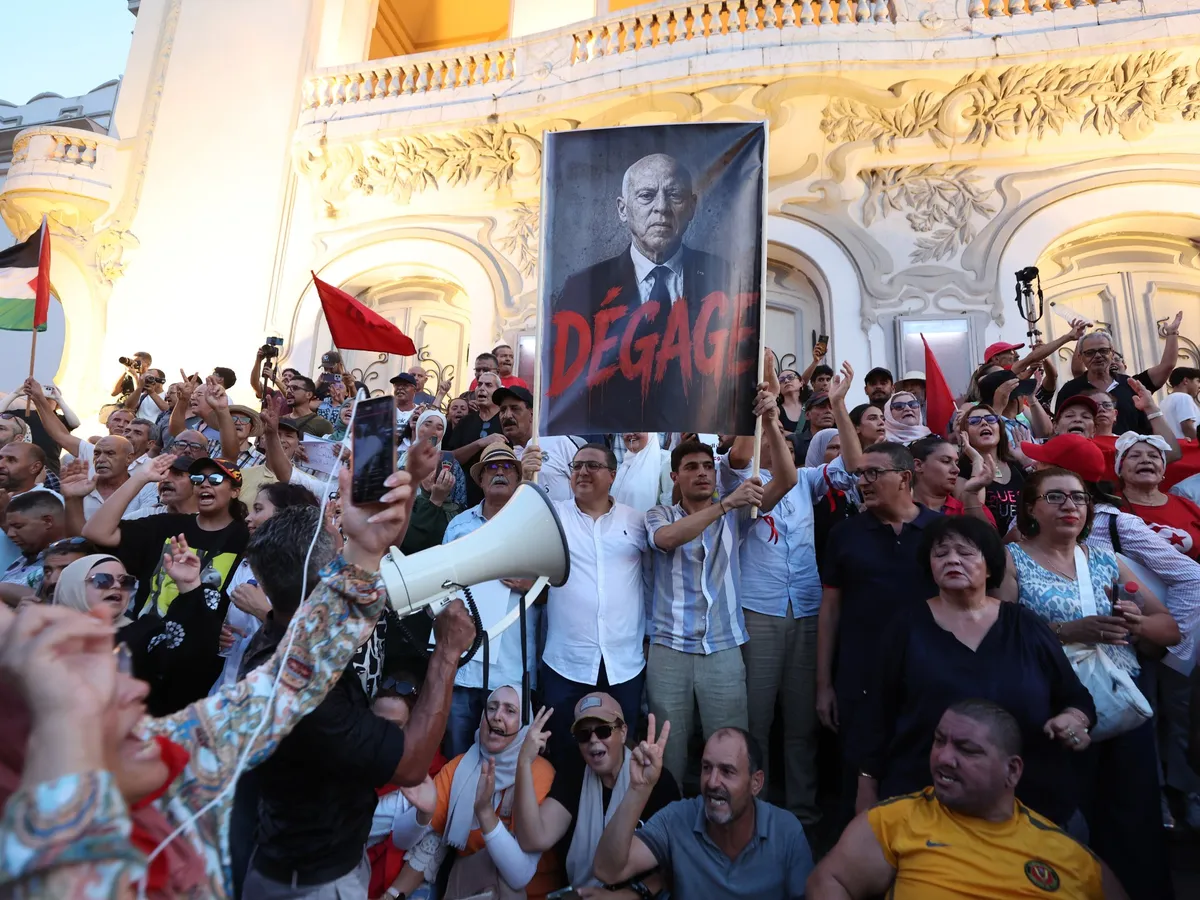
Critics claim Tunisia’s judiciary acts under political pressure, as opposition leaders face lengthy prison terms.Tunisia’s Court of Cassation has rejected in a mass trial the final appeal of dozens of opposition figures, upholding prison sentences of up to 45 years for figures accused of conspiring to overthrow President Kais Saied.The ruling on Thursday closes out three years of legal proceedings against 40 people, including opposition party leaders, lawyers, businessmen and human rights defenders. Half of those had fled the country and were sentenced in absentia.Recommended Stories list of 3 itemslist 1 of 3Tunisia swelters as power cuts disrupt water supplieslist 2 of 3Five years after Saied’s power grab, Tunisia’s old grievances resurfacelist 3 of 3Tunisia protests: Water, power cuts and rising angerend of listAmong those sentenced were National Salvation Front leader Najib Chebbi – sentenced to 12 years – and opposition figures Ghazi Chaouachi, Issam Chebbi, Jawhar Ben Mbarek and Ridha Belhaj – each sentenced to 20 years. Politician Noureddine Bhiri was sentenced to 10 years.“The ruling confirms that the judiciary is not independent,” said Haifa Chebbi, a lawyer and Najib’s daughter, who said her father and other defendants were “silenced” through a case designed to imprison opposition figures. “Opponents entered prison by political decision and will leave when Saied falls.”Lawyers claimed they were notified of Thursday’s hearing on Monday, leaving too little time to prepare a defence.Dalila Msaddek, whose brother Jawhar Ben Mbarek was among those convicted, wrote on Facebook that “the legal battle is now over … what begins is a purely political battle”.The case is widely seen as emblematic of Tunisia’s democratic backsliding since the election of Saied in 2019, who has ruled largely by decree, dissolved the independent Supreme Judicial Council and dismissed dozens of judges.
SRCAl Jazeera
LANGEN
LEANCenter
WORDS290
ENT12
THU · 2026-09-03 · 23:23 GMTBRIEF NSR-2026-0904-109012
NSR-2026-0904-109012News Report·EN·Political Strategy
Tunisia’s top court upholds conviction of opposition figures, activists
Tunisia's Court of Cassation has upheld lengthy prison sentences for dozens of opposition figures, lawyers, businessmen, and human rights defenders accused of conspiring to overthrow President Kais Saied. The ruling, which concludes three years of legal proceedings, saw sentences ranging up to 45 years, with half of the defendants sentenced in absentia after fleeing the country.
Al Jazeera StaffAl JazeeraFiled 2026-09-03 · 23:23 GMTLean · CenterRead · 2 min
Al JazeeraFIG 01
Reading time
2min
Word count
290words
Sources cited
4cited
Entities identified
12entities
Quality score
100%
§ 01
Briefing Summary
AI-generatedNEWSAR · AI
Tunisia's Court of Cassation has upheld lengthy prison sentences for dozens of opposition figures, lawyers, businessmen, and human rights defenders accused of conspiring to overthrow President Kais Saied. The ruling, which concludes three years of legal proceedings, saw sentences ranging up to 45 years, with half of the defendants sentenced in absentia after fleeing the country. Prominent figures like Najib Chebbi received 12 years, while others were sentenced to 20 years. Critics argue the judiciary is not independent and acts under political pressure, asserting that the convictions are a political move to silence opposition. This mass trial is viewed as a significant indicator of democratic backsliding in Tunisia since President Saied assumed power and began ruling by decree.
Confidence 0.90Sources 4Claims 5Entities 12
§ 02
Article analysis
Model · rule-basedFraming
Political Strategy
Legal & Judicial
Tone
Measured
AI-assessed
CalmNeutralAlarmist
Factuality
0.70 / 1.00
Factual
LowHigh
Sources cited
4
Well sourced
FewMany
§ 03
Key claims
5 extracted01
Haifa Chebbi stated that the ruling confirms the judiciary is not independent and opponents were imprisoned by political decision.
quoteHaifa Chebbi
Confidence
1.00
02
The ruling closes out three years of legal proceedings against 40 people, including opposition leaders, lawyers, businessmen and human rights defenders.
factual
Confidence
1.00
03
Tunisia’s Court of Cassation rejected the final appeal of dozens of opposition figures, upholding prison sentences.
factual
Confidence
1.00
04
The case is seen as emblematic of Tunisia’s democratic backsliding since President Kais Saied’s election in 2019.
factual
Confidence
0.90
05
Critics claim Tunisia’s judiciary acts under political pressure.
quoteCritics
Confidence
0.90
§ 04
Full report
2 min read · 290 words§ 05
Entities
12 identifiedKey playerOppositionContextPositiveNeutralNegative
People9
KS
Kais Saied
PoliticianKey Player
4x
90
NC
Najib Chebbi
PoliticianOpposition
3x
70
RB
Ridha Belhaj
PoliticianOpposition
60
IC
Issam Chebbi
PoliticianOpposition
60
GC
Ghazi Chaouachi
PoliticianOpposition
60
JB
Jawhar Ben Mbarek
PoliticianOpposition
2x
60
NB
Noureddine Bhiri
PoliticianOpposition
50
HC
Haifa Chebbi
personContext
40
DM
Dalila Msaddek
personContext
30
Locations1
§ 06
Keywords & salience
9 termstunisia
1.00
opposition figures
0.90
kais saied
0.80
judicial independence
0.70
political pressure
0.70
democratic backsliding
0.60
prison sentences
0.50
mass trial
0.40
human rights defenders
0.40
§ 07
Topic connections
Interactive graph Network visualization showing 51 related topics
View Full Graph Person Organization Location Event|Click node to navigate|Edge numbers = shared articles