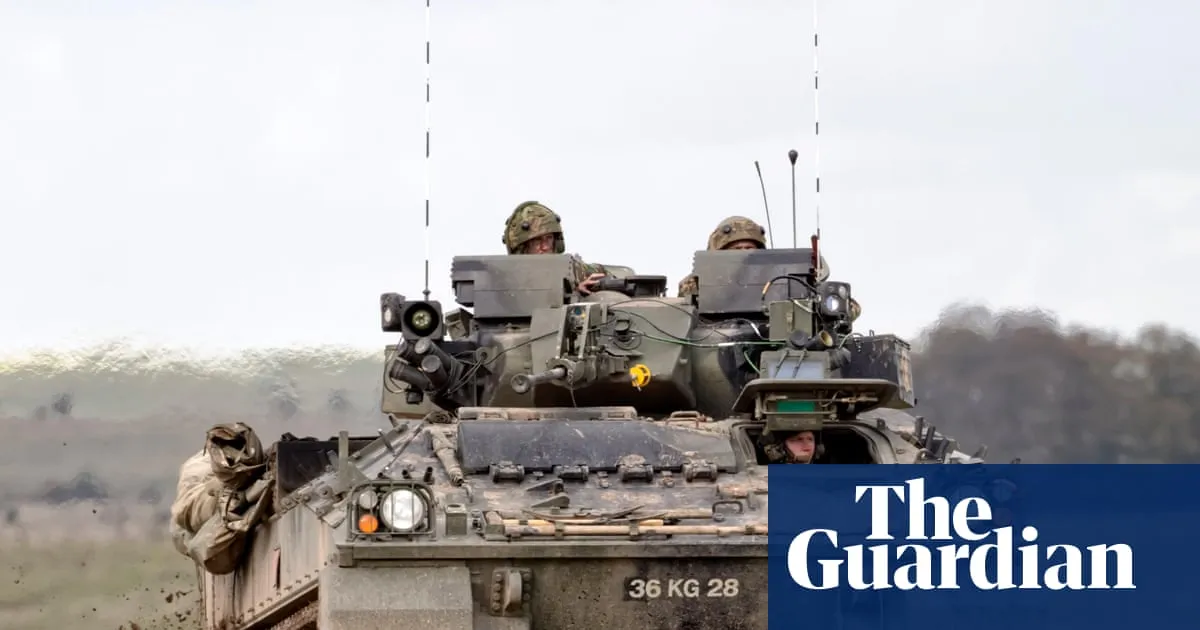
The British army has been ordered to halt non-essential training exercises in an effort to save money.Troops preparing to be deployed or on deployments, those who are on standby or in a quick-reaction role will continue to train as normal. But collective training exercises for UK-based units are being suspended for most of this year amid budget pressures.Cancelled exercises included those involving tanks and Apache helicopters, according to reports in The Times and BBC.The army did not deny the cuts and said a training regime informed by lessons from the Ukraine conflict – such as on drone warfare and modernisation – was being prioritised.An army spokesperson said: “Our training continues and we are prioritising activity that contributes most directly to readiness, deployability and operational effectiveness.“We are also investing £2bn to transform training for the British army over the next 15 years.”Andy Burnham is under pressure to increase defence spending to 3% of national income by 2030, rising to 3.5% by 2035.At prime minister’s questions on Wednesday, Burnham was urged by the chair of the Commons defence select committee, the Labour MP Tan Singh Dhesi, to “urgently commit to charting a pathway to reaching 3% of GDP spend on defence by 2030 which, as his chancellor rightly noted, is critical to keeping our country safe”. Dhesi told the prime minister that “vibes alone just isn’t going to be enough”, when it came to funding the UK’s armed forcesPlans set out in the defence investment plan (Dip) include defence spending rising to 2.7% of GDP by 2027/28, but there are no firm details on how further increases will be achieved beyond that date.The Treasury has consistently said the government will set out plans for reaching 3% and 3.5% at the spending review, due to take place next year.skip past newsletter promotionafter newsletter promotionThe chancellor, John Healey, resigned from Keir Starmer’s government as defence secretary in June, in protest against what he argued was the then prime minister’s failure to adequately fund defence.But in his new post in No 11 Downing Street, Healey has made clear that he will wait until next year’s spending review before presenting a plan to meet Labour’s pledge of devoting 3.5% of GDP to defence by 2035.Healey will present his first budget on 28 October and needs to find approximately £1.4bn a year over the next three years to pay for Starmer’s defence investment plan – which Healey in his last job derided as inadequate.
SRCThe Guardian - World News
LANGEN
LEANCenter-Left
WORDS407
ENT12
FRI · 2026-09-04 · 06:44 GMTBRIEF NSR-2026-0904-109125
NSR-2026-0904-109125News Report·EN·National Security
British army told to halt non-essential training exercises to save money
The British army is suspending most non-essential collective training exercises for UK-based units for the remainder of the year due to budget pressures. Troops involved in deployments, standby duties, or quick-reaction roles will continue training as usual.
Jamie GriersonThe Guardian - World NewsFiled 2026-09-04 · 06:44 GMTLean · Center-LeftRead · 2 min
The Guardian - World NewsFIG 01
Reading time
2min
Word count
407words
Sources cited
3cited
Entities identified
12entities
Quality score
100%
§ 01
Briefing Summary
AI-generatedNEWSAR · AI
The British army is suspending most non-essential collective training exercises for UK-based units for the remainder of the year due to budget pressures. Troops involved in deployments, standby duties, or quick-reaction roles will continue training as usual. This decision, which includes the cancellation of exercises involving tanks and Apache helicopters, prioritizes training that directly contributes to readiness and operational effectiveness, informed by lessons from the Ukraine conflict. The government faces pressure to increase defense spending to 3% of national income by 2030 and 3.5% by 2035, with plans for further increases beyond 2.7% by 2027/28 to be detailed in next year's spending review.
Confidence 0.90Sources 3Claims 5Entities 12
§ 02
Article analysis
Model · rule-basedFraming
National Security
Economic Impact
Tone
Measured
AI-assessed
CalmNeutralAlarmist
Factuality
0.70 / 1.00
Factual
LowHigh
Sources cited
3
Well sourced
FewMany
§ 03
Key claims
5 extracted01
Labour's pledge is to devote 3.5% of GDP to defence by 2035.
factual
Confidence
0.90
02
Army is prioritizing training informed by lessons from the Ukraine conflict, such as drone warfare and modernization.
factualarmy spokesperson
Confidence
0.90
03
Troops preparing for or on deployment, on standby, or in quick-reaction roles will continue training normally.
factual
Confidence
0.90
04
British army ordered to halt non-essential training exercises to save money.
factual
Confidence
0.90
05
Cancelled exercises included those involving tanks and Apache helicopters.
factualreports in the Times and BBC
Confidence
0.80
§ 04
Full report
2 min read · 407 words§ 05
Entities
12 identifiedKey playerOppositionContextPositiveNeutralNegative
People4
Organizations4
§ 06
Keywords & salience
9 termstraining exercises
1.00
british army
1.00
save money
0.90
budget pressures
0.80
defence spending
0.70
ukraine conflict
0.60
drone warfare
0.50
operational effectiveness
0.50
gdp
0.40
§ 07
Topic connections
Interactive graph No topic relationship data available yet. This graph will appear once topic relationships have been computed.