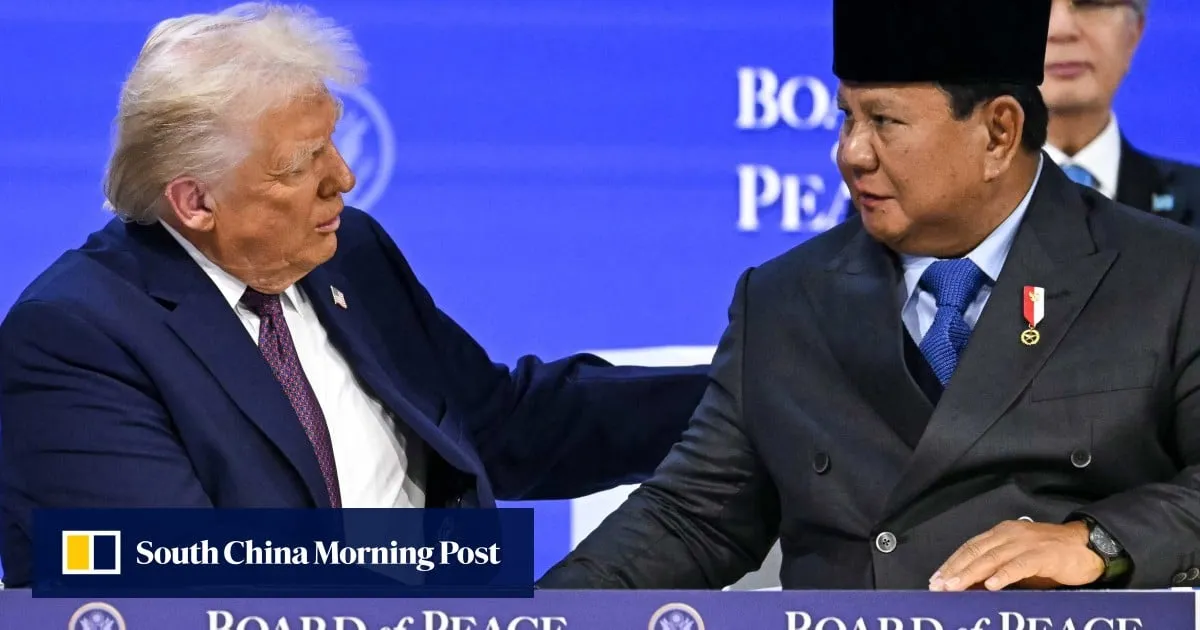
Indonesia’s decision to join US President Donald Trump’s “Board of Peace” has raised eyebrows at home, with critics zeroing in on how it deviated from Jakarta’s values by serving the interests of only the US and Israel instead of Palestine.Some observers, however, argue that the move is “consistent” with Indonesia’s proactive foreign policy stance and allows it access to major powers.President Prabowo Subianto was among several world leaders flanking Trump at Thursday’s signing of the board’s charter on the sidelines of the World Economic Forum. More than 20 other countries have joined – including Albania, Azerbaijan, Belarus, Egypt, Hungary, Israel, Kosovo, Pakistan, Qatar, Saudi Arabia and Vietnam.“Indonesia’s presence is certainly a form of international recognition of Indonesian diplomacy, position and views on world peace in general and peace in the region in particular,” Foreign Minister Sugiono said in a video statement released on Friday.The president had “carefully considered various strategic aspects” before he decided to join the board, according to Sugiono.US President Donald Trump holds up the signed “Board of Peace” charter on Thursday. Photo: EPA“Palestinian independence and recognition of Palestinian sovereignty are things we have been striving for. The Board of Peace is one concrete alternative we can currently rely on to achieve these goals,” he said. “We will ensure that the efforts carried out by the Board of Peace remain focused on Palestinian independence and the achievement of a two-state solution.”
SRCSouth China Morning Post
LANGEN
LEANCenter-Right
WORDS233
ENT12
TUE · 2026-01-27 · 09:52 GMTBRIEF NSR-2026-0127-10917
NSR-2026-0127-10917News Report·EN·Political Strategy
Indonesia’s move to join Trump’s ‘Board of Peace’ stirs debate on foreign policy shift
Indonesia's recent decision to join the US-led "Board of Peace," formalized at the World Economic Forum, has sparked domestic debate regarding a potential shift in foreign policy. While the Indonesian Foreign Minister argues the move aligns with the country's proactive diplomacy and offers access to major powers, critics suggest it compromises Jakarta's values by prioritizing US and Israeli interests over Palestinian concerns.
Resty Woro YuniarSouth China Morning PostFiled 2026-01-27 · 09:52 GMTLean · Center-RightRead · 1 min
South China Morning PostFIG 01
Reading time
1min
Word count
233words
Sources cited
2cited
Entities identified
12entities
Quality score
100%
§ 01
Briefing Summary
AI-generatedNEWSAR · AI
Indonesia's recent decision to join the US-led "Board of Peace," formalized at the World Economic Forum, has sparked domestic debate regarding a potential shift in foreign policy. While the Indonesian Foreign Minister argues the move aligns with the country's proactive diplomacy and offers access to major powers, critics suggest it compromises Jakarta's values by prioritizing US and Israeli interests over Palestinian concerns. The Board, which includes over 20 countries, aims to promote peace globally, with Indonesia asserting its participation will focus on achieving Palestinian independence and a two-state solution. President Prabowo Subianto's decision followed careful consideration of strategic aspects, according to the Foreign Minister. The move has been met with mixed reactions, highlighting differing perspectives on Indonesia's role in international peace efforts.
Confidence 0.90Sources 2Claims 5Entities 12
§ 02
Article analysis
Model · rule-basedFraming
Political Strategy
Diplomatic
Tone
Measured
AI-assessed
CalmNeutralAlarmist
Factuality
0.70 / 1.00
Factual
LowHigh
Sources cited
2
Limited
FewMany
§ 03
Key claims
5 extracted01
More than 20 other countries have joined the “Board of Peace”.
factualArticle's own claim
Confidence
1.00
02
Indonesia’s presence is a form of international recognition of Indonesian diplomacy.
quoteForeign Minister Sugiono
Confidence
0.90
03
The president had “carefully considered various strategic aspects” before he decided to join the board
quoteForeign Minister Sugiono
Confidence
0.80
04
Indonesia’s decision to join US President Donald Trump’s “Board of Peace” has raised eyebrows at home.
factualArticle's own claim
Confidence
0.80
05
The Board of Peace is one concrete alternative we can currently rely on to achieve these goals.
quoteForeign Minister Sugiono
Confidence
0.70
§ 04
Full report
1 min read · 233 words§ 05
Entities
12 identifiedKey playerOppositionContextPositiveNeutralNegative
People3
Organizations1
§ 06
Keywords & salience
9 termsboard of peace
1.00
indonesia
0.80
foreign policy
0.80
palestinian independence
0.70
two-state solution
0.60
international recognition
0.50
us
0.50
israel
0.40
donald trump
0.40
§ 07
Topic connections
Interactive graph Network visualization showing 51 related topics
View Full Graph Person Organization Location Event|Click node to navigate|Edge numbers = shared articles