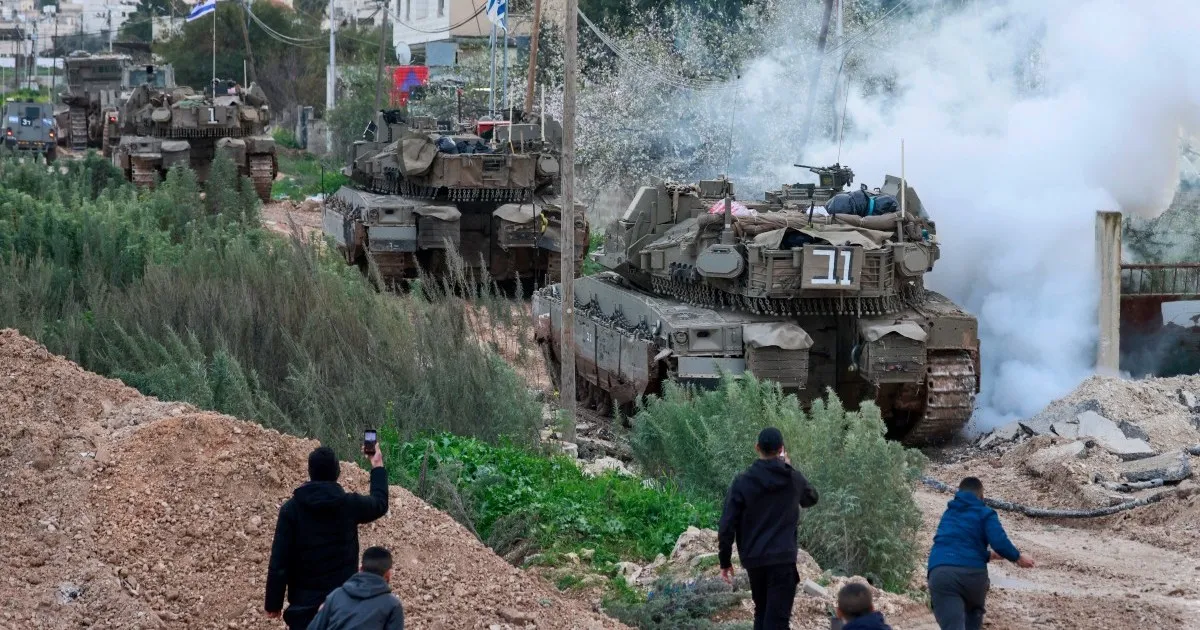
More than 33,000 Palestinian refugees remain displaced since Israel launched Operation Iron Wall.Israel’s military actions resulting in the displacement of entire Palestinian populations in three refugee camps in the occupied West Bank “appear to amount to collective punishment and raise concerns of ethnic cleansing”, a United Nations Human Rights report has found.Israel’s Operation Iron Wall in January and February 2025 killed 102 Palestinians and displaced more than 33,000 residents from the Jenin, Nur Shams and Tulkarem refugee camps, said the report, titled Destruction of Palestinian refugee camps in northern West Bank.Recommended Stories list of 3 itemslist 1 of 3Who are the ‘Hilltop Girls’ behind Israel’s ‘soft settlement’ strategy?list 2 of 3Four imprisoned Palestine Action activists appeal terrorism sentenceslist 3 of 3Jerusalem Daily: Students sing ‘Erase Palestine’end of listDisplaced Palestinians reported being told by Israeli officers that there would be no more refugee camps and that they should “all go to Jordan”.Such large-scale, long-term and systematic displacement of the Palestinian population could amount to a crime against humanity of forcible transfer, the report by the UN-office-of-the-high-commissioner-for-human-rights" class="entity-link entity-organization" data-entity-id="185123" data-entity-type="organization">UN Office of the High Commissioner for Human Rights (OHCHR) said on Friday.It stressed that the use of air strikes, armoured bulldozers and controlled detonations to render entire areas uninhabitable and prevent the return of residents, in the absence of imperative military necessity, is not permissible under international law.“The way Operation Iron Wall has been conducted suggests its aim was to expel as many Palestinians as possible and to make way for more illegal Israeli settlements, in further violation of international law,” said UN High Commissioner for Human Rights Volker Turk.The three camps are among a total of 19 in the West Bank that were established to shelter Palestinian refugees after the mass forced expulsion during the Nakba in 1948 and have been administered by the UN Relief and Works Agency for Palestinian refugees (UNRWA).
SRCAl Jazeera
LANGEN
LEANCenter
WORDS309
ENT12
FRI · 2026-09-04 · 15:31 GMTBRIEF NSR-2026-0904-109278
NSR-2026-0904-109278News Report·EN·Human Rights
UN raises ‘ethnic cleansing’ concerns over Israel’s West Bank operation
A UN Human Rights report has raised concerns of ethnic cleansing and collective punishment following Israel's Operation Iron Wall in January and February 2025. The operation resulted in the deaths of 102 Palestinians and the displacement of over 33,000 residents from three refugee camps in the occupied West Bank: Jenin, Nur Shams, and Tulkarem.
Al Jazeera StaffAl JazeeraFiled 2026-09-04 · 15:31 GMTLean · CenterRead · 2 min
Al JazeeraFIG 01
Reading time
2min
Word count
309words
Sources cited
2cited
Entities identified
12entities
Quality score
100%
§ 01
Briefing Summary
AI-generatedNEWSAR · AI
A UN Human Rights report has raised concerns of ethnic cleansing and collective punishment following Israel's Operation Iron Wall in January and February 2025. The operation resulted in the deaths of 102 Palestinians and the displacement of over 33,000 residents from three refugee camps in the occupied West Bank: Jenin, Nur Shams, and Tulkarem. Displaced Palestinians reported being told by Israeli officers that refugee camps would cease to exist and that they should relocate to Jordan. The UN Office of the High Commissioner for Human Rights stated that such large-scale displacement could constitute the crime against humanity of forcible transfer, noting that rendering areas uninhabitable without imperative military necessity is impermissible under international law. UN High Commissioner for Human Rights Volker Turk suggested the operation's aim was to expel Palestinians and facilitate illegal Israeli settlements.
Confidence 0.90Sources 2Claims 5Entities 12
§ 02
Article analysis
Model · rule-basedFraming
Human Rights
Conflict
Tone
Mixed Tone
AI-assessed
CalmNeutralAlarmist
Factuality
0.70 / 1.00
Factual
LowHigh
Sources cited
2
Limited
FewMany
§ 03
Key claims
5 extracted01
Operation Iron Wall's conduct suggests its aim was to expel Palestinians and make way for illegal Israeli settlements.
quoteVolker Turk (UN High Commissioner for Human Rights)
Confidence
1.00
02
Large-scale, systematic displacement of Palestinians could amount to a crime against humanity of forcible transfer.
factualUN Office of the High Commissioner for Human Rights (OHCHR)
Confidence
1.00
03
Operation Iron Wall killed 102 Palestinians and displaced over 33,000 residents from Jenin, Nur Shams, and Tulkarem refugee camps.
statisticUN Human Rights report
Confidence
1.00
04
UN Human Rights report finds Israeli military actions in West Bank raise concerns of ethnic cleansing.
factualUN Human Rights report
Confidence
1.00
05
Displaced Palestinians reported Israeli officers telling them to 'all go to Jordan' and that there would be no more refugee camps.
quoteDisplaced Palestinians
Confidence
0.90
§ 04
Full report
2 min read · 309 words§ 05
Entities
12 identifiedKey playerOppositionContextPositiveNeutralNegative
Organizations4
Locations6
§ 06
Keywords & salience
10 termsethnic cleansing
1.00
west bank operation
0.90
palestinian refugees
0.90
collective punishment
0.80
forcible transfer
0.70
operation iron wall
0.70
un human rights
0.60
international law
0.50
illegal israeli settlements
0.50
nakba
0.40
§ 07
Topic connections
Interactive graph Network visualization showing 51 related topics
View Full Graph Person Organization Location Event|Click node to navigate|Edge numbers = shared articles