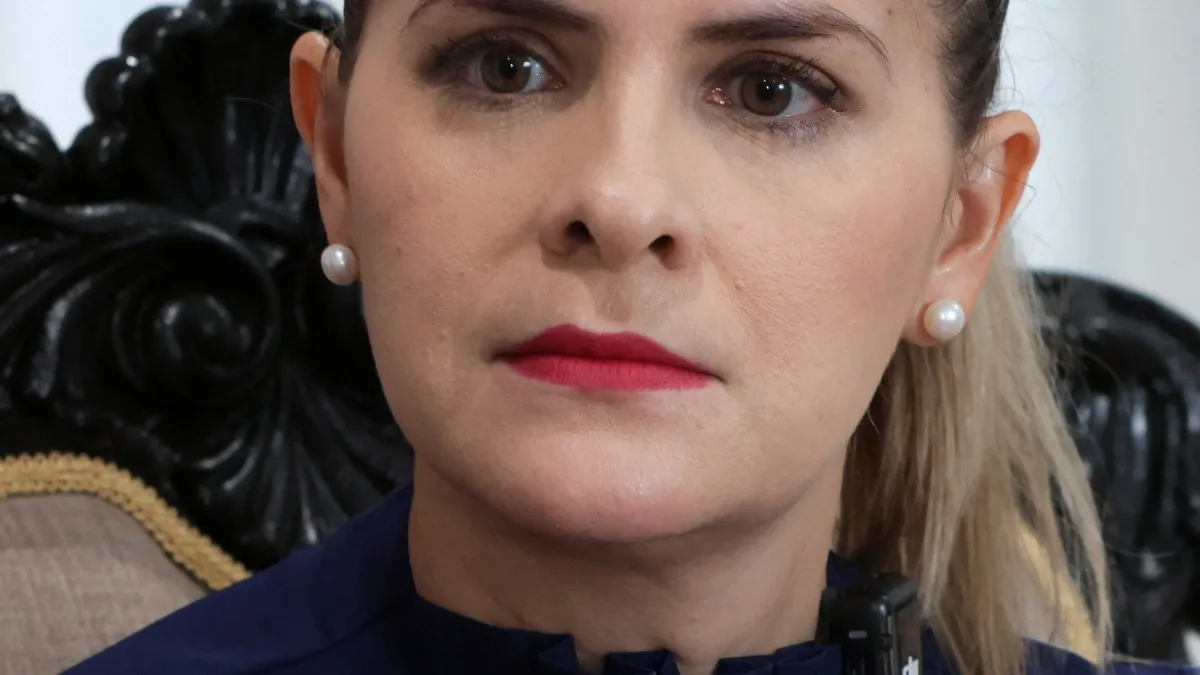
President Laura Fernandez notes that Costa Rica’s Congress would need to approve any US military operations within the country.Costa Rica's President Laura Fernandez is interviewed by Reuters at the presidential palace in San Jose, Costa Rica, on September 4 [Mayela Lopez/Reuters]Published On 4 Sep 2026Costa Rican President Laura Fernandez has suggested that United States military operations in the country’s territory could bring national security benefits.But she added caveats. In an interview published on Friday, Fernandez emphasised to the news service Reuters that such measures would require approval from the national legislature.Recommended Stories list of 3 itemslist 1 of 3Laura Fernandez sworn in as Costa Rica’s new presidentlist 2 of 3Civilians faced attacks, abuse in joint US-Ecuador operations, HRW sayslist 3 of 3In a bid to counter China, Trump hosts a summit for Latin America leadersend of listShe also added there were no plans in the works for US forces to operate in the country.“It would obviously be very good for national security if it were about pursuing a common objective against transnational crime, transnational drug trafficking, transnational terrorism,” said Fernandez, a right-wing populist who took office in May.Fernandez succeeded her mentor, former President Rodrigo Chaves, after a February election in which concerns about security and rising violence in the Central American country played a prominent role.Though she ran on a tough-on-crime platform, Fernandez has said that she is not currently considering a state of emergency to address the problem.Such emergency declarations typically suspend key constitutional rights, in favour of giving police or the military added powers to crack down on violence.That model has been popularised under the right-wing president of El Salvador, Nayib Bukele.But critics point out that the states of emergency are meant to be short-term measures, not permanent ones. El Salvador has been under an emergency declaration since 2022, with the government extending it dozens of times.Crime has become a top voter concern in Costa Rica. The Central American country’s homicide rate has doubled in the last decade, reaching 17.2 per 100,000 inhabitants in 2023.That figure still places the country’s average well below many others in the region, but the change, partly attributed to increased drug trafficking activity, has startled many residents.Fernandez’s remarks also reflect growing pressure from the US to reduce crime across the Western Hemisphere.Since returning to office for a second term, US President Donald Trump has pushed to expand his country’s influence across Latin America, notably through military engagements.Earlier this year, he launched the “Shield of the Americas”, also known as the Americas Counter Cartel Coalition (ACCC), to bring together right-wing leaders across the region to address drug trafficking.Trump used the inaugural meeting to encourage Latin American governments to embrace a military-driven approach to crime, despite concerns about human rights.He has also carried out and threatened military operations in sovereign countries, on the premise of combatting crime.Some countries, such as Mexico, have baulked at the prospect of US military forces carrying out operations on their territory. Critics point to Washington’s long record of interventions and rights abuses in the region.But other countries have been more receptive. US forces, for instance, have recently carried out military operations with the right-wing government of Ecuador, in an effort to lower crime rates.Ecuador’s armed forces, however, have been accused of crimes such as torture and enforced disappearance, abuses that experts warn could be worsened by support from the US.A July report from Human Rights Watch warns that the military collaboration between Ecuador and the US has already had dire consequences.Ecuadorian fishermen have reported facing attacks at sea, and in one case, Ecuadorian soldiers allegedly detained and tortured four Colombian farm workers, using methods such as mock executions, beatings and electric shocks.That incident reportedly took place during a raid near the border carried out with US support.“The two countries’ security relationship is deepening at a moment when both governments have engaged in serious human rights violations fueled by their insistence on framing their confrontations with organised crime groups as a kind of war,” the report says.Those raids come after Ecuadorian voters rejected a referendum last year that would have allowed foreign countries to set up military bases in the country.
SRCAl Jazeera
LANGEN
LEANCenter
WORDS690
ENT12
FRI · 2026-09-04 · 21:45 GMTBRIEF NSR-2026-0904-109310
NSR-2026-0904-109310News Report·EN·National Security
Costa Rican president signals openness to domestic US military operations
Costa Rican President Laura Fernandez has indicated a potential openness to US military operations within her country, stating they could benefit national security by targeting transnational crime. However, she emphasized that any such operations would require approval from Costa Rica's Congress and clarified that no plans are currently in place.
Al Jazeera StaffAl JazeeraFiled 2026-09-04 · 21:45 GMTLean · CenterRead · 3 min
Al JazeeraFIG 01
Reading time
3min
Word count
690words
Sources cited
2cited
Entities identified
12entities
Quality score
100%
§ 01
Briefing Summary
AI-generatedNEWSAR · AI
Costa Rican President Laura Fernandez has indicated a potential openness to US military operations within her country, stating they could benefit national security by targeting transnational crime. However, she emphasized that any such operations would require approval from Costa Rica's Congress and clarified that no plans are currently in place. Fernandez's remarks come amid rising crime concerns in Costa Rica and increased US pressure to address regional security issues. The article notes that other Latin American countries have had mixed reactions to US military involvement, with some experiencing human rights concerns in joint operations.
Confidence 0.90Sources 2Claims 5Entities 12
§ 02
Article analysis
Model · rule-basedFraming
National Security
Political Strategy
Tone
Measured
AI-assessed
CalmNeutralAlarmist
Factuality
0.70 / 1.00
Factual
LowHigh
Sources cited
2
Limited
FewMany
§ 03
Key claims
5 extracted01
Costa Rica's homicide rate doubled in the last decade, reaching 17.2 per 100,000 inhabitants in 2023.
statisticarticle
Confidence
1.00
02
There are no current plans for US forces to operate in Costa Rica.
quoteLaura Fernandez
Confidence
0.90
03
Any US military operations within Costa Rica would require approval from the national legislature.
quoteLaura Fernandez
Confidence
0.90
04
Costa Rican President Laura Fernandez suggested that US military operations in the country could bring national security benefits.
quoteLaura Fernandez
Confidence
0.90
05
US President Donald Trump has pushed to expand his country’s influence across Latin America since returning to office.
factualarticle
Confidence
0.80
§ 04
Full report
3 min read · 690 words§ 05
Entities
12 identifiedKey playerOppositionContextPositiveNeutralNegative
People3
Organizations1
Locations5
§ 06
Keywords & salience
10 termsus military operations
1.00
national security
0.90
transnational crime
0.80
drug trafficking
0.80
transnational terrorism
0.70
costa rica congress
0.60
rising violence
0.50
laura fernandez
0.50
state of emergency
0.40
el salvador
0.40
§ 07
Topic connections
Interactive graph Network visualization showing 19 related topics
View Full Graph Person Organization Location Event|Click node to navigate|Edge numbers = shared articles