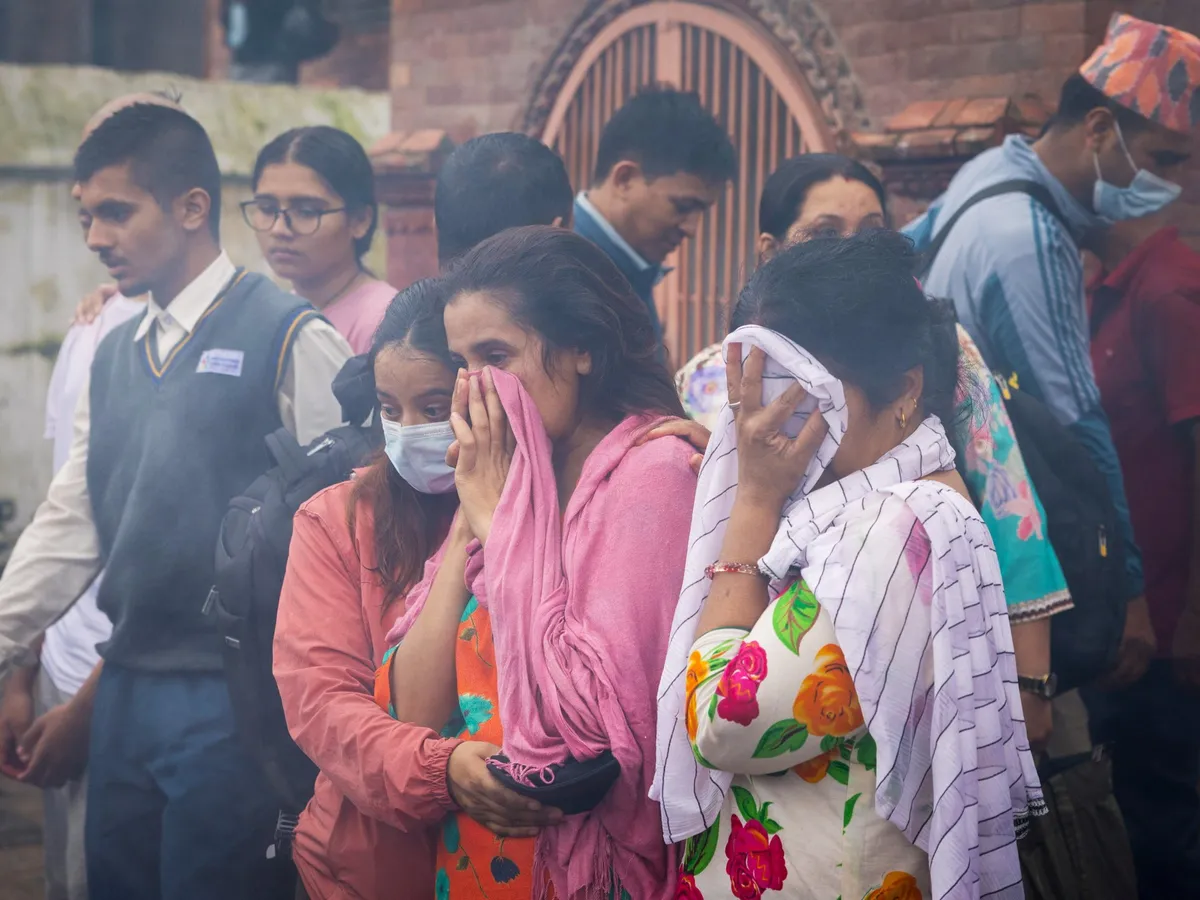
Fewer than one in 10 recovered bodies of people killed in deadly floods has been formally identified – so families are opting to cremate effigies.Published On 5 Sep 2026Kathmandu, Nepal – Nine days after his father, Dinesh, went missing, Sujan Achhami, 23, carries a body to the bank of the Bagmati River next to the famous Pashupatinath Temple in Nepal’s capital, Kathmandu. He lays the body on the Brahmanal – a stone on which corpses are placed for rituals. The priest reads mantras, directing Sujan to wash the body and offer a traditional clay lamp and flowers.Except it’s not a real body.Catastrophic flash floods swept through northern and central Nepal on August 26, killing more than 1,200 people and leaving almost 5,000 others missing. With hopes of finding them alive – or even dead – fading, grieving relatives are being forced to say goodbye without bodies. So, many are instead performing symbolic last rites using effigies made of sacred kusha grass.“We searched for them everywhere,” says Khim Bahadur Gharti Magar, whose uncle Tham Bahadur Pun, 71, a former British Army soldier, and aunt Chausara Pun, 64, were on a pilgrimage in northern Nepal when the flood hit. “We couldn’t find them.”He has also performed these symbolic last rites for his missing relatives, right here on the bank of the Bagmati.“There were 17 buses in the group they were with. During our search, we found four other people [dead bodies] who were part of the pilgrimage group. That’s why we decided to cremate,” Magar says.Sher Bahadur Pun, the deceased man’s son-in-law and a senior health official with the Nepal-government" class="entity-link entity-organization" data-entity-id="200893" data-entity-type="organization">Nepal government, says the family has given DNA samples to police in the hope their identities might be traced later.
SRCAl Jazeera
LANGEN
LEANCenter
WORDS287
ENT12
SAT · 2026-09-05 · 14:40 GMTBRIEF NSR-2026-0905-109516
NSR-2026-0905-109516News Report·EN·Human Interest
Relatives hold cremations without bodies for Nepal’s missing flood victims
In Nepal, families of victims from catastrophic flash floods on August 26 are performing symbolic cremations with effigies due to the low identification rate of recovered bodies. Over 1,200 people died and nearly 5,000 remain missing.
Samik Kharel,Roshan SedhaiAl JazeeraFiled 2026-09-05 · 14:40 GMTLean · CenterRead · 2 min
Al JazeeraFIG 01
Reading time
2min
Word count
287words
Sources cited
3cited
Entities identified
12entities
Quality score
100%
§ 01
Briefing Summary
AI-generatedNEWSAR · AI
In Nepal, families of victims from catastrophic flash floods on August 26 are performing symbolic cremations with effigies due to the low identification rate of recovered bodies. Over 1,200 people died and nearly 5,000 remain missing. Fewer than 10% of the recovered bodies have been formally identified, forcing relatives to conduct last rites without their loved ones present. Grieving families, like Sujan Achhami and Khim Bahadur Gharti Magar, are using kusha grass effigies for these rituals on the banks of the Bagmati River in Kathmandu. Some families, like Magar's, have found other deceased members of their group and decided to proceed with cremations. DNA samples have been provided to authorities in hopes of future identification.
Confidence 0.90Sources 3Claims 5Entities 12
§ 02
Article analysis
Model · rule-basedFraming
Human Interest
Environmental
Tone
Measured
AI-assessed
CalmNeutralAlarmist
Factuality
0.80 / 1.00
Factual
LowHigh
Sources cited
3
Well sourced
FewMany
§ 03
Key claims
5 extracted01
Sher Bahadur Pun's family has given DNA samples to police in the hope their identities might be traced later.
quoteSher Bahadur Pun
Confidence
1.00
02
Khim Bahadur Gharti Magar's uncle and aunt were on a pilgrimage in northern Nepal when the flood hit.
quoteKhim Bahadur Gharti Magar
Confidence
1.00
03
Grieving relatives are performing symbolic last rites using effigies made of sacred kusha grass for missing flood victims.
factual
Confidence
1.00
04
Catastrophic flash floods swept through northern and central Nepal on August 26, killing more than 1,200 people and leaving almost 5,000 others missing.
statistic
Confidence
1.00
05
Fewer than one in 10 recovered bodies of people killed in Nepal's floods have been formally identified.
statistic
Confidence
1.00
§ 04
Full report
2 min read · 287 words§ 05
Entities
12 identifiedKey playerOppositionContextPositiveNeutralNegative
People6
§ 06
Keywords & salience
9 termscremations without bodies
1.00
flood victims
1.00
symbolic last rites
0.90
missing persons
0.80
nepal floods
0.80
effigies
0.70
dna samples
0.60
kathmandu
0.50
bagmati river
0.40
§ 07
Topic connections
Interactive graph Network visualization showing 51 related topics
View Full Graph Person Organization Location Event|Click node to navigate|Edge numbers = shared articles