Germany’s chancellor, Friedrich Merz, has accused the far-right Alternative für Deutschland (AfD) of seeking “ethnic cleansing” with its “remigration” drive, after the nativist party’s seismic weekend victory in a state election.In his first public confrontation with the AfD since Sunday’s shock outcome in Saxony-Anhalt, Merz said at a raucous parliamentary debate that the far-right party would take an axe to one of the pillars of the German economy with a racist campaign of mass deportations.“The term ‘remigration’ is nothing but a synonym for ethnic cleansing based on origin and skin colour,” he said on Wednesday to applause from the other parties in the Bundestag lower house.In a fiery speech addressed to the AfD parliamentary group, which repeatedly interrupted him with loud taunts and heckling, Merz said millions of working immigrants were crucial to German society.“If those working in Germany have to leave the country again because you are championing ‘remigration’,” Merz said, “then the skilled trades in Germany will no longer be able to function: not a single care home will remain open, not a single hospital in Germany will remain operational, and not a single restaurant in Germany will be able to stay in business.”He said the AfD’s rhetoric, which propelled it to the strongest showing for a far-right party in a German state since the Nazi period, “is precisely what is dividing our society so deeply”.The AfD has repeatedly called for large-scale expulsions of irregular migrants, a policy that would face stiff challenges under German law.(L-R) The AfD’s Tino Chrupalla, Ulrich Siegmund and Alice Weidel after the Saxony-Anhalt election win. Photograph: Clemens Bilan/EPAIn the election, the party rode an international wave of populism, nationalism and discontent with mainstream parties, underscored overnight by congratulations from Donald Trump.In a post on his Truth Social platform, the US president hailed the AfD’s “really big night” in Saxony-Anhalt. “They finally got tired of the absolutely horrible immigration rules and regulations which have hurt Germany so badly,” Trump wrote.Merz responded by cancelling a planned phone call with Trump on Wednesday. A spokesperson for the chancellor declined to explain but noted that Merz had always objected “in general terms” to “interfering in or commenting on the domestic political situation, particularly regarding elections”.Support for Merz, a conservative Christian Democrat, has plummeted in the 16 months since he took office at the helm of a coalition with the centre-left Social Democrats, amid disappointment over slow progress on economic growth and the cost of living.He has adopted a hard line on border policy in a faltering effort to win back AfD supporters, and acknowledged Germany still had “problems in the area of migration”.“We still have many people in Germany who should not have permanent residency. This is consensus in the [ruling] coalition, that we need to deport more people,” he said on Wednesday.“But we make a careful distinction between those who work in Germany, who contribute to our prosperity, and who are welcome here, and those who do not have permanent residency in Germany and who must leave our country. Unlike you [the AfD], we take great care to make this distinction.”skip past newsletter promotionafter newsletter promotionThe AfD won nearly 44% of the vote in Saxony-Anhalt but fell three seats short of an absolute majority. Its chief candidate, Ulrich Siegmund, is seeking potential supporters among the other parties to elect him as state premier.Merz, who has acknowledged his unpopularity played a role in the halving of support for his party in the state, tried to put a brave face on the rout. “Fifty-six percent of voters in Saxony-Anhalt didn’t vote for you,” he told the AfD.He accused Siegmund, whose party is classed as rightwing extremist by domestic intelligence, of “electoral fraud” by already breaking a campaign promise not to seek to govern the state if he failed to win an absolute majority.“And you won’t manage that in Germany either [at the federal level],” Merz told the AfD co-leader Alice Weidel. “Nowhere in Germany will you get a majority. You are and remain a destructive force.”Merz also attacked the AfD for its opposition to military assistance for Ukraine, and accused it of making common cause with Russia, which Berlin has alleged is mounting a sabotage and disinformation campaign on its soil.He said that despite “clear evidence” a failed drone bomb attack at Leipzig airport last month “had been planned in Russia for months and was specifically directed against Germany”, the AfD had remained silent on it.Earlier, Weidel had savoured her party’s resounding election victory from the podium, saying the CDU had been “pulverised” and calling it a referendum on Merz’s leadership.Attacking the government’s migration policy and blaming it for crime and other security problems, Weidel said: “Your time is up. The public want a change in policy, and they will get it,” reiterating her party’s aim to form a federal government in the foreseeable future.Polls show Merz’s fractious coalition would not have a majority in a general election, though the next national vote is not due until 2029. The AfD is polling in first place at 28% to 29%, with the wind at its back before another two state polls this month, in Berlin and Mecklenburg-Western Pomerania.
SRCThe Guardian - World News
LANGEN
LEANCenter-Left
WORDS859
ENT12
WED · 2026-09-09 · 13:43 GMTBRIEF NSR-2026-0909-109879
NSR-2026-0909-109879News Report·EN·Political Strategy
Merz accuses AfD of ‘ethnic cleansing’ policy and cancels call with Trump
German Chancellor Friedrich Merz accused the far-right Alternative für Deutschland (AfD) of advocating "ethnic cleansing" with its "remigration" policy following the party's significant win in the Saxony-Anhalt state election. Merz stated that the AfD's proposed mass deportations of working immigrants would cripple key sectors of the German economy.
Deborah Cole in BerlinThe Guardian - World NewsFiled 2026-09-09 · 13:43 GMTLean · Center-LeftRead · 4 min
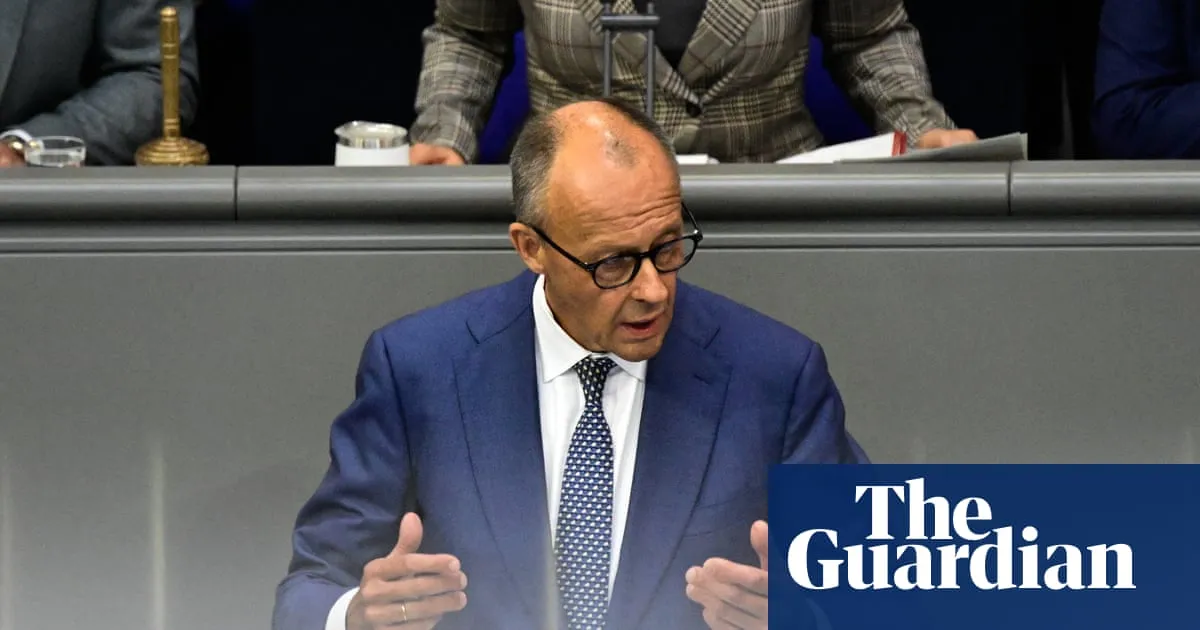
The Guardian - World NewsFIG 01
Reading time
4min
Word count
859words
Sources cited
3cited
Entities identified
12entities
Quality score
100%
§ 01
Briefing Summary
AI-generatedNEWSAR · AI
German Chancellor Friedrich Merz accused the far-right Alternative für Deutschland (AfD) of advocating "ethnic cleansing" with its "remigration" policy following the party's significant win in the Saxony-Anhalt state election. Merz stated that the AfD's proposed mass deportations of working immigrants would cripple key sectors of the German economy. In response to Donald Trump congratulating the AfD on their victory, Merz canceled a planned phone call with the former US president. Merz emphasized that while his government also seeks to deport individuals without permanent residency, it distinguishes between them and welcome, contributing immigrants. The AfD's election success was attributed to populist sentiment and discontent with mainstream parties.
Confidence 0.90Sources 3Claims 5Entities 12
§ 02
Article analysis
Model · rule-basedFraming
Political Strategy
Social Justice
Tone
Sensational
AI-assessed
CalmNeutralAlarmist
Factuality
0.60 / 1.00
Mixed
LowHigh
Sources cited
3
Well sourced
FewMany
§ 03
Key claims
5 extracted01
The AfD's rhetoric is dividing German society.
quoteFriedrich Merz
Confidence
1.00
02
Merz cancelled a planned phone call with Trump following Trump's comments.
factualSpokesperson for the chancellor
Confidence
1.00
03
Donald Trump congratulated the AfD on their election victory, citing immigration rules.
quoteDonald Trump
Confidence
1.00
04
The AfD's 'remigration' policy would lead to mass deportations of working immigrants.
quoteFriedrich Merz
Confidence
1.00
05
Merz accused the AfD of seeking 'ethnic cleansing' with its 'remigration' drive.
quoteFriedrich Merz
Confidence
1.00
§ 04
Full report
4 min read · 859 words§ 05
Entities
12 identifiedKey playerOppositionContextPositiveNeutralNegative
Organizations3
Locations3
§ 06
Keywords & salience
10 termsremigration
1.00
ethnic cleansing
1.00
alternative für deutschland (afd)
0.90
mass deportations
0.80
german economy
0.70
state election
0.60
immigration rules
0.50
donald trump
0.50
friedrich merz
0.40
populism
0.40
§ 07
Topic connections
Interactive graph No topic relationship data available yet. This graph will appear once topic relationships have been computed.