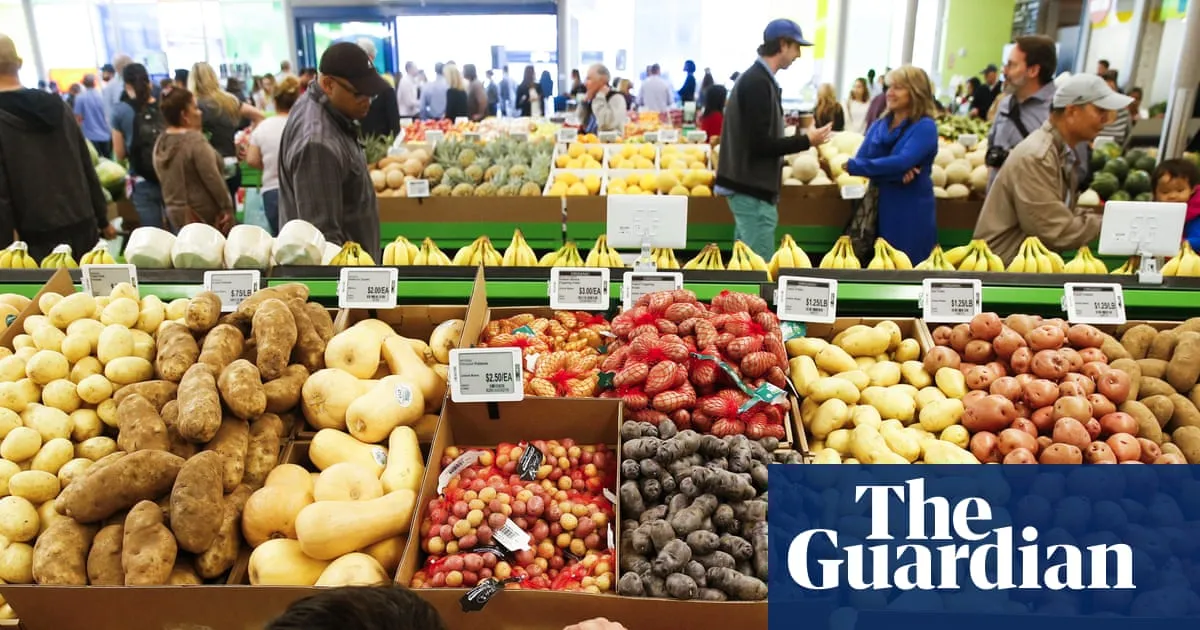
The universal adoption of electronic shelf labels in grocery stores across the US could cost tens of thousands of jobs and billions of dollars in lost wages while further driving up grocery costs, according to a report released on Tuesday.An analysis by the AFL-CIO Tech Institute of the label manufacturers’ own marketing materials found the universal adoption of electronic shelf labels, which are marketed to retailers as a cost-cutting measure, could cost workers between $1.6bn and $6.9bn in lost wages annually and affect between 44,223 and 191,633 jobs.The policy brief – Priced Out, Pushed Out: electronic shelf labels Raise Prices and Shrink Paychecks – calls for a ban on electronic labels to protect consumers and workers.Manufacturers have hailed the labels as a way to collect huge amounts of personal data from customers, increase profits and cut labor costs.The report argues that electronic shelf labels use the same pricing systems that allow dynamic pricing – price changes such as increasing allergy medication prices when pollen counts are high – to surveillance pricing, changing prices based on personal data.These technologies are being implemented across the US retail industry at a time when food prices have surpassed inflation and wage gains, increasing 33% over the past seven years.“Through our analysis, we found that the implementation of electronic shelf labels are likely going to drive prices even higher. The reason being that these labels are connected to the same algorithmic pricing software that online retailers are already using,” said Sunny Glottmann, policy and programs managers at the AFL-CIO Tech Institute and co-author of the report.“electronic shelf labels create the infrastructure that would make rapid algorithmic price changes easier to implement at scale, and this raises concerns for consumers that are already struggling with grocery costs.”The report comes as several states have begun introducing legislation to ban surveillance pricing and electronic shelf labels. In April, Maryland became the first state in the US to ban surveillance pricing. Connecticut signed a ban into law in June and New Jersey signed a ban into law in July.electronic shelf labels “enable instantaneous price changes”, said Lauren McFerran, executive director of the AFL-CIO Tech Institute and former chairman of the National Labor Relations Board.“This is a technology that both is enabling this kind of ‘how do we extract the absolute most money out of grocery shoppers that is humanly possible’ and ‘how do we squeeze our workers as much as is humanly possible’,” said McFerran.A May poll released by the United Food and Commercial Workers union found 68% of Americans believe surveillance pricing will increase grocery costs and 65% say digital price tags will do the same. About 67% support banning digital price tags and surveillance pricing, with only 26% opposing a ban.Ademola Oyefeso, vice-president of UFCW International, said that as retailers are implementing electronic shelf labels, the labor cuts occur gradually, with workers who typically change prices on shelves losing work hours.“Slowly, if someone has a full-time job or a part-time job, they go from full-time to part-time, from part-time to no time, and that’s what’s going to start happening across the entire industry,” said Oyefeso. “We have gone with paper labels for over 100 years. It’s worked. It’s the trust stores have built with people. I know [that] you and I are paying the same price.“If we come there on Monday, you and I are going to pay the same price on Monday, on Tuesday, on Wednesday.”Oyefeso said workers were also consumers, and that electronic shelf labels allow price changes to occur multiple times a day.In December, Instacart ended a pilot program practice that allowed retailers to charge online shoppers different prices for the same products after an investigation by Consumer Reports and Groundwork Collaborative found grocery prices could differ by as much as 23% between customers.“ESLs are the embodiment of surge pricing and surveillance pricing,” Oyefeso said. “Shelf labels allow grocery shopping to become airline ticket shopping.”
SRCThe Guardian - World News
LANGEN
LEANCenter-Left
WORDS651
ENT10
WED · 2026-09-09 · 11:00 GMTBRIEF NSR-2026-0909-109900
NSR-2026-0909-109900News Report·EN·Economic Impact
Electronic shelf labels likely to cost jobs and drive up grocery prices, US report warns
A report by the AFL-CIO Tech Institute warns that widespread adoption of electronic shelf labels in US grocery stores could lead to significant job losses and reduced wages for workers, potentially impacting between 44,223 and 191,633 jobs and resulting in $1.6 billion to $6.9 billion in lost annual wages. The report argues that these labels, marketed to retailers as cost-saving, enable dynamic and "surveillance pricing" by collecting personal data, which could further increase grocery costs for consumers already facing inflation.
Michael SainatoThe Guardian - World NewsFiled 2026-09-09 · 11:00 GMTLean · Center-LeftRead · 3 min
The Guardian - World NewsFIG 01
Reading time
3min
Word count
651words
Sources cited
3cited
Entities identified
10entities
Quality score
100%
§ 01
Briefing Summary
AI-generatedNEWSAR · AI
A report by the AFL-CIO Tech Institute warns that widespread adoption of electronic shelf labels in US grocery stores could lead to significant job losses and reduced wages for workers, potentially impacting between 44,223 and 191,633 jobs and resulting in $1.6 billion to $6.9 billion in lost annual wages. The report argues that these labels, marketed to retailers as cost-saving, enable dynamic and "surveillance pricing" by collecting personal data, which could further increase grocery costs for consumers already facing inflation. The AFL-CIO is calling for a ban on electronic shelf labels to protect both consumers and workers. Several states, including Maryland, Connecticut, and New Jersey, have already introduced or signed legislation to ban surveillance pricing and electronic shelf labels.
Confidence 0.90Sources 3Claims 5Entities 10
§ 02
Article analysis
Model · rule-basedFraming
Economic Impact
Social Justice
Tone
Mixed Tone
AI-assessed
CalmNeutralAlarmist
Factuality
0.70 / 1.00
Factual
LowHigh
Sources cited
3
Well sourced
FewMany
§ 03
Key claims
5 extracted01
Electronic shelf labels are marketed to retailers as a cost-cutting measure.
factualAFL-CIO Tech Institute report
Confidence
0.95
02
Electronic shelf labels use pricing systems that allow dynamic pricing to surveillance pricing.
factualAFL-CIO Tech Institute report
Confidence
0.90
03
Universal adoption of electronic shelf labels could cost tens of thousands of jobs and billions in lost wages annually.
statisticAFL-CIO Tech Institute report
Confidence
0.90
04
Implementation of electronic shelf labels is likely to drive prices higher due to connection with algorithmic pricing software.
quoteSunny Glottmann, AFL-CIO Tech Institute
Confidence
0.85
05
68% of Americans believe surveillance pricing will increase grocery costs.
statisticUnited Food and Commercial Workers union poll
Confidence
0.80
§ 04
Full report
3 min read · 651 words§ 05
Entities
10 identifiedKey playerOppositionContextPositiveNeutralNegative
Organizations1
Locations4
§ 06
Keywords & salience
10 termselectronic shelf labels
1.00
job losses
0.90
grocery prices
0.90
surveillance pricing
0.80
algorithmic pricing
0.70
lost wages
0.70
afl-cio tech institute
0.60
retail industry
0.50
labor costs
0.50
price changes
0.40
§ 07
Topic connections
Interactive graph No topic relationship data available yet. This graph will appear once topic relationships have been computed.