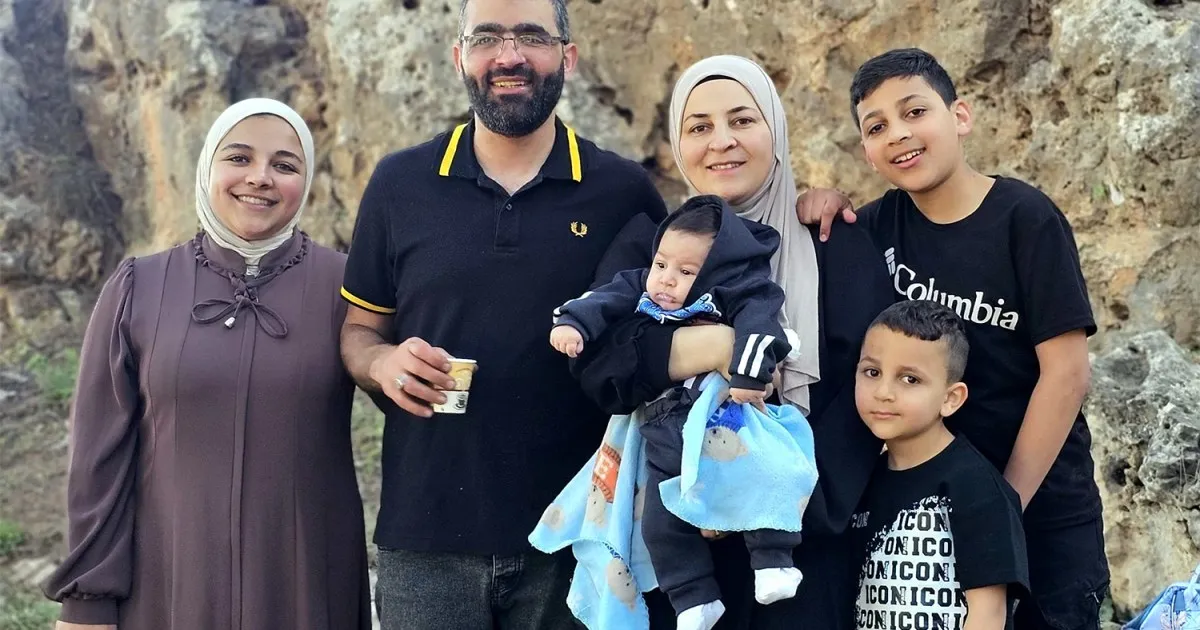
Ben-Gvir oversees prison facilities where Palestinian detainees are abused and neglected.Muath Amarneh, a Palestinian journalist, with his family [Courtesy of Muath Amarneh]Published On 9 Sep 2026When Palestinian photojournalist and former prisoner Muath Amarneh saw Israel’s National Security Minister Itamar Ben-Gvir’s videos gloating over the decrepit conditions endured by imprisoned Palestinians, he thought of what happened before and after the cameras started rolling.“When a figure like that comes to the prisons, they don’t show everything. What they do show is only certain video clips where the arrogance of that figure comes through,” Amarneh told Al Jazeera.Recommended Stories list of 4 itemslist 1 of 4Israeli flags become the latest weapon of settlers in West Bank dominationlist 2 of 4Palestine weekly: Israeli ministers push for depopulation of Gazalist 3 of 4UK bans goods from Israeli West Bank settlements: What that really meanslist 4 of 4Shift in British policy on Israel is palpableend of list“But before and after, the prisoner is subjected to humiliation and beatings they don’t show the public. That whole hour of humiliation, they show half a minute of it, or a minute, or two minutes.”Ben-Gvir, who oversees Israel’s prison system in his role, has spent recent weeks broadcasting what he views as his accomplishments in office.An AI-generated video posted to his social media in August showed well-fed Palestinian men on a conveyor belt entering a detention facility, then emerging emaciated, weeping – captioned “We promised, we delivered”. He deleted it as comparisons to Nazi concentration camps mounted.Days later, he posted footage of himself confronting female prisoners. One told him she had not showered in three days and was not receiving medical treatment. “The good conditions in the prisons are over,” Ben-Gvir told her. “I am directly responsible for everything. I am pleased with these conditions.”Detainees’ testimonies and data from Palestinian rights groups offer a glimpse of what that policy has meant inside Israeli prisons.Amarneh, 39, who now lives in the Dheisheh refugee camp south of Bethlehem, has been arrested twice since the genocidal war on Gaza began, both times under administrative detention.There are now roughly 3,200 administrative detainees – more than double the approximately 1,300 held before October 7, 2023, according to Addameer, a Palestinian prisoners’ advocacy group.Israel and the United States accuse Addameer of supporting “terrorism”, a charge the group denies, and Amarneh’s numerous run-ins with Israeli forces started when he began work as a photojournalist.Muath Amerneh sees family after his release from detention in 2024 [Courtesy of Muath Amarneh]In 2019, Israeli forces shot him with a rubber-coated metal bullet while he was covering Israeli attacks near Hebron and wearing a press vest. A bullet took out his left eye and left shrapnel lodged near his skull.Amarneh was first taken into administrative detention in October 2023, a week after Israel’s genocidal war on Gaza began, and was held for nine months in Megiddo and Nafha prisons.After his release, he deliberately moved away from news work towards documentary work, hoping to reduce his risk of being imprisoned again.Nevertheless, he was arrested again in August 2025 and held for eight months at Ofer prison, still without charge. “My charge was working in media,” he said.‘Then came October 7’Sahar Francis, a lawyer who was the executive director of Addameer, said Ben-Gvir’s nearly four-year tenure as minister responsible for the prison authority did not create the system’s cruelty so much as intensify it. “From his first day overseeing the prison authority, he closed the only two bakeries producing bread for detainees.”“Then came October 7, after which the situation in prisons worsened considerably. Family visits and Red Cross access were suspended, while lawyers were barred for the first four or five months. Clothing, food and books were confiscated, leaving detainees with a single change of clothes,” she added.Amarneh wore the same trousers for 90 days. Health clinics were shuttered. Special units began raiding sections daily, beating detainees – a practice she says has caused multiple deaths in custody.“They were always using torture. But what happened after the genocide is that they came back to conditions similar to the early years of the occupation, on the level of the brutality, the physical abuse, the rape, the harassment,” said Francis.Across his two periods of administrative detention, Amarneh lost 35kg (77 pounds) over nine months.“I lived through the transformation of the prisons – how they were before the war and how they became,” said Amarneh. “The prisons, where life was already hard to begin with, were transformed into places where life became impossible: a place that isn’t fit for human life.”Muath Amerneh with children in the occupied West Bank [Courtesy of Muath Amarneh]By the time of his second arrest in 2025, Amarneh said, he noticed deteriorating conditions in detention facilities.“I never imagined the situation would be worse than the times before. The scale of the humiliation in there was enormous, to an indescribable degree,” he said.Amarneh was stripped of his prescription glasses for six months, and others were deprived of regular access to showers and basic hygiene products. When detainees managed to have a rare shower, they were forced to sit out in the rain immediately afterwards. Prison guards regularly referred to Amarneh and others as animals and cursed their mothers and wives. Often, guards remarked they “should have just killed you”.He remembers guards forbidding prisoners to stand in the sun, telling them “this sun is ours, not yours”. When one detainee simply asked when Eid was taking place, a riot unit stormed into the cell 10 minutes later, beat everyone else inside, and shot the questioner with rubber bullets, “so you won’t dare ask about Eid again”.‘I’m going to die here’To make matters worse, Amarneh’s wife was pregnant while he was held in Ofer prison, with no information about her condition. He only happened to learn by chance later from a lawyer visiting another detainee in his section that his wife had given birth and only found out the child’s name, Osama, two months later.Blankets were forbidden between 5am and 4pm, through the coldest months, leaving the prisoners “the colour of a dead body”, he said.Medical care was all but nonexistent, with one person given the wrong diabetes medication at the wrong dose.When an infection in his leg left Amarneh partly paralysed, he was given minimal treatment only after his lawyer noticed his condition at a court hearing. Later, his eye implant became dislodged after a wound reopened, but prison authorities denied him a hospital transfer, saying his condition was “not seriously dangerous”.“That’s it, I’m going to die here,” he remembered thinking. When the pain from the beatings and infections became unbearable, guards offered a single painkiller tablet to be divided among 11 detainees.The United Nations Working Group on Arbitrary Detention ruled in 2024 that Amarneh’s first detention was unlawful and discriminatory. Press freedom organisations have also raised his repeated imprisonment as part of a broader pattern targeting Palestinian journalists. But none of it stopped his second arrest, 10 months later.Francis said international bodies like the UN’s Working Group “don’t have the power to impose their decisions on the Israeli side”.“At the end, it’s an opinion — a decision that needs more political will in order to be implemented,” she added.
SRCAl Jazeera
LANGEN
LEANCenter
WORDS1 195
ENT11
WED · 2026-09-09 · 17:04 GMTBRIEF NSR-2026-0909-110026
NSR-2026-0909-110026News Report·EN·Human Rights
Inside Israel’s prisons, where Ben-Gvir’s cruelty is policy
Israeli National Security Minister Itamar Ben-Gvir oversees Israeli prisons where Palestinian detainees are reportedly subjected to inhumane conditions, abuse, and neglect. Since the war on Gaza began, the number of administrative detainees has more than doubled.
Al Jazeera StaffAl JazeeraFiled 2026-09-09 · 17:04 GMTLean · CenterRead · 5 min
Al JazeeraFIG 01
Reading time
5min
Word count
1 195words
Sources cited
2cited
Entities identified
11entities
Quality score
100%
§ 01
Briefing Summary
AI-generatedNEWSAR · AI
Israeli National Security Minister Itamar Ben-Gvir oversees Israeli prisons where Palestinian detainees are reportedly subjected to inhumane conditions, abuse, and neglect. Since the war on Gaza began, the number of administrative detainees has more than doubled. Testimonies from former detainees like photojournalist Muath Amarneh describe severe humiliation, beatings, and drastic reductions in living conditions, including limited access to showers, medical treatment, and personal belongings. Rights groups state that Ben-Gvir's tenure has intensified existing cruelty, with measures like closing bakeries, suspending family visits, and confiscating items, leading to a significant deterioration in the well-being of prisoners.
Confidence 0.90Sources 2Claims 5Entities 11
§ 02
Article analysis
Model · rule-basedFraming
Human Rights
Social Justice
Tone
Mixed Tone
AI-assessed
CalmNeutralAlarmist
Factuality
0.40 / 1.00
Mixed
LowHigh
Sources cited
2
Limited
FewMany
§ 03
Key claims
5 extracted01
Ben-Gvir stated, 'The good conditions in the prisons are over. I am directly responsible for everything. I am pleased with these conditions.'
quoteItamar Ben-Gvir
Confidence
1.00
02
Palestinian journalist Muath Amarneh states that prisoners are subjected to humiliation and beatings before and after cameras are rolling.
quoteMuath Amarneh
Confidence
1.00
03
Israeli forces shot Muath Amarneh with a rubber-coated metal bullet in 2019, causing him to lose his left eye.
factualMuath Amarneh
Confidence
0.90
04
The number of administrative detainees in Israeli prisons has more than doubled since October 7, 2023, reaching approximately 3,200.
statisticAddameer
Confidence
0.90
05
Ben-Gvir oversees prison facilities where Palestinian detainees are abused and neglected.
factual
Confidence
0.70
§ 04
Full report
5 min read · 1 195 words§ 05
Entities
11 identifiedKey playerOppositionContextPositiveNeutralNegative
Organizations2
Locations5
§ 06
Keywords & salience
10 termsisraeli prisons
1.00
palestinian detainees
1.00
itamar ben-gvir
0.90
administrative detention
0.80
prison conditions
0.80
human rights abuses
0.70
cruelty
0.60
policy
0.50
muath amarneh
0.40
gaza war
0.40
§ 07
Topic connections
Interactive graph Network visualization showing 51 related topics
View Full Graph Person Organization Location Event|Click node to navigate|Edge numbers = shared articles