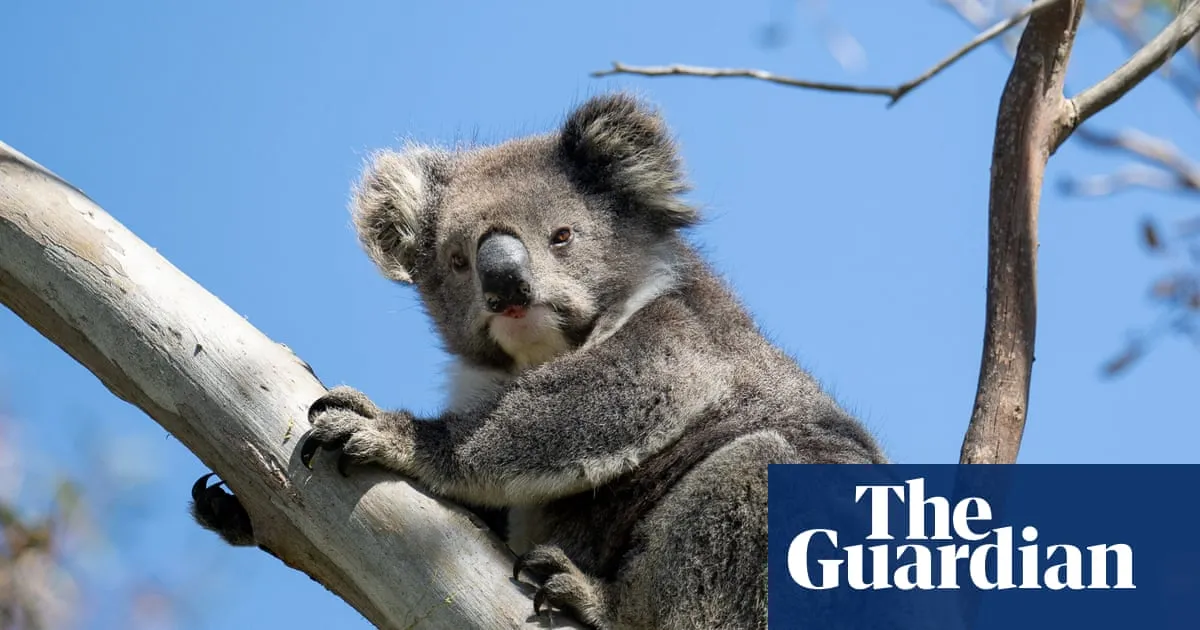
An overabundance in some local koala populations had created a perception that Victoria’s overall population was thriving, researchers say. Photograph: Penny Stephens/The Guardian View image in fullscreen An overabundance in some local koala populations had created a perception that Victoria’s overall population was thriving, researchers say. Photograph: Penny Stephens/The Guardian Victoria’s koalas in chronically poor health and population is half what was previously estimated Exclusive: State government delayed releasing major report into the health of the koala population for more than 12 months Follow our Australia news live blog for latest updates Get our breaking news email, free app or daily news podcast The Victorian government sat on a report for more than 12 months that found the state’s koala population was in chronically poor health. The review of the state’s koala populations, led by state science agency the Arthur Rylah Institute in conjunction with scientists from major universities, was completed for the Victorian government in June 2025. It estimated there were 217,000 koalas in the state in 2023 and 224,800 in 2024 – a dramatic drop from past estimates of 460,000, which the report attributed to different survey and modelling methodology, rather than an actual population decline. As part of the research, scientists conducted health and disease assessments on 68 koalas, with 29 of the koalas (43%) found to be in such poor health they “were euthanised on welfare grounds”. The report warned the surveys found “a higher-than-expected proportion of koalas from seven geographically distinct regions in a state of chronically poor health and welfare”. The government published the report on Wednesday morning as the new environment minister, Jaclyn Symes, announced $2.6m for koala conservation, including for habitat restoration and research into koala health and genetics. Leanne Wicker, a wildlife veterinarian who was one of the authors on the report, said researchers had been shocked by the poor health of some of the koalas they found in the field. “While we were doing this research we knew we were seeing something that urgently needed attention and understanding,” she said. “And it’s been very difficult to get the support and resources needed because the report hadn’t been made public.” She said the overabundance of certain local Victorian koala populations – such as those at French Island and in Victoria" class="entity-link entity-location" data-entity-id="202115" data-entity-type="location">western Victoria – had created a perception that the state’s overall koala population was thriving. “What we’ve missed is we have a crisis in our koala populations in Victoria because we have a very concerning level of poor health and welfare.” Deakin University’s Desley Whisson, another author on the report, said while the 2024 population estimate of about 225,000 koalas “seems like a lot, most of those koalas are in areas where there are high densities of animals”. “There’s large parts of the state where koalas occur at low densities and are probably in poor health,” she said. She said the government needed to turn its attention to areas with low numbers “because we could be losing koalas in some parts of the state without even knowing”. The report used systematic visual and acoustic surveys in 2023 and 2024 to monitor koalas at 182 sites. That data was then used to estimate the overall abundance and distribution of Victoria’s koala population. The report states the drop in the estimated population from previous estimates of 460,000 was due to changes in the methodology used. It said the new data also represented the first time koala populations had been surveyed statewide. Of the 68 koalas sampled for health and welfare checks, 39 healthy individuals were rereleased, with healthy animals present at all of the locations sampled, according to the report. But 29 koalas were euthanised due to ill health. Koalas that were euthanised were more likely to have poor coat condition, dental disease and “wet bottom” (an advanced urinary tract infection, most commonly caused by chlamydia), and were more likely to occur in areas with high koala densities. Dental disease was recorded in 37% of koalas across all life stages and regions, except Mallacoota, according to the report. The report states that these findings raised concerns “for the health of Victorian koalas”. “Clinical signs consistent with chronic ill-health were observed across all life stages, suggesting that multiple individual, environmental and demographic stressors may be contributing to prolonged physiological stress within these populations,” the scientists wrote. Animal Justice party MP Georgie Purcell said the research painted a grim picture of the health and wellbeing of Victoria’s koalas. “It is clear that we need to use every lever possible to ensure they’re given the best chance at survival, or we will soon be just like the many states across Australia where koalas are listed as endangered,” she said. The report also found that 23% of Victoria’s koala population now lived in the state’s blue gum plantation estate “where they occur at much higher density than koalas in neighbouring native forest”. “Given the high estimated density of koalas within blue gum plantations, changes to the plantation estate size and/or stand ages may result in significant changes to population size,” it states. Jessica Robertson, from advocacy group the koala Alliance, called Wednesday’s funding announcement “a calculated political rescue mission for Labor, not for koalas”. “Sitting on critical ecological data for over a year while koalas continued to suffer and disappear is a shocking failure of transparency and responsibility,” she said. A Victorian environment department spokesperson said since receiving the report it had been working with other agencies, and consulting external groups, “to prioritise actions and design projects that address its findings and recommendations”. A spokesperson said Wednesday’s funding announcement was the result of this work. The environment department’s spokesperson said the timing of the report’s public release had not affected “important work” the government was already doing to manage the health of the state’s koalas. Explore more on these topics Victoria Wildlife Animals Conservation news Share Reuse this content
SRCThe Guardian - World News
LANGEN
LEANCenter-Left
WORDS981
ENT9
WED · 2026-09-09 · 20:23 GMTBRIEF NSR-2026-0909-110086
NSR-2026-0909-110086News Report·EN·Environmental
Victoria’s koalas in chronically poor health and population is half what was previously estimated
A Victorian government-commissioned report, completed in June 2025 but delayed in release for over a year, reveals that the state's koala population is in chronically poor health. Scientists estimated the population at around 225,000 in 2023-2024, significantly lower than previous estimates, though this is attributed to updated methodology.
Lisa Cox Environment and climate correspondentThe Guardian - World NewsFiled 2026-09-09 · 20:23 GMTLean · Center-LeftRead · 4 min
The Guardian - World NewsFIG 01
Reading time
4min
Word count
981words
Sources cited
3cited
Entities identified
9entities
Quality score
100%
§ 01
Briefing Summary
AI-generatedNEWSAR · AI
A Victorian government-commissioned report, completed in June 2025 but delayed in release for over a year, reveals that the state's koala population is in chronically poor health. Scientists estimated the population at around 225,000 in 2023-2024, significantly lower than previous estimates, though this is attributed to updated methodology. Health assessments of 68 koalas found 43% were euthanized due to poor welfare, with dental disease and urinary tract infections being common issues. Researchers noted that localized overabundance in some areas masked a broader crisis of poor health and welfare across the state. The government has announced $2.6 million for koala conservation efforts.
Confidence 0.90Sources 3Claims 5Entities 9
§ 02
Article analysis
Model · rule-basedFraming
Environmental
Human Interest
Tone
Mixed Tone
AI-assessed
CalmNeutralAlarmist
Factuality
0.80 / 1.00
Factual
LowHigh
Sources cited
3
Well sourced
FewMany
§ 03
Key claims
5 extracted01
An overabundance in some local koala populations created a false perception of overall population health.
factualLeanne Wicker
Confidence
1.00
02
The Victorian government delayed releasing a major koala health report for over 12 months.
factualArticle
Confidence
1.00
03
43% of koalas assessed (29 out of 68) were euthanized on welfare grounds due to poor health.
statisticReport authors
Confidence
1.00
04
A significant proportion of koalas assessed were in chronically poor health and welfare.
factualReport authors
Confidence
1.00
05
Victoria's koala population is half what was previously estimated, with current estimates around 225,000.
statisticArthur Rylah Institute and university scientists
Confidence
1.00
§ 04
Full report
4 min read · 981 words§ 05
Entities
9 identifiedKey playerOppositionContextPositiveNeutralNegative
Organizations3
Topics1
§ 06
Keywords & salience
8 termskoala population
1.00
koala health
1.00
wildlife conservation
0.90
victorian government
0.80
habitat restoration
0.70
welfare grounds
0.60
research report
0.50
genetics research
0.40
§ 07
Topic connections
Interactive graph Network visualization showing 51 related topics
View Full Graph Person Organization Location Event|Click node to navigate|Edge numbers = shared articles