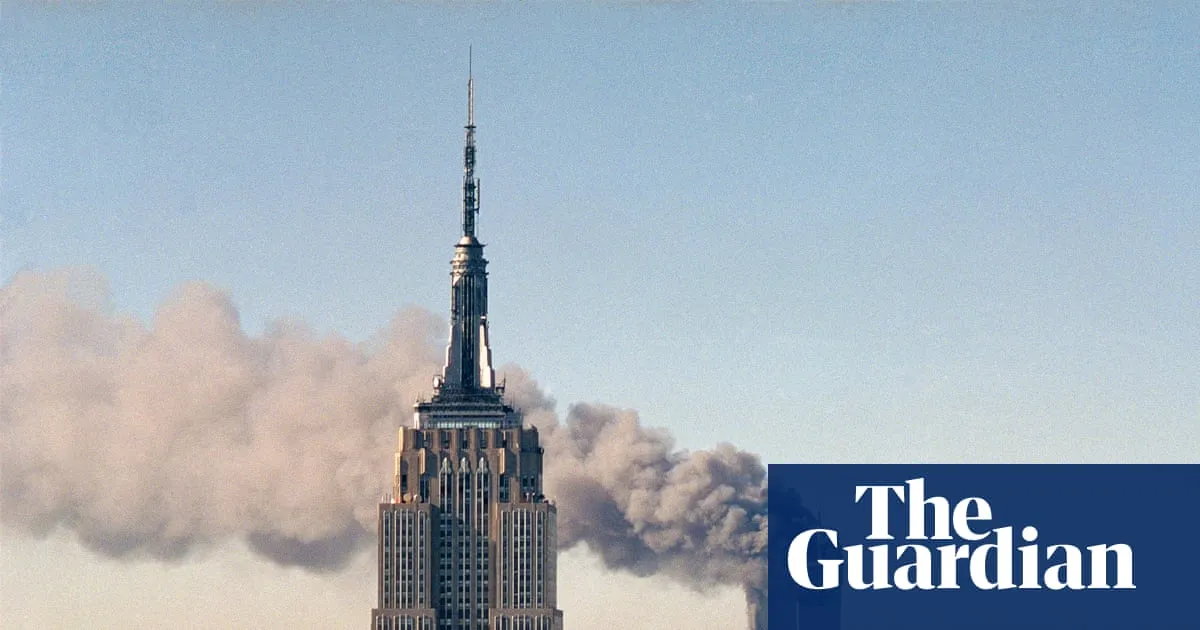
The US faces growing challenges in countering international terrorism as resources are diverted to other threats, experienced security officials leave and “complacency” spreads, experts have warned.It is 25 years this week since the 9/11 attacks launched by Osama bin Laden’s al-Qaida on New York and Washington, which killed about 3,000 people and led to decades of conflict, radicalisation and instability across the Middle East and beyond.Though there have been no successful attacks on anything like a similar scale in the US since, and only a small number inspired by extremist Islamist ideologies, many are warning of growing risks.Some blame Donald Trump for politicising counter-terrorism efforts, making ill-considered and inappropriate appointments to senior intelligence posts and diverting attention from more urgent threats with a campaign against drug cartels.Members of the Mexican national guard and army patrol the border wall between Mexico and the US. Trump has shifted focus and resources by designating criminal groups such as the Mexican drug cartels as foreign terrorist organisations. Photograph: José Luis González/ReutersBruce Hoffman, a terrorism expert at Georgetown University, said: “I remember [9/11] and this pure chaos and pandemonium in the streets and I remember thinking that we would never lower our guard again and complacency against a threat that is episodic but when it is revealed highly consequential.”This year, Hoffmann told the US House permanent select committee on intelligence that “the counter-terrorism architecture built after 9/11 is eroding … through budget cuts, personnel losses, and the diminution of terrorism as a national security priority”.This was “recreating the conditions of under-resourcing and institutional neglect that preceded the 2001 attacks. Moreover, the terrorist threat to Americans has both changed and grown.”Analysts are split over whether the lack of obvious recent efforts by al-Qaida to strike in the US suggests a lack of ambition or disguises a careful, strategic plan to wait for the right opportunity.Last month, a UN report based on intelligence supplied by member states’ monitoring said the “al-Qaida senior leadership remained marginalized” while “its capability and intent to conduct external operations remained unclear”.Colin Clarke, the executive director of the Soufan Center, said the US intelligence community was experiencing a “basket of factors” including “funding, personnel [and] complacency”.“There is a certain amount of fatigue. We did the global war on terror for 20 years and people were keen to pivot to something else,” he said.Most analysts support a 2018 shift away from terrorism to focus on “long-term, strategic competition by … revisionist powers” such as Russia and China. But choices made by the Trump administration have exacerbated existing problems.“There is a real lack of morale because of the way the president has treated the intelligence community … the quiet professionals are really demoralised,” Clarke said.Intelligence veterans criticised the appointments of Tulsi Gabbard and Kash Patel to high-profile national intelligence roles. Photograph: Andrew Harnik/Getty ImagesIntelligence veterans criticised the appointments of Tulsi Gabbard as director of national intelligence and Kash Patel as director of the FBI, accusing both of lacking sufficient top-level experience in law enforcement.For the 2026 financial year, funding requested for the principal agencies of the civilian intelligence community totalled $81bn. But the designation of criminal groups such as the Mexican drug cartels as foreign terrorist organisations has stretched resources.An updated counter-terrorism strategy released in May by the Trump administration has been controversial. Many intelligence experts and analysts have highlighted how the strategy downplays the rising threat from rightwing extremism in the US and stresses instead the battle against leftwing violence, cartels and gangs.“It is a very partial document [and] raises the question: are you protecting America or people who agree with you?” said Clarke. “We have finite resources now. You don’t have a blank cheque like after 9/11 and at the same time it’s not just Sunni jihadist groups which are considered the threat.”skip past newsletter promotionafter newsletter promotionDevorah Margolin at the Washington Institute for Near East Policy said that the new strategy was a significant shift. “That is not to say that counter-terrorism policies cannot change as the landscape changes, but this year’s strategy appears more focused on a political agenda than the reality of the threat,” Margolin added.People in lower Manhattan watch smoke billow from the World Trade Center on 9/11. One expert said the focus has shifted from terrorism to threats from China and Russia. Photograph: Amy Sancetta/AP“While the strategy still acknowledged the threat posed by groups like the Islamic State and al-Qaida, it also expanded definitions of counter-terrorism. It sought to use the vast counter-terrorism bureaucracy that has been built over the last two decades for its own political agenda. This has spread dwindling counter-terrorism resources even thinner.”The loss of experienced personnel is a significant problem, experts say, with many criticising the dismantlement last year of programmes aimed at countering extremist ideologies and preventing radicalisation.Don Rassler, the director of strategic initiatives at the Combating Terrorism Center at West Point, said that terrorism became less of a priority as strategic focus shifted to real or potential threats from China and Russia, and warned the US needed to be careful the intelligence community did not “revert back to the dynamics that led to an event like 9/11”.The 2001 attacks were the culmination of a series of attacks launched by Bin Laden on US targets. In 1996 and again in 1998, 10 years after founding al-Qaida, Bin Laden “declared war” on America with statements issued from a base in Afghanistan, listing grievances including US backing for “tyrannical, apostate” regimes in the Middle East such as in his native Saudi Arabia amid a broader diatribe against what he called western aggression against Muslims worldwide.Shortly afterwards, double bombings demolished two US embassies in east Africa and a suicide attack nearly sank a US warship off Yemen in 2000. The failure of senior officials including George W Bush to act on multiple intelligence warnings was highlighted by the congressional investigation into the 9/11 attacks, as well as the failure of the FBI and the CIA to share with each other vital information that might have prevented the atrocity.The Freedom Tower rises above one of the 9/11 memorial reflecting pools. Photograph: Spencer Platt/Getty ImagesAn al-Qaida effort to blow up a passenger plane as it prepared to land in Detroit in 2009 was averted only at the last minute when explosives failed to detonate as intended. An attack a decade later by a single “self-radicalised” Saudi Arabian air force officer in Florida which killed three was linked to the organisation’s affiliate in Yemen.Since then, there have been more than 100 attacks in the US by violent Islamic extremists linked to the broader “jihadi” movement, according to a count by the Center for Strategic and International Studies.Rassler said extremist Islamist groups were still a key priority but with fewer resources and fewer people the US had “to accept more terrorist risk”.“There hasn’t been another attack … but there is a danger of believing that the [terrorist] threat isn’t there. The threat is different in many ways from 10 years ago and we have to be as clear-eyed as possible about it.”
SRCThe Guardian - World News
LANGEN
LEANCenter-Left
WORDS1 172
ENT12
THU · 2026-09-10 · 05:00 GMTBRIEF NSR-2026-0910-110169
NSR-2026-0910-110169News Report·EN·National Security
‘Institutional neglect’: 25 years on from 9/11, experts sound alarm over US counter-terror efforts
Twenty-five years after the 9/11 attacks, experts warn that the US counter-terrorism efforts are weakening due to budget cuts, loss of experienced officials, and a shift in focus to other threats. This "institutional neglect" is recreating conditions similar to those before 9/11, experts say.
Jason Burke International security correspondentThe Guardian - World NewsFiled 2026-09-10 · 05:00 GMTLean · Center-LeftRead · 5 min
The Guardian - World NewsFIG 01
Reading time
5min
Word count
1 172words
Sources cited
3cited
Entities identified
12entities
Quality score
100%
§ 01
Briefing Summary
AI-generatedNEWSAR · AI
Twenty-five years after the 9/11 attacks, experts warn that the US counter-terrorism efforts are weakening due to budget cuts, loss of experienced officials, and a shift in focus to other threats. This "institutional neglect" is recreating conditions similar to those before 9/11, experts say. The Trump administration's decisions, including politicizing counter-terrorism and diverting resources to combat drug cartels, have exacerbated these issues. While the threat from groups like al-Qaida remains, the US intelligence community faces fatigue and a diminished priority for terrorism as a national security concern, potentially increasing the risk of future attacks.
Confidence 0.90Sources 3Claims 5Entities 12
§ 02
Article analysis
Model · rule-basedFraming
National Security
Political Strategy
Tone
Mixed Tone
AI-assessed
CalmNeutralAlarmist
Factuality
0.60 / 1.00
Mixed
LowHigh
Sources cited
3
Well sourced
FewMany
§ 03
Key claims
5 extracted01
The terrorist threat to Americans has both changed and grown.
quoteBruce Hoffman
Confidence
0.90
02
The counter-terrorism architecture built after 9/11 is eroding through budget cuts, personnel losses, and diminished priority.
quoteBruce Hoffman
Confidence
0.90
03
The US intelligence community is experiencing a 'basket of factors' including funding, personnel, and complacency.
quoteColin Clarke
Confidence
0.80
04
US counter-terror efforts face growing challenges due to diverted resources, experienced official departures, and spreading complacency.
factualexperts
Confidence
0.80
05
Al-Qaida's senior leadership remained marginalized, with unclear capability and intent for external operations.
factualUN report
Confidence
0.70
§ 04
Full report
5 min read · 1 172 words§ 05
Entities
12 identifiedKey playerOppositionContextPositiveNeutralNegative
People3
Organizations3
Locations5
§ 06
Keywords & salience
10 termscounter-terrorism efforts
1.00
institutional neglect
0.90
9/11 attacks
0.80
terrorism threat
0.70
al-qaida
0.70
complacency
0.60
security officials
0.60
national security priority
0.50
drug cartels
0.40
intelligence community
0.40
§ 07
Topic connections
Interactive graph Network visualization showing 11 related topics
View Full Graph Person Organization Location Event|Click node to navigate|Edge numbers = shared articles