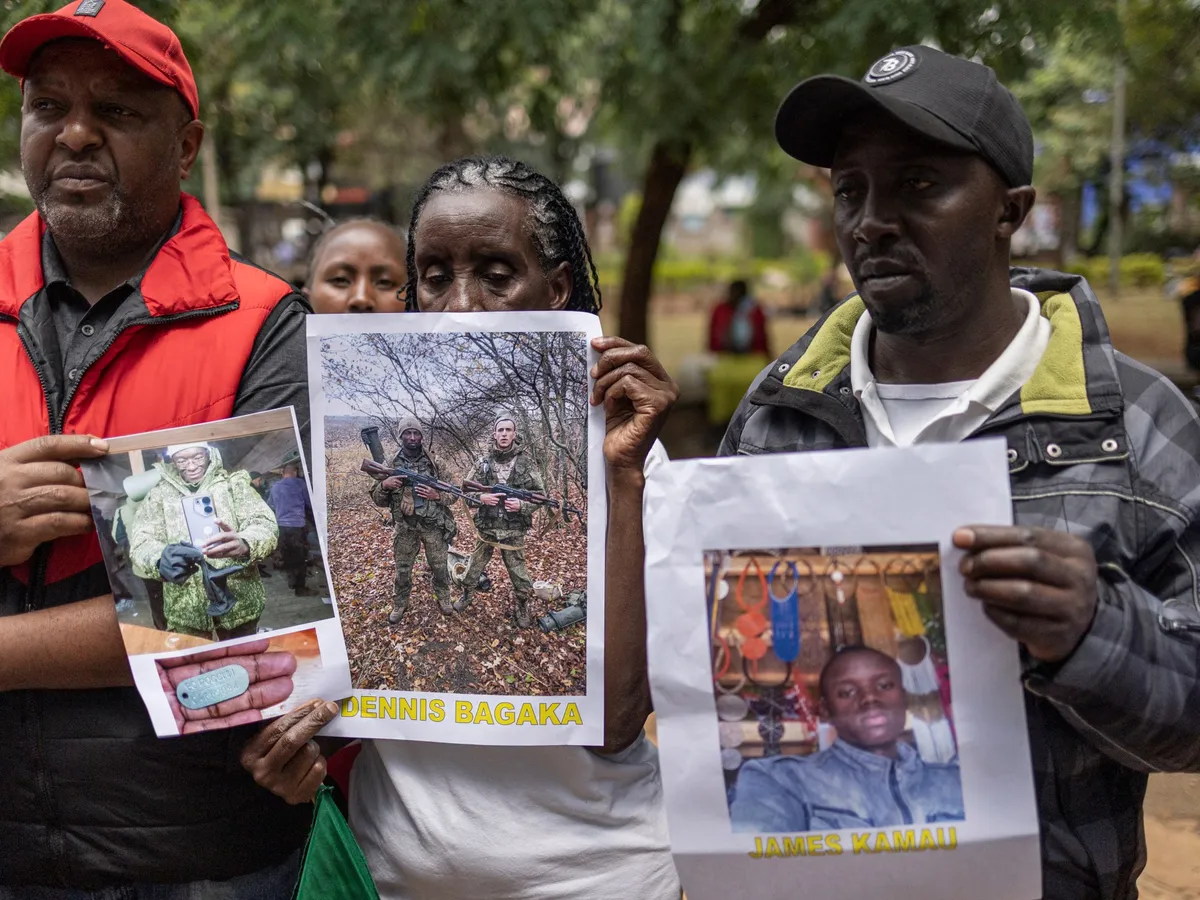
Report reveals foreign nationals were misled with job offers, then forced into Russia’s army upon arrival.A new report by Amnesty International has accused Russia of tricking foreigners into fighting on Ukraine’s front lines in what amounts to “human trafficking”.Victims from Brazil, Colombia, Sri Lanka and South Africa were duped into travelling to Russia to take up well-paid civilian or non-combat jobs, then forced to join the Russian army on arrival, according to the report released on Thursday.Recommended Stories list of 3 itemslist 1 of 3‘Our children were sold off’: The South Africans sent to fight Russia’s warlist 2 of 3Zimbabweans lured into Russia’s war as families plead for their returnlist 3 of 3Russia ‘looking for new soldiers’; Kyiv claims 83,000 dead so far in 2026end of listRussian recruiters also targeted migrants and refugees in Russia and coerced them into joining the military, the report said.“Amnesty’s research demonstrates how Russia’s Armed Forces are bolstering their ranks with economically vulnerable foreign nationals and using them as cannon fodder in the Ukraine" class="entity-link entity-event" data-entity-id="202560" data-entity-type="event">war of aggression against Ukraine,” said Agnes Callamard, Amnesty International’s secretary general.“The level of exploitation and coercion involved led us to conclude that in many cases this amounts to human trafficking, as defined under the [United Nations] Palermo Protocol,” Callamard added.Fraud and deceptionAmnesty International interviewed prisoners of war at two Ukrainian camps between 2024 and 2026.The rights group also spoke with foreign nationals currently serving with Russian forces and members of their families as well as lawyers, human rights activists and journalists.It found local agents and misleading online job s were used to deceive foreign nationals in their home countries.A South African man who applied online for a driving job in Poland was told to fly to Moscow to pick up a truck and drive it to Poland. His wife told Amnesty International: “Upon arrival to Moscow, everything was taken from him. He was told that he would not be going to Poland and that he is becoming a soldier.”
SRCAl Jazeera
LANGEN
LEANCenter
WORDS328
ENT12
THU · 2026-09-10 · 19:02 GMTBRIEF NSR-2026-0910-110350
NSR-2026-0910-110350News Report·EN·Human Rights
Amnesty accuses Russia of trafficking foreigners to fight in Ukraine
Amnesty International has released a report accusing Russia of human trafficking by tricking foreign nationals into fighting in Ukraine. The report, based on interviews with prisoners of war, serving soldiers, and their families between 2024 and 2026, details how individuals from countries like Brazil, Colombia, Sri Lanka, and South Africa were lured to Russia with promises of well-paid civilian jobs.
Al Jazeera StaffAl JazeeraFiled 2026-09-10 · 19:02 GMTLean · CenterRead · 2 min
Al JazeeraFIG 01
Reading time
2min
Word count
328words
Sources cited
1cited
Entities identified
12entities
Quality score
100%
§ 01
Briefing Summary
AI-generatedNEWSAR · AI
Amnesty International has released a report accusing Russia of human trafficking by tricking foreign nationals into fighting in Ukraine. The report, based on interviews with prisoners of war, serving soldiers, and their families between 2024 and 2026, details how individuals from countries like Brazil, Colombia, Sri Lanka, and South Africa were lured to Russia with promises of well-paid civilian jobs. Upon arrival, they were allegedly forced to join the Russian army. The report also states that Russian recruiters coerced migrants and refugees already in Russia into military service. Agnes Callamard, Amnesty International's secretary general, described this practice as bolstering Russia's ranks with economically vulnerable foreigners used as "cannon fodder" and amounting to human trafficking under the UN Palermo Protocol.
Confidence 0.90Sources 1Claims 5Entities 12
§ 02
Article analysis
Model · rule-basedFraming
Human Rights
Conflict
Tone
Mixed Tone
AI-assessed
CalmNeutralAlarmist
Factuality
0.70 / 1.00
Factual
LowHigh
Sources cited
1
Limited
FewMany
§ 03
Key claims
5 extracted01
The exploitation and coercion involved in these cases amount to human trafficking as defined by the UN Palermo Protocol.
quoteAgnes Callamard (Amnesty International)
Confidence
0.90
02
Victims from Brazil, Colombia, Sri Lanka, and South Africa were misled with job offers and forced to join the Russian army.
factualAmnesty International
Confidence
0.90
03
Amnesty International accuses Russia of tricking foreigners into fighting on Ukraine's front lines, amounting to human trafficking.
factualAmnesty International
Confidence
0.90
04
A South African man was recruited for a driving job in Poland but was forced to become a soldier upon arrival in Moscow.
factualAmnesty International (via wife of victim)
Confidence
0.80
05
Russian recruiters coerced migrants and refugees within Russia into joining the military.
factualAmnesty International
Confidence
0.80
§ 04
Full report
2 min read · 328 words§ 05
Entities
12 identifiedKey playerOppositionContextPositiveNeutralNegative
Locations6
§ 06
Keywords & salience
9 termshuman trafficking
1.00
russia ukraine war
0.90
amnesty international
0.80
foreign nationals
0.70
deception
0.60
coercion
0.60
exploitation
0.50
recruitment
0.50
palermo protocol
0.40
§ 07
Topic connections
Interactive graph Network visualization showing 42 related topics
View Full Graph Person Organization Location Event|Click node to navigate|Edge numbers = shared articles