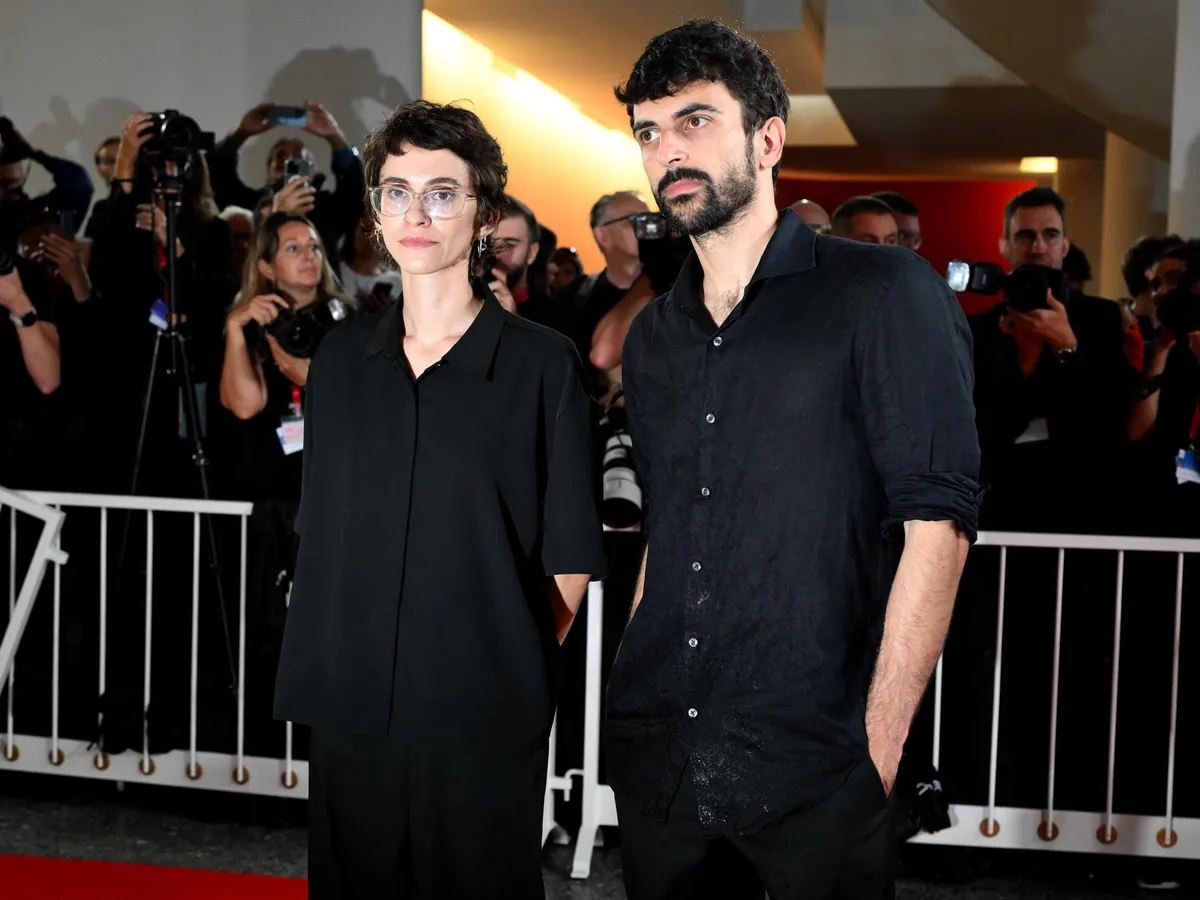
Venice Film Festival honours NAZA, an expose on Israel’s use of AI systems in Gaza, with a lengthy standing ovation.A film documenting Israel’s use of AI-powered systems to target Palestinians in Gaza has received a 25-minute standing ovation at its premiere at the Venice Film Festival.The 80-minute film, NAZA, was directed by Israeli filmmakers Yuval Abraham and Rachel Szor, who won an Oscar in 2025 for No Other Land, a documentary on Israeli settler pogroms in the occupied West Bank, made with Palestinian co-directors Basel Adra and Hamdan Ballal.Recommended Stories list of 3 itemslist 1 of 3Israel will never stop me speaking up for Palestinelist 2 of 3Jerusalem Daily: Israeli strikes devastate Gazalist 3 of 3Gaza students with overseas university offers, scholarships remain trappedend of listThe result of a nearly three-year investigation, the film is built on testimony from Israeli military and intelligence sources who spoke on the condition that their identities be concealed. Their voices and faces were digitally altered, and they were filmed at night on Tel Aviv rooftops.“We are letting the soldiers and the officers speak about what they did,” Abraham told the AFP news agency. “The goal was very simple: we wanted to hear, in as much detail as possible, how the systems of killing in Gaza looked, how they operated,” he added.The film’s title is a Hebrew intelligence euphemism used to indicate the number of civilians expected to be killed in a given air strike. Interviewees describe an AI-assisted system known as “Lavender”, which drew on Gaza’s monitored telecommunications network – phone calls, movements and interactions – to identify assassination targets.“It was done on a mass scale, like a factory,” one interviewee says in the film, while another involved in identifying targets says the process is “like a video game, because everything is done remotely” and is “insanely fun”.Smoke and fire rise after an Israeli strike on a house in Khan Younis, southern Gaza, on September 9, 2026 [Bashar Taleb/AFP]Some interviewees spoke about the destruction of civilian homes, disregard for humanitarian law and a “general atmosphere” of “hatred” towards Palestinians.
SRCAl Jazeera
LANGEN
LEANCenter
WORDS345
ENT12
FRI · 2026-09-11 · 00:14 GMTBRIEF NSR-2026-0911-110404
NSR-2026-0911-110404News Report·EN·Conflict
Israeli film on Gaza receives 25-minute ovation at Venice premiere
The Israeli film "NAZA," which investigates Israel's use of AI systems in Gaza, premiered at the Venice Film Festival to a 25-minute standing ovation. Directed by Israeli filmmakers Yuval Abraham and Rachel Szor, the 80-minute documentary is based on nearly three years of investigation and testimony from anonymous Israeli military and intelligence sources.
Al Jazeera StaffAl JazeeraFiled 2026-09-11 · 00:14 GMTLean · CenterRead · 2 min
Al JazeeraFIG 01
Reading time
2min
Word count
345words
Sources cited
2cited
Entities identified
12entities
Quality score
100%
§ 01
Briefing Summary
AI-generatedNEWSAR · AI
The Israeli film "NAZA," which investigates Israel's use of AI systems in Gaza, premiered at the Venice Film Festival to a 25-minute standing ovation. Directed by Israeli filmmakers Yuval Abraham and Rachel Szor, the 80-minute documentary is based on nearly three years of investigation and testimony from anonymous Israeli military and intelligence sources. The film reveals an AI-assisted targeting system called "Lavender," which allegedly used data from Gaza's telecommunications network to identify assassination targets on a large scale. Interviewees describe the process as akin to a "video game" and discuss the destruction of civilian homes and disregard for humanitarian law. The film's title, "NAZA," is described as a Hebrew intelligence euphemism for the expected number of civilian casualties in an airstrike.
Confidence 0.90Sources 2Claims 5Entities 12
§ 02
Article analysis
Model · rule-basedFraming
Conflict
Human Rights
Tone
Mixed Tone
AI-assessed
CalmNeutralAlarmist
Factuality
0.70 / 1.00
Factual
LowHigh
Sources cited
2
Limited
FewMany
§ 03
Key claims
5 extracted01
One interviewee involved in target identification described the process as 'like a video game, because everything is done remotely' and 'insanely fun'.
quoteInterviewee in NAZA
Confidence
1.00
02
The film NAZA is built on testimony from Israeli military and intelligence sources who spoke on condition of anonymity, with digitally altered voices and faces.
factual
Confidence
1.00
03
An Israeli film titled NAZA, documenting Israel's use of AI systems in Gaza, received a 25-minute standing ovation at the Venice Film Festival.
factual
Confidence
1.00
04
Some interviewees spoke about the destruction of civilian homes, disregard for humanitarian law, and a 'general atmosphere' of 'hatred' towards Palestinians.
factualInterviewees in NAZA
Confidence
0.90
05
Interviewees describe an AI-assisted system known as 'Lavender' used to identify assassination targets by analyzing Gaza's telecommunications network.
factualInterviewees in NAZA
Confidence
0.90
§ 04
Full report
2 min read · 345 words§ 05
Entities
12 identifiedKey playerOppositionContextPositiveNeutralNegative
People4
Locations5
§ 06
Keywords & salience
10 termsgaza
1.00
ai systems
1.00
venice film festival
0.90
naza
0.90
israeli filmmakers
0.80
targeting palestinians
0.80
lavender system
0.70
military intelligence
0.60
humanitarian law
0.50
civilian homes
0.40
§ 07
Topic connections
Interactive graph Network visualization showing 51 related topics
View Full Graph Person Organization Location Event|Click node to navigate|Edge numbers = shared articles