Frontline activists and leaders in the fight against Female Genital Mutilation, which has affected more than 230 million women and girls worldwide, have welcomed an unprecedented $15.5m (£11.4m) fund aimed at creating “unstoppable momentum” to finally end the practice.The launch of the fund comes as women’s rights are increasingly under attack and donor funding is in sharp decline, particularly for work led by FGM survivors in local communities. It is thought to be the largest single philanthropic contribution to ending the practice of FGM.The United Nations has set a goal of elimination by by 2030, but progress is not on track as funding declines and legal protections are challenged.Funding received by the largest initiative to end the practice – a joint programme operated in 18 countries by the UN’s sexual and reproductive health agency, UNFPA, and the UN humanitarian organisation for children, Unicef – fell by 45% last year, from $29.6m to $16.3m.The Her Horizon Fund has been seeded with $14m from the Wallace Global Fund, plus an additional $1.5m contribution from an anonymous donor, making $15.5m in total.The aim of Her Horizon Fund, set up by the US-based Wallace Global Fund, is to pool $100m from donors to reach a “tipping point” towards ending FGM within a generation.Ifrah Ahmed, a Somali-Irish activist and survivor of FGM who set up the Ifrah Foundation to end practice in Somalia, where it is nearly universal, said: “By giving $14m, the global fund will ensure activists can continue their work in this area.”UN funding worth $300,000 to her organisation was cut by UNFPA last year, but Ahmed managed to raise money from elsewhere. The Ifrah Foundation has helped push for anti-FGM legislation in Somalia, she said.Three of Somalia’s seven federal member states have enacted anti-FGM laws, while in two other states bills banning the practice have been endorsed by cabinet and are awaiting parliamentary approval, albeit with opposition by religious leaders in some areas.“If we don’t continue to raise money, the dream where this practice will end will have died for young girls,” she added.Advocates warn that while international recognition of FGM as a human rights violation has grown, and countries such as Burkina Faso, The Gambia and Kenya have criminalised the practice, progress remains fragile.In recent years, survivors and frontline groups have been trying to protect gains made over several decades.The Gambia’s supreme court, for instance, is considering a constitutional challenge to the country’s 2015 ban on Female Genital Mutilation and cutting. The case follows a 2024 parliamentary effort to repeal the ban, which lawmakers rejected after months of debate, amid strong resistance from women’s rights groups. In Sierra Leone, the new Child Rights Act does not prohibit FGM, despite sustained campaigning from rights groups.Susan Gibbs, the Wallace Global Fund’s senior adviser on women’s rights and FGM, said: “Female Genital Mutilation is a global crisis, an extreme manifestation of gender-based violence and violence against children, and a public health emergency.“There has been decades of progress, and UN data indicates declines in prevalence in a number of countries. But there have also been anti-rights pushback and political crises. Obviously, donor funding is in decline. So it’s a mixed picture.”skip past newsletter promotionafter newsletter promotionShe added: “We’re at this critical inflection point. Most frontline organisations have been absolutely starved for resources, and so more direct funding would allow them to sustain and scale [up] their work.”Gibbs, who attended a Justice for Girls global gathering in Kenya earlier this month, where the fund was officially launched, said the momentum at the meeting was “incredible”.“Lasting change must be led by the frontline – it cannot be imposed from the outside. Frontline survivors, activists, they know their communities and they know what it will take. They must have the resources and power to lead.“I’m convinced the impact [of the fund] will be catalytic,” she said. “There’s no doubt in my mind that with adequate funding, these frontline activists have what it takes to get this done.”FGM is the partial or total removal of female genitalia for non-medical reasons. It has been endured by more than 144 million women and girls in Africa, 80 million in Asia and 6 million in the Middle East. The practice can cause immediate health complications such as severe pain, excessive bleeding and infection, as well as long-term consequences that include complications during childbirth, chronic pain and lasting psychological trauma.A 2025 study estimated that FGM causes approximately 44,000 deaths each year in the 15 countries examined, making it one of the leading causes of death for women and girls in those countries.
SRCThe Guardian - World News
LANGEN
LEANCenter-Left
WORDS759
ENT12
FRI · 2026-09-11 · 04:00 GMTBRIEF NSR-2026-0911-110436
NSR-2026-0911-110436News Report·EN·Social Justice
$15m fund launched to create ‘unstoppable momentum’ to end FGM worldwide
The Her Horizon Fund has launched with an initial $15.5 million to combat female genital mutilation (FGM), a practice affecting over 230 million women and girls globally. Seeded by the Wallace Global Fund and an anonymous donor, the fund aims to raise $100 million to create "unstoppable momentum" towards ending FGM within a generation.
Karen McVeighThe Guardian - World NewsFiled 2026-09-11 · 04:00 GMTLean · Center-LeftRead · 4 min
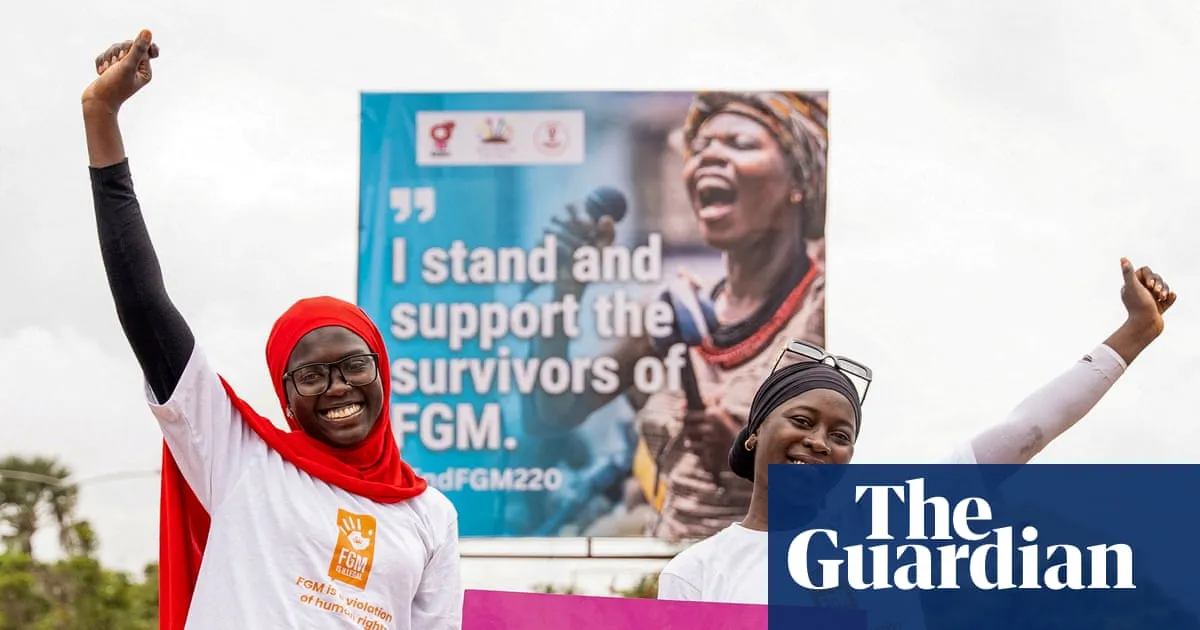
The Guardian - World NewsFIG 01
Reading time
4min
Word count
759words
Sources cited
3cited
Entities identified
12entities
Quality score
100%
§ 01
Briefing Summary
AI-generatedNEWSAR · AI
The Her Horizon Fund has launched with an initial $15.5 million to combat female genital mutilation (FGM), a practice affecting over 230 million women and girls globally. Seeded by the Wallace Global Fund and an anonymous donor, the fund aims to raise $100 million to create "unstoppable momentum" towards ending FGM within a generation. This initiative comes amid declining donor funding for FGM prevention efforts, particularly for local, survivor-led organizations. The fund's launch is seen as crucial for activists working to end FGM, especially as progress towards the UN's 2030 elimination goal is not on track and legal protections face challenges in some regions.
Confidence 0.90Sources 3Claims 5Entities 12
§ 02
Article analysis
Model · rule-basedFraming
Social Justice
Human Rights
Tone
Measured
AI-assessed
CalmNeutralAlarmist
Factuality
0.80 / 1.00
Factual
LowHigh
Sources cited
3
Well sourced
FewMany
§ 03
Key claims
5 extracted01
Ifrah Ahmed stated that the $14m contribution from the Wallace Global Fund will ensure activists can continue their work.
quoteIfrah Ahmed
Confidence
1.00
02
Funding for the largest UN initiative to end FGM fell by 45% last year, from $29.6m to $16.3m.
statistic
Confidence
1.00
03
A $15.5m fund has been launched to combat female genital mutilation (FGM) worldwide.
factual
Confidence
1.00
04
The Her Horizon Fund aims to pool $100m to reach a tipping point towards ending FGM within a generation.
factualWallace Global Fund
Confidence
0.90
05
The UN aims to eliminate FGM by 2030, but progress is not on track due to declining funding and challenged legal protections.
factual
Confidence
0.90
§ 04
Full report
4 min read · 759 words§ 05
Entities
12 identifiedKey playerOppositionContextPositiveNeutralNegative
Organizations6
Locations4
§ 06
Keywords & salience
10 termsending fgm
1.00
female genital mutilation
1.00
her horizon fund
0.90
activists
0.80
funding
0.70
women's rights
0.60
unicef
0.50
unfpa
0.50
human rights violation
0.40
somalia
0.40
§ 07
Topic connections
Interactive graph Network visualization showing 2 related topics
View Full Graph Person Organization Location Event|Click node to navigate|Edge numbers = shared articles