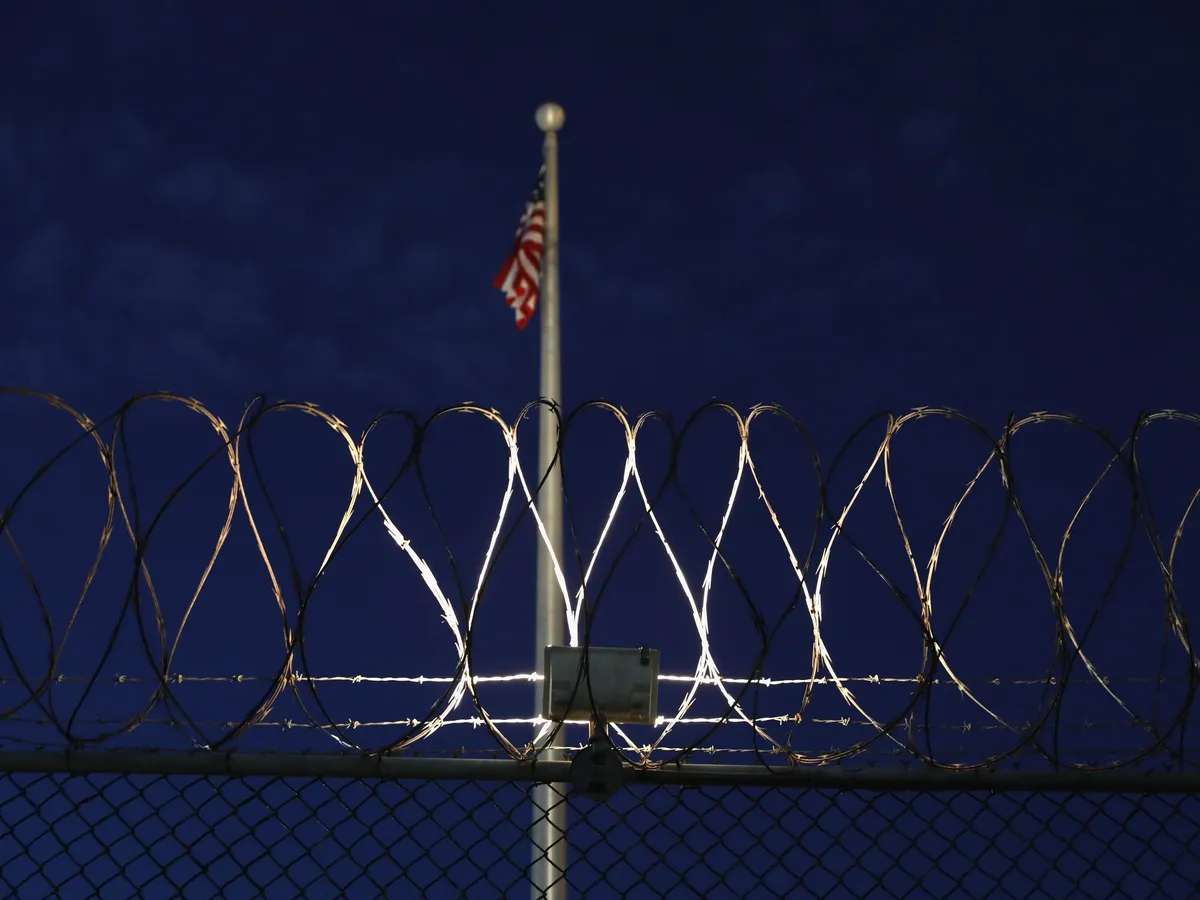
A quarter-century after 9/11, we are still living under the security order it unleashed.Press Officer at CAGE International.Published On 11 Sep 2026A protest movement has been proscribed as a terrorist organisation, thereby criminalising support for those enduring a genocide rather than any act of violence. Migrants are being held in detention facilities modelled on the very practices documented at Guantanamo Bay, and some are even being sent to the Cuban detention camp itself. Surveillance infrastructure once built to monitor “terrorism” has quietly been turned on Palestine solidarity protesters instead. None of this sits at the edges of the law, straining against it or slipping past its limits. It sits comfortably within laws written 25 years ago, doing precisely what they were written to do.The legal architecture assembled after 9/11 was sold to the public as an emergency response to a single, unrepeatable day. A quarter of a century later, it has not been rolled back, nor even meaningfully questioned. It has simply become permanent, its reach extending steadily beyond anything its original architects would have needed to justify at the time.It is worth resisting, too, the instinct to treat 9/11 as the origin of this story. The hostility that the “war on terror” eventually gave a name to was already established Western policy long before that morning arrived; 9/11 did not invent the idea that certain populations could be treated as a security problem before they were treated as human beings; it simply furnished that idea with a name, a legal framework, and a budget without limit. Read the last 25 years as a continuation of something older, rather than an aberration that began with a single attack, and the years since start to make a different kind of sense.
SRCAl Jazeera
LANGEN
LEANCenter
WORDS290
ENT6
FRI · 2026-09-11 · 13:24 GMTBRIEF NSR-2026-0911-110540
NSR-2026-0911-110540Opinion·EN·Human Rights
The dystopian legal architecture of the ‘war on terror’ must be dismantled
A quarter-century after 9/11, the legal framework established in response to the attacks remains in place, extending its reach beyond original intentions. This "security order" has led to the proscription of protest movements as terrorist organizations, criminalizing support for those facing genocide.
Karsen TrullAl JazeeraFiled 2026-09-11 · 13:24 GMTLean · CenterRead · 2 min
Al JazeeraFIG 01
Reading time
2min
Word count
290words
Sources cited
0cited
Entities identified
6entities
Quality score
100%
§ 01
Briefing Summary
AI-generatedNEWSAR · AI
A quarter-century after 9/11, the legal framework established in response to the attacks remains in place, extending its reach beyond original intentions. This "security order" has led to the proscription of protest movements as terrorist organizations, criminalizing support for those facing genocide. Migrants are held in detention facilities mirroring Guantanamo Bay practices, with some even sent to the camp. Surveillance infrastructure initially intended for terrorism monitoring is now used against Palestine solidarity protesters. The article argues that this legal architecture, presented as an emergency measure, has become permanent and is a continuation of pre-existing Western policies that treated certain populations as security problems.
Confidence 0.90Claims 5Entities 6
§ 02
Article analysis
Model · rule-basedFraming
Human Rights
Legal & Judicial
Tone
Mixed Tone
AI-assessed
CalmNeutralAlarmist
Factuality
0.30 / 1.00
Opinion-Heavy
LowHigh
Sources cited
0
No named sources
FewMany
§ 03
Key claims
5 extracted01
Hostility towards certain populations as a security problem predates 9/11 and was established Western policy.
factual
Confidence
0.90
02
The legal architecture assembled after 9/11 has become permanent and its reach has extended beyond original justifications.
factual
Confidence
0.90
03
Surveillance infrastructure built for terrorism monitoring has been redirected to target Palestine solidarity protesters.
factual
Confidence
0.80
04
A protest movement has been proscribed as a terrorist organisation, criminalising support for those enduring a genocide.
factual
Confidence
0.80
05
Migrants are being held in detention facilities modelled on Guantanamo Bay practices, with some sent to the camp itself.
factual
Confidence
0.70
§ 04
Full report
2 min read · 290 words§ 05
Entities
6 identifiedKey playerOppositionContextPositiveNeutralNegative
Organizations1
§ 06
Keywords & salience
10 termswar on terror
1.00
legal architecture
0.90
security order
0.80
dismantled
0.70
9/11
0.60
surveillance infrastructure
0.50
guantanamo bay
0.50
protest movement
0.40
detention facilities
0.40
palestine solidarity
0.40
§ 07
Topic connections
Interactive graph Network visualization showing 6 related topics
View Full Graph Person Organization Location Event|Click node to navigate|Edge numbers = shared articles