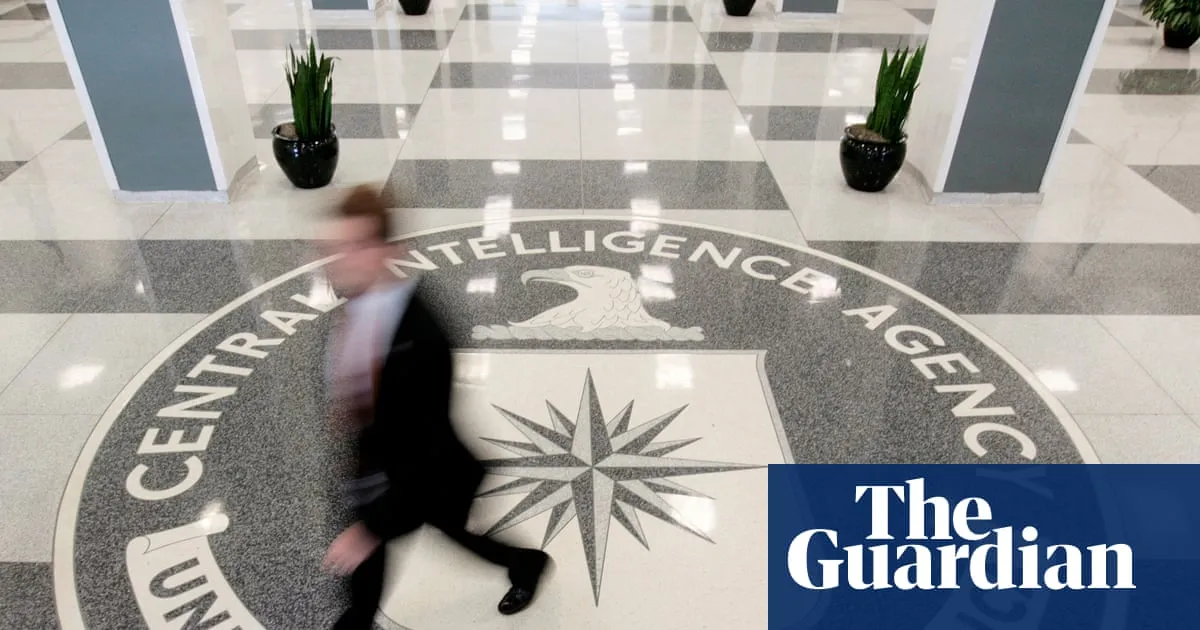
Several dozen presidential briefing documents declassified on Friday, the 25th anniversary of the September 11 attacks, detail intelligence that government officials had gathered about Osama bin Laden and al-Qaida leading up to the hijackings that killed nearly 3,000 people and upended American national security.The documents illustrate security analysts’ tracking of Bin Laden’s movements and support system, as well as concerns about possible threats to US targets. They also detail officials’ understanding of his network in the United States and other countries, including how his operations were financed.Proclaiming it “an act of exceptional transparency”, the CIA director, John Ratcliffe, said the documents were the agency’s single largest release of declassified presidential daily briefs – the highly classified briefings prepared by the nation’s intelligence community for the government’s most senior leaders.The documents range from a February 1998 file – prepared for then president Bill Clinton – titled “Terrorists seeking WMD capability” and mentioning Bin Laden and other Islamic extremists – to a 12 September 2001 report in which a source indicated the attacks had been planned for two years and had also targeted the US Capitol.An April 1998 document described the Taliban’s unwillingness to hand over Bin Laden, at the time seen as their “guest” in Afghanistan, noting their “gratitude for his assistance during the Soviet occupation” was making them “reluctant to alienate him by monitoring or controlling his activities”.Briefers in July 1998 called it “plausible that Bin Ladin places a high priority on conducting attacks in the United States” and noted his “interest in conducting attacks with chemical and biological agents”.Two months later, a briefer wrote that Bin Laden’s “preferred option is to strike the US on its own soil in Washington”, and that al-Qaida “may fly an explosive-packed airplane into a US city”.Potential hijackings were also discussed in December 1998, when a briefer described how conspirators “had evaded security checks during a recent trial run at an unidentified New York airport”, and “some members of the Bin Ladin network have received hijack training”.Other documents detail Bin Laden’s pursuit of materials for making “dirty bombs”, conventional weapons infused with radioactive material. By June 1999, according to intelligence officials, his operatives had conducted such experiments with explosives to “increase their energy output”.About two years before the attacks, intelligence officials were aware that Bin Laden appeared to be misleading the Taliban about his reluctance to launch an unprovoked attack on the US. Briefs prepared for George W Bush in early 2001 focused in part on Bin Laden’s “experimentation by crude means to make and deploy biological agents”.A report a month before the attacks indicated Bin Laden’s commitment “to conduct terrorist attacks in the US”, noting that the 1998 al-Qaida attacks on US embassies “demonstrate that he prepares operations years in advance and is not deterred by setbacks”.At that time – August 2001 – officials wrote of “suspicious activity in this country consistent with preparations for hijackings or other types of attacks, including recent surveillance of federal buildings in New York”, adding that the FBI was “conducting approximately 70 full field investigations throughout the US that it considers Bin Ladin-related”.Many of the documents were redacted to conceal sources’ names and other identifying information. They didn’t appear to break any new ground on the planning of the attacks or on US officials’ understanding of how they had unfolded.In the years immediately after the attacks, a bipartisan commission highlighted a lack of information-sharing among agencies such as the CIA and FBI, and issued recommendations that yielded new positions, including a centralized director of national intelligence, as well as the National Counterterrorism Center, which analyzes domestic and foreign terrorism information across different government branches.Asked for comment on the release, the White House noted the release of another batch of documents by the National Archives, also on Friday. That batch, including interviews with national security officials in the Clinton and Bush administrations, was a product of the commission that investigated the attacks from 2002 to 2004.
SRCThe Guardian - World News
LANGEN
LEANCenter-Left
WORDS658
ENT12
FRI · 2026-09-11 · 22:27 GMTBRIEF NSR-2026-0912-110642
NSR-2026-0912-110642News Report·EN·National Security
CIA releases dozens of presidential daily briefs on Bin Laden and al-Qaida from before 9/11
On the 25th anniversary of the September 11th attacks, the CIA declassified dozens of presidential daily briefs concerning Osama bin Laden and al-Qaida. These documents, the agency's largest release of such materials, detail intelligence gathered by government officials leading up to the attacks.
Associated PressThe Guardian - World NewsFiled 2026-09-11 · 22:27 GMTLean · Center-LeftRead · 3 min
The Guardian - World NewsFIG 01
Reading time
3min
Word count
658words
Sources cited
1cited
Entities identified
12entities
Quality score
100%
§ 01
Briefing Summary
AI-generatedNEWSAR · AI
On the 25th anniversary of the September 11th attacks, the CIA declassified dozens of presidential daily briefs concerning Osama bin Laden and al-Qaida. These documents, the agency's largest release of such materials, detail intelligence gathered by government officials leading up to the attacks. They illustrate the tracking of bin Laden's movements, support systems, and concerns about potential threats to US targets, as well as officials' understanding of his network and its financing. The briefs, ranging from 1998 to September 2001, reveal discussions of bin Laden's interest in weapons of mass destruction, potential attacks on US soil, and hijack training within his network. While the documents do not appear to reveal new information on the attacks' planning, they highlight the intelligence landscape prior to 9/11.
Confidence 0.90Sources 1Claims 5Entities 12
§ 02
Article analysis
Model · rule-basedFraming
National Security
Conflict
Tone
Measured
AI-assessed
CalmNeutralAlarmist
Factuality
0.90 / 1.00
Factual
LowHigh
Sources cited
1
Limited
FewMany
§ 03
Key claims
5 extracted01
Intelligence officials were aware that Bin Laden appeared to be misleading the Taliban about his reluctance to launch an unprovoked attack on the US.
factualintelligence officials
Confidence
1.00
02
Briefers in July 1998 called it 'plausible that Bin Ladin places a high priority on conducting attacks in the United States'.
quoteCIA (briefer)
Confidence
1.00
03
A February 1998 brief mentioned Bin Laden and other Islamic extremists seeking WMD capability.
factualCIA (document)
Confidence
1.00
04
Documents detail intelligence on Bin Laden's movements, support system, and concerns about possible threats to US targets.
factualarticle
Confidence
1.00
05
CIA released dozens of presidential daily briefs on Bin Laden and al-Qaida from before 9/11.
factualCIA
Confidence
1.00
§ 04
Full report
3 min read · 658 words§ 05
Entities
12 identifiedKey playerOppositionContextPositiveNeutralNegative
People3
Organizations3
§ 06
Keywords & salience
10 termsosama bin laden
1.00
al-qaida
1.00
presidential daily briefs
1.00
september 11 attacks
0.90
intelligence
0.80
declassified documents
0.70
wmd capability
0.60
national security
0.50
taliban
0.40
dirty bombs
0.40
§ 07
Topic connections
Interactive graph Network visualization showing 24 related topics
View Full Graph Person Organization Location Event|Click node to navigate|Edge numbers = shared articles