It sometimes guards kingdoms and empires; other times, it hoards treasures within a hidden cave. The dragon frequently symbolises power, strength, and good fortune. In contrast, its counterpart, the phoenix, meets its end in a pile of ashes only to be reborn at the pinnacle of its beauty, symbolising grace, beauty, and rebirth.Individually, the dragon and phoenix are iconic figures in Chinese mythology. Together, these contrasting creatures embody a yin-and-yang that serves as an important emblem of harmony in Chinese history.At its height, the dragon-and-phoenix image functioned as the state emblem of the China" class="entity-link entity-organization" data-entity-id="39764" data-entity-type="organization">Republic of China from 1913 to 1928, appearing on coins minted during that period. It was ultimately replaced when the Kuomintang came to power under Chiang Kai-shek.However, the dual imagery of the dragon and phoenix reaches much further back in Chinese history, nearly to the dawn of China itself.Individually iconic in Chinese mythology, the dragon and phoenix together embody a yin-yang balance that symbolises ultimate harmony. Photo: ShutterstockIn mid-August, a group of scientists unveiled the discovery of the oldest known pairing of the dragon and phoenix, dating back about 4,300 years.According to the Global Times, the symbols were positioned as clay statues about the size of a human body, placed beside the deceased in a grave located in Inner Mongolia, northern China.The dragon was positioned to the right of the body, with its head aligning closely with the human skull. The phoenix, on the left, was depicted as soaring upwards. The scientists believe the body likely belonged to a person of means, as dental analysis indicated a diet that included more meat than was typical for the population of that era.“[The discovery] pushes back the materialised representation of the dragon and phoenix to the Longshan era,” stated Sun Jinsong, the head of the Inner Mongolia Institute of Cultural Relics and Archaeology, in an interview with the Global Times.The dragon and phoenix are one of the most iconic pairings in Chinese art, symbolising the perfect union of complementary forces. Photo: ShutterstockThese statues also provide significant evidence of the development of a remarkably complex society in northern China towards the end of the Neolithic period. The gravesite indicates that dragon and phoenix imagery emerged before the establishment of the unified state we envision today.While this is the oldest known example of the dragon and phoenix being represented together, it is not the first image of either mythological creature to appear in China. The earliest dragon imagery was discovered in a 5,000-year-old tomb, also in Inner Mongolia, crafted from jade.Known as fenghuang, the phoenix predates this, first emerging in central China’s Henan province, dating between 6000 BC and 7000 BC. The Chinese phoenix was originally divided into the feng, the male figure, and the huang, the female. Over time, this gender distinction faded, and the fenghuang is now typically depicted as a unisex mythological creature.Photo above shows Longshan Temple in Taipei, Taiwan. A detailed close-up of the ornate sculptures featuring a dragon and a phoenix on the roof ridge of the historic temple. Photo: ShutterstockThe images of dragons and phoenixes gained popularity as burial objects during the Shang dynasty (1600 BC–1046 BC) and continued to become popular in art during the Warring States period (475 BC–221 BC), notably in the acclaimed piece, the Silk Painting of Human Figure with dragon and phoenix.Together, these two mythological creatures illustrate the natural harmony that arises from the blending of polar opposites. Their integration into funerary practices is fitting, as the imagery seeks to honour how seemingly conflicting forces can create the balance essential for a fulfilling life.Further ReadingThe Longshan era (3000 BC–1900 BC) is renowned for its pottery, often referred to as the “black pottery culture” due to its highly polished, deep black ceramics. It was also characterised by a notably diverse populace, with historians recognising that “Longshan” serves as a broad term encompassing communities that varied significantly from region to region.
SRCSouth China Morning Post
LANGEN
LEANCenter-Right
WORDS649
ENT12
SAT · 2026-09-12 · 10:00 GMTBRIEF NSR-2026-0912-110760
NSR-2026-0912-110760News Report·EN·Human Interest
A symbol of harmony: Chinese scientists discover earliest dragon-phoenix pairing in ancient tomb
Chinese scientists have discovered the oldest known pairing of dragon and phoenix imagery, dating back approximately 4,300 years to the Longshan era. These clay statues, found in a tomb in Inner Mongolia, were placed beside the deceased, with the dragon on the right and the phoenix on the left.
Kevin McSpaddenSouth China Morning PostFiled 2026-09-12 · 10:00 GMTLean · Center-RightRead · 3 min
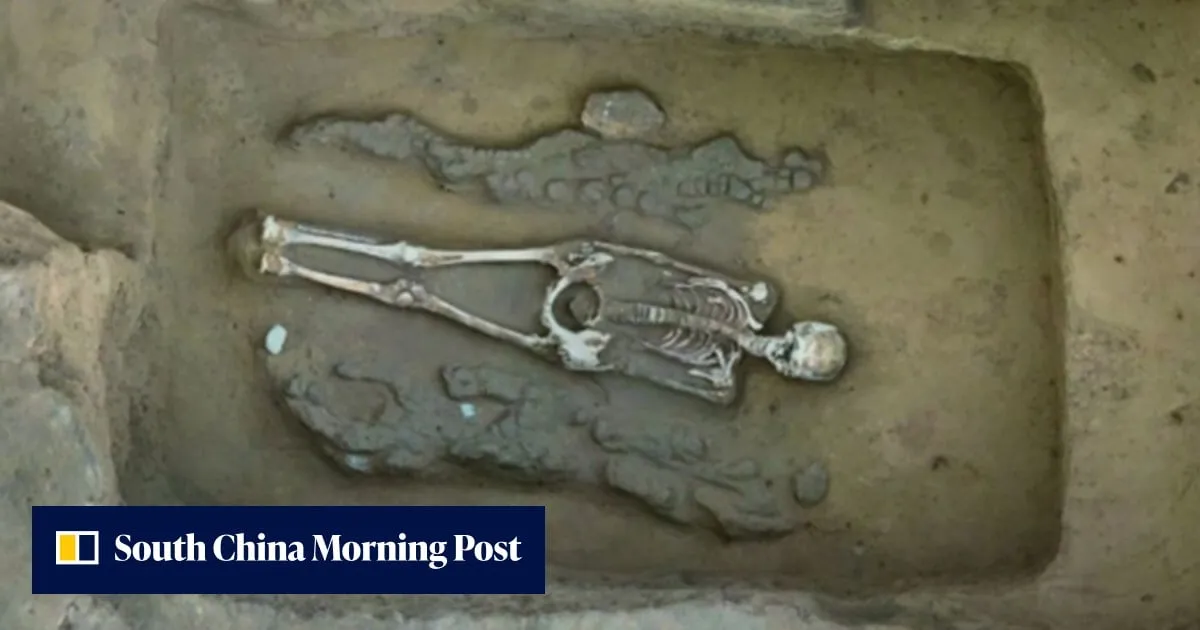
South China Morning PostFIG 01
Reading time
3min
Word count
649words
Sources cited
1cited
Entities identified
12entities
Quality score
100%
§ 01
Briefing Summary
AI-generatedNEWSAR · AI
Chinese scientists have discovered the oldest known pairing of dragon and phoenix imagery, dating back approximately 4,300 years to the Longshan era. These clay statues, found in a tomb in Inner Mongolia, were placed beside the deceased, with the dragon on the right and the phoenix on the left. This discovery pushes back the material representation of these mythological creatures, which individually symbolize power and grace, and together represent harmony. The find provides significant evidence of a complex society in northern China towards the end of the Neolithic period, indicating the emergence of this imagery before the unified state.
Confidence 0.90Sources 1Claims 5Entities 12
§ 02
Article analysis
Model · rule-basedFraming
Human Interest
Technology
Tone
Measured
AI-assessed
CalmNeutralAlarmist
Factuality
0.70 / 1.00
Factual
LowHigh
Sources cited
1
Limited
FewMany
§ 03
Key claims
5 extracted01
This discovery pushes back the materialised representation of the dragon and phoenix to the Longshan era.
quoteSun Jinsong
Confidence
0.90
02
The dragon and phoenix symbols were found as clay statues, about the size of a human body, placed beside a deceased individual in a grave in Inner Mongolia.
factualGlobal Times
Confidence
0.90
03
Scientists have discovered the oldest known pairing of the dragon and phoenix, dating back approximately 4,300 years.
factualScientists
Confidence
0.90
04
The earliest dragon imagery was discovered in a 5,000-year-old tomb, also in Inner Mongolia, crafted from jade.
factualArticle
Confidence
0.80
05
Dental analysis of the deceased indicated a diet including more meat than typical for the era, suggesting the person was of means.
factualScientists
Confidence
0.80
§ 04
Full report
3 min read · 649 words§ 05
Entities
12 identifiedKey playerOppositionContextPositiveNeutralNegative
Organizations4
§ 06
Keywords & salience
10 termsdragon and phoenix
1.00
chinese mythology
0.90
harmony
0.80
archaeological discovery
0.70
ancient tomb
0.70
longshan era
0.60
neolithic period
0.60
yin-yang balance
0.50
inner mongolia
0.40
symbolism
0.40
§ 07
Topic connections
Interactive graph Network visualization showing 16 related topics
View Full Graph Person Organization Location Event|Click node to navigate|Edge numbers = shared articles