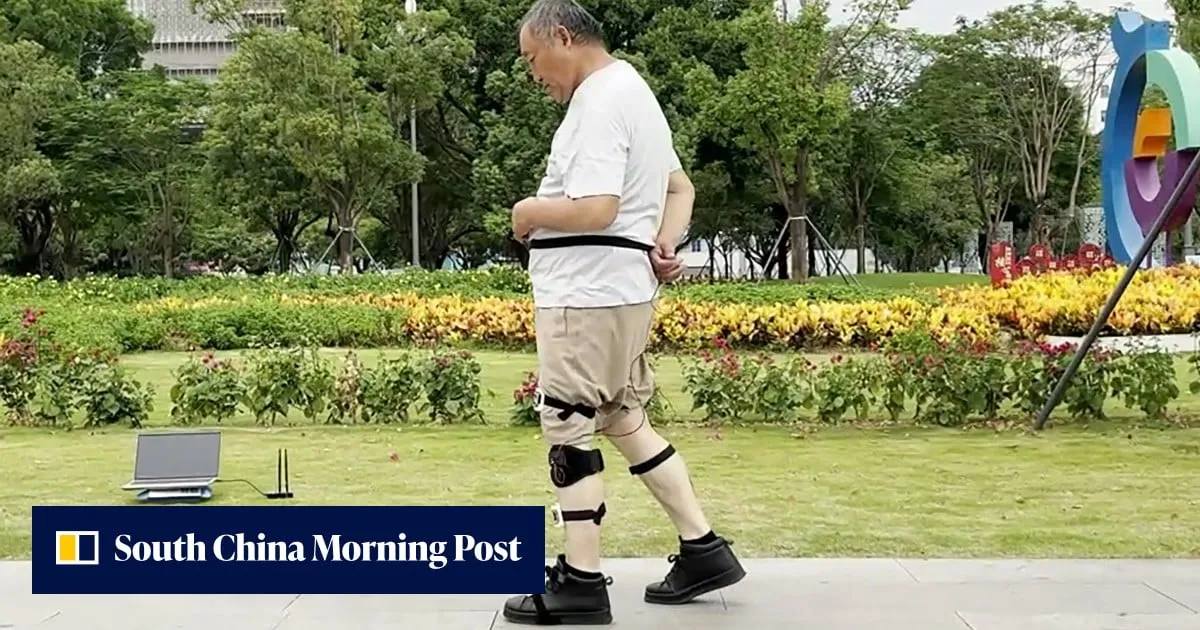
Scientists have developed a lightweight, battery-free device that could help improve the mobility of people with difficulty walking, such as stroke survivors.Developed by researchers in Hong Kong and mainland China, the neural prosthesis uses energy generated by the wearer’s own movements to electrically stimulate their muscles, helping to flex their ankle and restore their natural walking pattern.This could prevent falls for stroke survivors, elderly individuals, and others living with mobility impairments. The researchers behind the device also said it could even be used by athletes during training.“Rather than relying on external sensors or battery-powered control, the device operates automatically during walking through mechanically coupled energy harvesting and stimulation delivery,” the team said in a paper published in the peer-reviewed journal Nature Communications on September 2.
SRCSouth China Morning Post
LANGEN
LEANCenter-Right
WORDS125
ENT10
MON · 2026-09-14 · 08:00 GMTBRIEF NSR-2026-0914-111142
NSR-2026-0914-111142News Report·EN·Technology
China’s self-powered neural device helps stroke survivors walk naturally
Researchers from Hong Kong and mainland China have developed a novel, lightweight, and battery-free neural prosthesis designed to improve walking mobility. This device utilizes energy harvested from the wearer's own movements to electrically stimulate muscles, specifically aiding in ankle flexion.
Victoria BelaSouth China Morning PostFiled 2026-09-14 · 08:00 GMTLean · Center-RightRead · 1 min
South China Morning PostFIG 01
Reading time
1min
Word count
125words
Sources cited
1cited
Entities identified
10entities
Quality score
100%
§ 01
Briefing Summary
AI-generatedNEWSAR · AI
Researchers from Hong Kong and mainland China have developed a novel, lightweight, and battery-free neural prosthesis designed to improve walking mobility. This device utilizes energy harvested from the wearer's own movements to electrically stimulate muscles, specifically aiding in ankle flexion. The goal is to help individuals with walking difficulties, such as stroke survivors, elderly people, and those with other mobility impairments, to restore a more natural walking pattern and prevent falls. The technology operates automatically during walking, integrating energy harvesting and stimulation delivery without external sensors or batteries. The findings were published in Nature Communications on September 2.
Confidence 0.85Sources 1Claims 5Entities 10
§ 02
Article analysis
Model · rule-basedFraming
Technology
Public Health
Tone
Measured
AI-assessed
CalmNeutralAlarmist
Factuality
0.90 / 1.00
Factual
LowHigh
Sources cited
1
Limited
FewMany
§ 03
Key claims
5 extracted01
The device operates automatically during walking through mechanically coupled energy harvesting and stimulation delivery, without external sensors or battery power.
quoteresearchers
Confidence
1.00
02
The neural prosthesis uses energy from the wearer's movements to electrically stimulate muscles, aiding ankle flexion and restoring natural walking patterns.
factual
Confidence
1.00
03
A new lightweight, battery-free neural device can help improve mobility for individuals with walking difficulties, such as stroke survivors.
factual
Confidence
1.00
04
The device could potentially prevent falls for stroke survivors, the elderly, and individuals with mobility impairments.
prediction
Confidence
0.80
05
The device could also be used by athletes during training.
prediction
Confidence
0.70
§ 04
Full report
1 min read · 125 words§ 05
Entities
10 identifiedKey playerOppositionContextPositiveNeutralNegative
People1
Organizations1
§ 06
Keywords & salience
9 termsneural prosthesis
1.00
stroke survivors
0.90
mobility impairments
0.80
energy harvesting
0.70
muscle stimulation
0.70
walking pattern
0.60
battery-free device
0.60
nature communications
0.40
hong kong
0.40
§ 07
Topic connections
Interactive graph No topic relationship data available yet. This graph will appear once topic relationships have been computed.