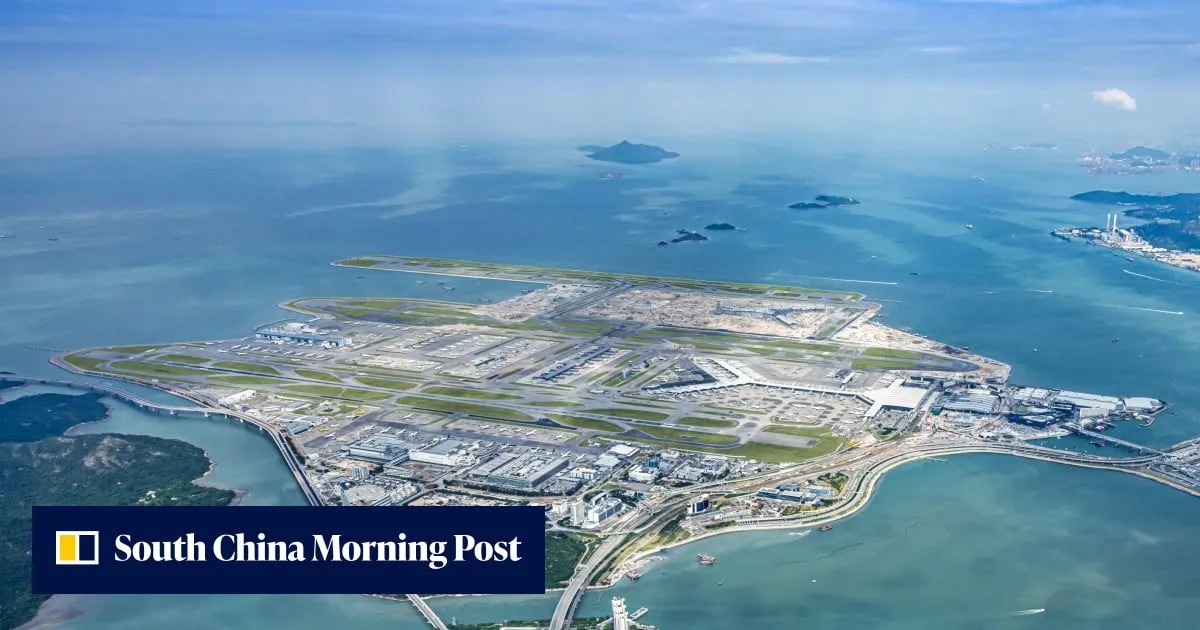
When Hong Kong International Airport (HKIA) set out to build a new runway and associated facilities for the three-runway system operation, engineers had to carefully navigate a challenge hidden beneath the surrounding waters. The project involved 650 hectares (1,606 acres) of reclaimed land adjacent to the existing airport, an area equivalent to about 34 Victoria Parks or 900 standard football pitches. More significantly, some 40 per cent of it sat directly above decades-old mud pits storing contaminated sediment from earlier construction works undertaken across different parts of Hong Kong.Conventional reclamation calls for dredging, but disturbing these pits would risk releasing legacy pollutants into the surrounding waters.“If we were doing construction by the dredging method, it would release the contaminant into the marine environment,” says Tommy Leung King-yin, executive director of engineering and technical services for the Airport Authority Hong Kong, who oversaw the three-runway system project throughout most of its construction.Construction of the three-runway system at Hong Kong International Airport involved reclaiming approximately 650 hectares of land, equivalent to 34 Victoria Parks or 900 standard football pitches.Instead, the Airport Authority turned to deep cement mixing, a technique that had been unprecedented at this scale. It used specialised rigs to inject cement slurry directly into the soft mud on the seabed, which hardened into more than 360,000 columns, which anchored the reclaimed land above while also keeping the contaminants undisturbed and locking them safely into place.“By using [deep cement mixing], not only can we contain the contaminant material, we’re able to solidify and consolidate the soft material at the same time,” Leung says, adding that the move was costlier but saved about a year of settlement time and cut fill material demand by roughly 10 per cent. “It has a lot of benefits on the environmental aspect, on the programme and on long-term performance.”Engineers applied this same conservation-driven philosophy elsewhere on the project. For example, horizontal directional drilling was used to divert two 5.2km (3.2-mile) aviation fuel pipelines about 100m (328 feet) below the seabed, instead of dredging a trench. At the time, this marked the world’s longest pipeline installation using the low-impact construction technique.The Airport Authority Hong Kong released fish fry and shrimp fry into the waters adjacent to HKIA, where 600 artificial reefs have been installed to help marine life thrive.More than 250 measures were implemented to address potential environmental impacts arising from construction and operation of the three-runway system. But the sustainability considerations of the project went beyond mere protection to also include voluntary enhancement features. The 13km sea wall ringing the reclaimed land where the new runway and its supporting infrastructure are located includes over 500 specially designed eco-enhanced blocks, which have grooved surfaces and water-retaining cavities that mimic natural rock pools to attract marine life.“These sea walls are engineered with cavities that hold water during low tide and textured panels that provide shading and shelter for marine life,” says Professor Kenneth Leung Mei-yee, a renowned marine ecologist who is director of the State Key Laboratory of Marine Environmental Health at City University of Hong Kong. “That kind of design can double the biodiversity compared with a conventional sea wall.”In addition, the Airport Authority has installed 600 artificial reefs and released nearly 90,000 fish fry into the surrounding waters, and also has supported the designation of the 2,400-hectare North Lantau Marine Park. The park, which is the largest and newest of its kind in Hong Kong, is part of a wider network of protected areas designed to support marine biodiversity.“This is a very positive step towards supporting the sustainability of our oceans,” Professor Leung says.Watch the full video to see Tommy Leung and Professor Kenneth Leung explain the engineering and environmental efforts behind HKIA’s three-runway system project.
SRCSouth China Morning Post
LANGEN
LEANCenter-Right
WORDS620
ENT10
TUE · 2026-09-15 · 08:00 GMTBRIEF NSR-2026-0915-111405
NSR-2026-0915-111405News Report·EN·Environmental
Hong Kong airport builds third runway with strategy to help marine environment thrive
Hong Kong International Airport (HKIA) has completed construction of a third runway, a project involving 650 hectares of reclaimed land. To avoid disturbing contaminated sediment beneath the seabed, engineers employed deep cement mixing, a large-scale, unprecedented technique that solidified the mud and contained pollutants.
Morning Studio editorsSouth China Morning PostFiled 2026-09-15 · 08:00 GMTLean · Center-RightRead · 3 min
South China Morning PostFIG 01
Reading time
3min
Word count
620words
Sources cited
1cited
Entities identified
10entities
Quality score
100%
§ 01
Briefing Summary
AI-generatedNEWSAR · AI
Hong Kong International Airport (HKIA) has completed construction of a third runway, a project involving 650 hectares of reclaimed land. To avoid disturbing contaminated sediment beneath the seabed, engineers employed deep cement mixing, a large-scale, unprecedented technique that solidified the mud and contained pollutants. This method, along with horizontal directional drilling to reroute fuel pipelines, minimized environmental impact. Beyond protection, HKIA implemented enhancement measures, including eco-designed sea walls that mimic natural rock pools, the installation of 600 artificial reefs, and the release of fish and shrimp fry into surrounding waters. These efforts aim to support and improve the marine environment adjacent to the airport.
Confidence 0.90Sources 1Claims 5Entities 10
§ 02
Article analysis
Model · rule-basedFraming
Environmental
Technology
Tone
Measured
AI-assessed
CalmNeutralAlarmist
Factuality
0.80 / 1.00
Factual
LowHigh
Sources cited
1
Limited
FewMany
§ 03
Key claims
5 extracted01
The Airport Authority released fish fry and shrimp fry into waters adjacent to HKIA.
factualAirport Authority Hong Kong
Confidence
1.00
02
Over 250 measures were implemented to address environmental impacts, including voluntary enhancement features like artificial reefs.
factualAirport Authority Hong Kong
Confidence
1.00
03
Horizontal directional drilling was used to divert aviation fuel pipelines, marking the world's longest installation of its kind using this low-impact technique.
factualAirport Authority Hong Kong
Confidence
1.00
04
Deep cement mixing solidified soft mud, anchored reclaimed land, and contained contaminants.
factualTommy Leung King-yin
Confidence
1.00
05
Hong Kong International Airport built a third runway using deep cement mixing to avoid disturbing contaminated sediment.
factualAirport Authority Hong Kong
Confidence
1.00
§ 04
Full report
3 min read · 620 words§ 05
Entities
10 identifiedKey playerOppositionContextPositiveNeutralNegative
Organizations1
Locations3
§ 06
Keywords & salience
10 termsthree-runway system
1.00
hong kong international airport
1.00
deep cement mixing
0.90
marine environment
0.80
reclaimed land
0.70
contaminated sediment
0.70
environmental aspect
0.60
horizontal directional drilling
0.50
pipeline installation
0.40
airport authority hong kong
0.40
§ 07
Topic connections
Interactive graph No topic relationship data available yet. This graph will appear once topic relationships have been computed.