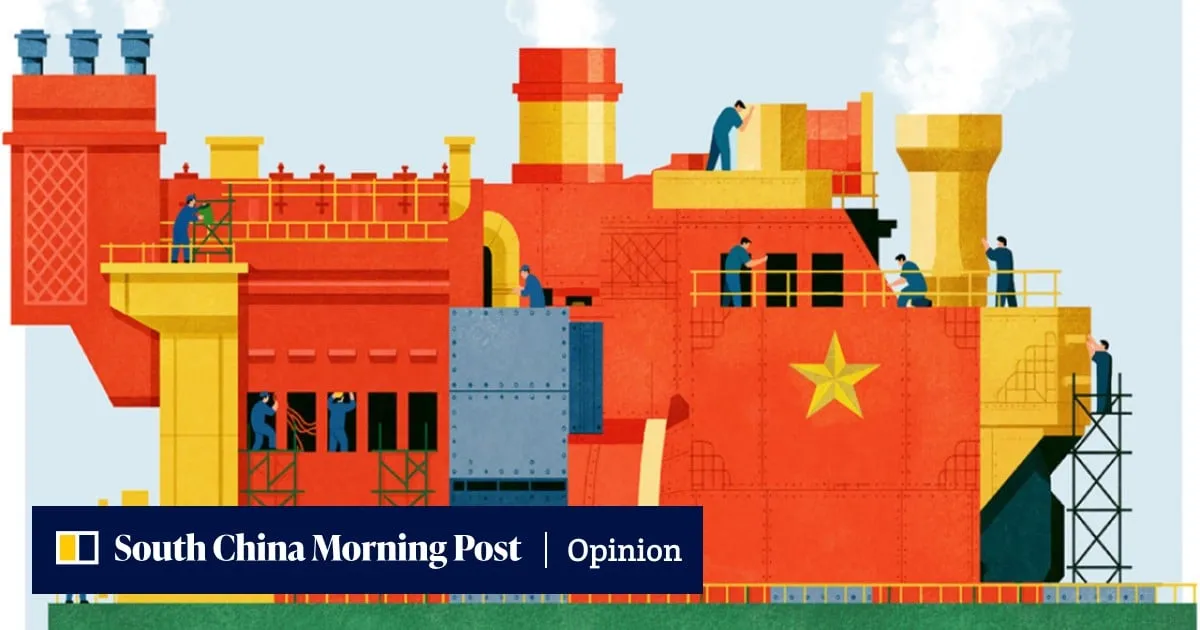
The first “China shock” was fairly easy to understand. Beginning in the 1990s, cheap Chinese goods poured into global markets, displacing large parts of lower-end manufacturing across the world. Now, China-shock-20" class="entity-link entity-topic" data-entity-id="135575" data-entity-type="topic">China shock 2.0 seems to be under way, with China taking the lead in electric vehicles (EVs), batteries, solar panels, semiconductors and other more technologically sophisticated industries.This is often perceived as a trade problem, with Chinese manufacturers producing too much, selling too cheaply and flooding global markets with subsidised goods. However, the more consequential question is not just why the United States and Europe run growing trade deficits with China. It is who is supplying the next round of industrial growth in Asia, Africa, Latin America and other emerging markets. That makes today’s industrial competition more of a production story than a trade story.
SRCSouth China Morning Post
LANGEN
LEANCenter-Right
WORDS134
ENT12
WED · 2026-09-16 · 01:30 GMTBRIEF NSR-2026-0916-111580
NSR-2026-0916-111580Analysis·EN·Economic Impact
Neither tariffs nor export controls will stop China’s industrial engine
China is experiencing a "China shock 2.0," mirroring the first shock in the 1990s when cheap goods disrupted global manufacturing. This new phase sees China leading in technologically advanced industries like electric vehicles, batteries, solar panels, and semiconductors.
Ziang LiuSouth China Morning PostFiled 2026-09-16 · 01:30 GMTLean · Center-RightRead · 1 min
South China Morning PostFIG 01
Reading time
1min
Word count
134words
Sources cited
0cited
Entities identified
12entities
Quality score
100%
§ 01
Briefing Summary
AI-generatedNEWSAR · AI
China is experiencing a "China shock 2.0," mirroring the first shock in the 1990s when cheap goods disrupted global manufacturing. This new phase sees China leading in technologically advanced industries like electric vehicles, batteries, solar panels, and semiconductors. While often viewed as a trade issue involving overproduction and subsidized goods, the article suggests the more significant question is who will supply industrial growth in emerging markets. This makes the current competition more about production than trade.
Confidence 0.85Claims 5Entities 12
§ 02
Article analysis
Model · rule-basedFraming
Economic Impact
Technology
Tone
Measured
AI-assessed
CalmNeutralAlarmist
Factuality
0.40 / 1.00
Mixed
LowHigh
Sources cited
0
No named sources
FewMany
§ 03
Key claims
5 extracted01
The first "China shock" involved cheap Chinese goods displacing lower-end manufacturing globally starting in the 1990s.
factual
Confidence
0.95
02
China shock 2.0 is characterized by China's leadership in advanced technology industries.
factual
Confidence
0.90
03
China is leading in electric vehicles, batteries, solar panels, semiconductors, and other technologically sophisticated industries.
factual
Confidence
0.90
04
Tariffs and export controls will not stop China's industrial engine.
prediction
Confidence
0.75
05
The current industrial competition is more of a production story than a trade story.
factual
Confidence
0.70
§ 04
Full report
1 min read · 134 words§ 05
Entities
12 identifiedKey playerOppositionContextPositiveNeutralNegative
Organizations1
Locations6
§ 06
Keywords & salience
10 termschina shock 2.0
1.00
industrial engine
0.90
electric vehicles
0.80
solar panels
0.70
semiconductors
0.70
industrial competition
0.60
production story
0.50
emerging markets
0.50
trade deficits
0.40
export controls
0.40
§ 07
Topic connections
Interactive graph Network visualization showing 51 related topics
View Full Graph Person Organization Location Event|Click node to navigate|Edge numbers = shared articles