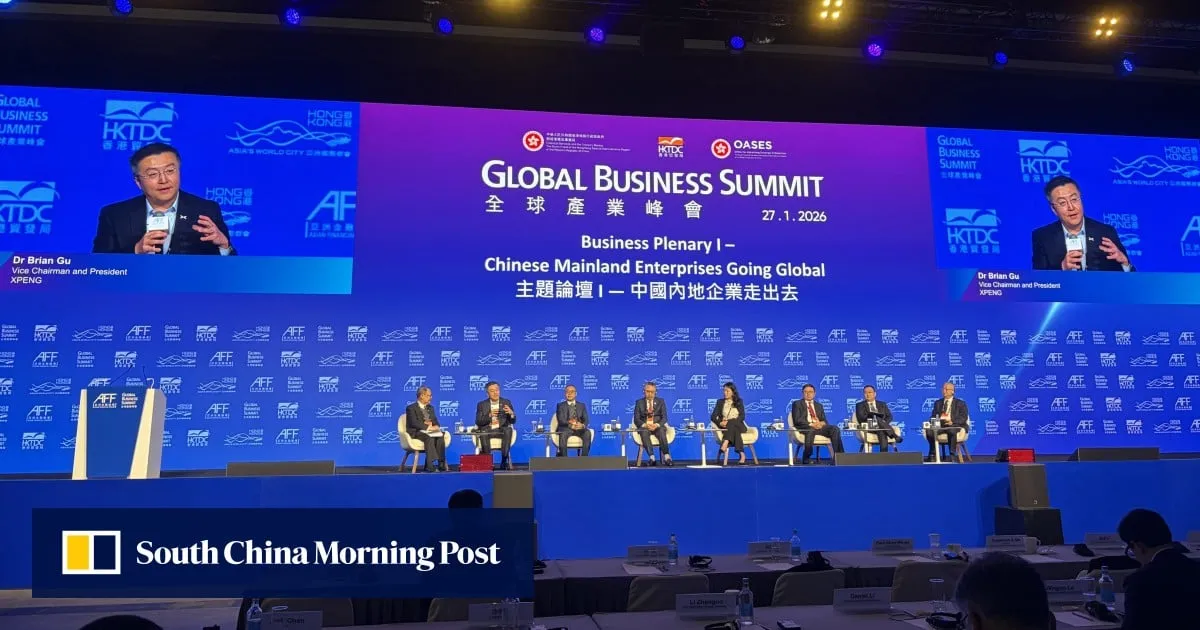
As Chinese companies accelerate their overseas expansion, industry leaders are urging a more partnership-driven approach rather than simply building factories abroad – a strategy they say could help ease growing concerns about excess capacity.As it pushes further into global markets, Zhejiang Geely Holding Group will prioritise partnerships over rapid capacity build-outs, vice-chairman Daniel Li Donghui said at the Asian Financial Forum (AFF) in Hong Kong on Tuesday.“We don’t think it’s the best idea to simply increase capacity in every country,” Li said, highlighting one of the key challenges facing Chinese carmakers as they expand overseas. “Actually, many countries, including European countries, may also face the challenge of overcapacity.”Li’s remarks come as Chinese companies increasingly look overseas for growth amid fierce competition at home and Beijing’s broader push to encourage firms to go global.Major carmakers, including Geely, have laid out aggressive international strategies backed by ambitious sales targets and heavy investment.Geely has set a goal of selling more than 6.5 million vehicles globally by 2030, spanning both passenger and commercial models – a 58 per cent increase from its projected 4.12 million units in 2025.
SRCSouth China Morning Post
LANGEN
LEANCenter-Right
WORDS184
ENT5
WED · 2026-01-28 · 03:00 GMTBRIEF NSR-2026-0128-11159
NSR-2026-0128-11159News Report·EN·Economic Impact
Partnerships, not plants: Chinese companies rethink overseas expansion strategy
Chinese companies are being urged to prioritize partnerships over building factories abroad as they expand overseas, a strategy aimed at mitigating concerns about potential overcapacity. Zhejiang Geely Holding Group, for example, will focus on collaborations as it expands into global markets.
Cao Li,Themis QiSouth China Morning PostFiled 2026-01-28 · 03:00 GMTLean · Center-RightRead · 1 min
South China Morning PostFIG 01
Reading time
1min
Word count
184words
Sources cited
1cited
Entities identified
5entities
Quality score
100%
§ 01
Briefing Summary
AI-generatedNEWSAR · AI
Chinese companies are being urged to prioritize partnerships over building factories abroad as they expand overseas, a strategy aimed at mitigating concerns about potential overcapacity. Zhejiang Geely Holding Group, for example, will focus on collaborations as it expands into global markets. This shift comes as Chinese firms, facing intense domestic competition, seek growth opportunities internationally, encouraged by Beijing's "go global" initiative. Major carmakers like Geely have announced ambitious international strategies with significant sales targets, such as Geely's goal to sell over 6.5 million vehicles globally by 2030. The partnership approach is seen as a more sustainable way to expand without exacerbating overcapacity issues in both China and international markets, including Europe.
Confidence 0.90Sources 1Claims 5Entities 5
§ 02
Article analysis
Model · rule-basedFraming
Economic Impact
Political Strategy
Tone
Measured
AI-assessed
CalmNeutralAlarmist
Factuality
0.70 / 1.00
Factual
LowHigh
Sources cited
1
Limited
FewMany
§ 03
Key claims
5 extracted01
Geely projects 4.12 million units in 2025.
statisticArticle
Confidence
1.00
02
Geely has set a goal of selling more than 6.5 million vehicles globally by 2030.
statisticArticle
Confidence
1.00
03
Zhejiang Geely Holding Group will prioritise partnerships over rapid capacity build-outs.
quoteDaniel Li Donghui, vice-chairman of Zhejiang Geely Holding Group
Confidence
1.00
04
Chinese companies are accelerating their overseas expansion.
factualArticle
Confidence
0.90
05
Many countries, including European countries, may also face the challenge of overcapacity.
quoteDaniel Li Donghui
Confidence
0.70
§ 04
Full report
1 min read · 184 words§ 05
Entities
5 identifiedKey playerOppositionContextPositiveNeutralNegative
Locations4
§ 06
Keywords & salience
10 termsoverseas expansion
0.90
partnerships
0.80
chinese companies
0.80
overcapacity
0.70
capacity build-outs
0.70
geely
0.60
global markets
0.60
international strategies
0.50
sales targets
0.50
asian financial forum
0.40
§ 07
Topic connections
Interactive graph Network visualization showing 51 related topics
View Full Graph Person Organization Location Event|Click node to navigate|Edge numbers = shared articles