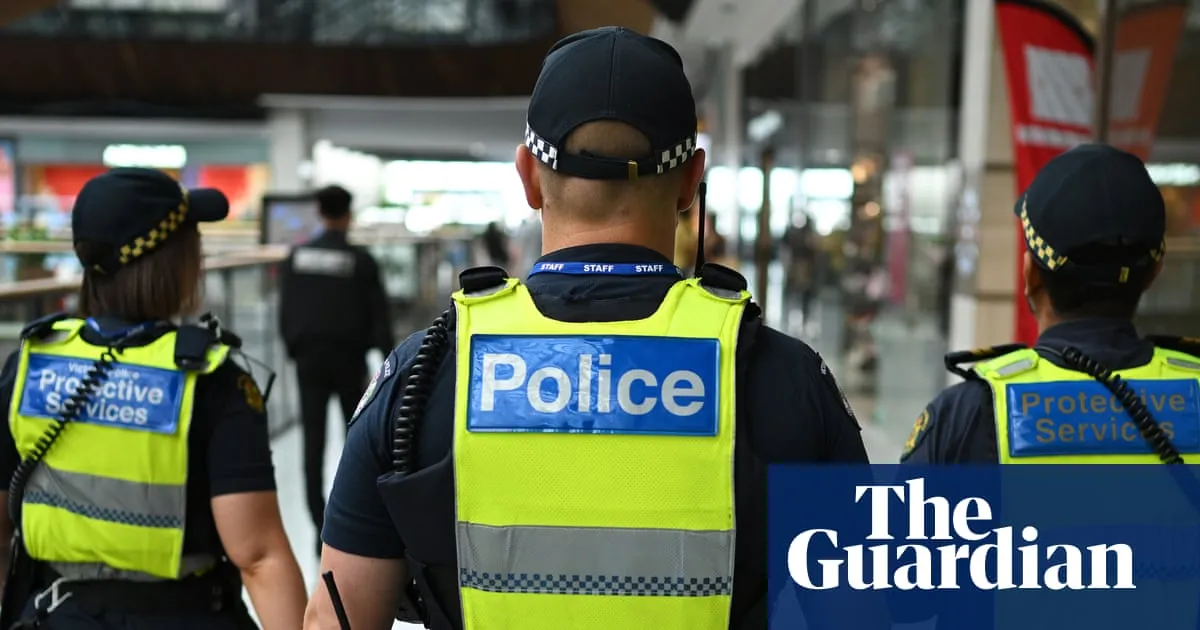
The Victorian government and opposition have now both committed to giving police and protective service officers the power to use metal-detecting wands on any person in a public place. Photograph: James Ross/AAP View image in fullscreen The Victorian government and opposition have now both committed to giving police and protective service officers the power to use metal-detecting wands on any person in a public place. Photograph: James Ross/AAP ‘Anywhere, anytime’: Victoria-police" class="entity-link entity-organization" data-entity-id="144887" data-entity-type="organization">Victoria police and PSOs to get random stop and search powers after Labor backflip Premier Ben Carroll adopts Coalition’s stance on Jack’s Law, which gives police and PSOs power to randomly search people for knives with metal detectors Follow our Australia news live blog for latest updates Get our breaking news email, free app or daily news podcast The Victorian premier has made another policy backflip, announcing a re-elected Labor government would give police and protective services officers the power to stop and search people for knives using handheld metal detectors – despite experts warning of a lack of evidence that the measure reduces violent crime. Ben Carroll on Wednesday announced he would match a commitment made by the Coalition opposition last year to introduce Queensland’s Jack’s Law, named after 17-year-old Jack Beasley, who was fatally stabbed in Surfers Paradise in 2019. Under Labor’s commitment, police and PSOs would receive 1,200 extra handheld metal-detecting wands to use on any person in a public place from early next year. Or as the police minister, Paul Edbrooke, put it: “Anywhere, anytime.” The bipartisan support for the new powers comes despite warnings from criminologists and human rights advocates that the laws will be ineffective at reducing violence. Sarah Schwartz, the legal director of the Human Rights Law Centre, accused Carroll of “ignoring the evidence and caving into pressure in a race to the bottom to suppress democratic freedoms and human rights”. “We know from other states that these powers only serve to give police unchecked powers to harass and target people, particularly marginalised groups, while doing nothing to actually keep communities safe,” she said. A Griffith University study of a 12-month trial of Jack’s Law on the Gold Coast between 2021–22 found there was no reduction in violence as a result of the searches and that they put human rights at risk. “There’s no evidence that it’s in any way effective in actually reducing knife-related violence, which is the whole premise of the law,” Griffith University’s Janet Ransley told the Guardian last year. Swinburne University criminologist Joel McGregor said “tough-on-crime policies” would do little to address the causes of crime, particularly among young people. “Police might find a knife or a weapon and they remove that weapon from the street. That’s a great outcome, but it doesn’t address the underlying behaviours as to why that person is carrying the knife or the weapon in the first place,” he said. Currently in Victoria, police are only authorised to perform warrantless pat-down searches in “designated areas”. A six-month designation of the CBD as one was earlier this year deemed invalid by the federal court. Carroll said the government would work with legal experts to ensure Jack’s Law would be “watertight”. “Victorians are sick of knife crime, and so am I,” he told reporters. Jack’s Law has also been replicated in Tasmania, Western Australia and the Northern Territory following advocacy by Jack’s parents. In New South Wales, the warrantless search powers apply only in declared designated areas. Victorian Labor’s move marks a significant shift for the state government after it had resisted expanding search powers under their former leader Jacinta Allan. After meeting with Beasley’s parents in September 2025, the then police minister, Anthony Carbines, said the state’s search powers were sufficient. “It might not be called Jack’s Law, but what we have in place in Victoria is a safe and effective mechanism that Victoria-police" class="entity-link entity-organization" data-entity-id="144887" data-entity-type="organization">Victoria police asked for,” he said at the time. Asked repeatedly why there had been a policy change, Carroll answered: “I’m the new premier.” The Victorian Greens’ justice spokesperson Katherine Copsey said the about-face showed Labor had “completely lost its way on community safety” and was “just copying whatever the Liberals announce”. According to Queensland police statistics, police stopped and scanned 160,997 people between 18 July 2025 and 30 June 2026. More than 77% of them were male, and 22.6% of people with a known ethnic origin were Indigenous, despite Aboriginal and Torres Strait Islander people making up only 4.6% of Queensland’s population. In Victoria, two years of data obtained by Liberty Victoria revealed just over 1% of the searches conducted in designated areas found illicit items, including weapons. But Carroll’s shift was welcomed by Jack’s father, Brett Beasley, who said it was “about bloody time”. “I’ve been pushing for Jack’s Law to be introduced down there for some time now, so it’s great news,” he told ABC Radio Melbourne. “Put the politics aside and let’s focus on the community safety and that’s what Jack’s Law is all about.” Explore more on these topics Australian police and policing Victoria Victorian politics Ben Carroll Crime - Australia news Share Reuse this content
SRCThe Guardian - World News
LANGEN
LEANCenter-Left
WORDS849
ENT12
WED · 2026-09-16 · 05:03 GMTBRIEF NSR-2026-0916-111615
NSR-2026-0916-111615News Report·EN·Legal & Judicial
‘Anywhere, anytime’: Victoria police and PSOs to get random stop and search powers after Labor backflip
Premier Ben Carroll adopts Coalition’s stance on Jack’s Law, which gives police and PSOs power to randomly search people for knives with metal detectors Follow our Australia news live blog for latest updates Get our breaking news email , free app or daily news podcast The Victorian premier has made
Benita Kolovos Victorian state correspondentThe Guardian - World NewsFiled 2026-09-16 · 05:03 GMTLean · Center-LeftRead · 4 min
The Guardian - World NewsFIG 01
Reading time
4min
Word count
849words
Sources cited
3cited
Entities identified
12entities
Quality score
50%
§ 02
Article analysis
Model · rule-basedFraming
Legal & Judicial
Human Rights
Tone
Mixed Tone
AI-assessed
CalmNeutralAlarmist
Factuality
0.60 / 1.00
Mixed
LowHigh
Sources cited
3
Well sourced
FewMany
§ 03
Key claims
5 extracted01
Sarah Schwartz accuses Carroll of 'ignoring the evidence and caving into pressure in a race to the bottom to suppress democratic freedoms and human rights'.
quoteSarah Schwartz, Human Rights Law Centre
Confidence
1.00
02
The Victorian government and opposition have both committed to granting these new powers.
factual
Confidence
1.00
03
Victorian police and PSOs will be given powers to use metal-detecting wands on any person in a public place.
factual
Confidence
1.00
04
A Griffith University study found no reduction in violence and that the powers put human rights at risk.
factualGriffith University study
Confidence
0.90
05
Experts warn of a lack of evidence that the measure reduces violent crime.
factualExperts
Confidence
0.90
§ 04
Full report
4 min read · 849 words§ 05
Entities
12 identifiedKey playerOppositionContextPositiveNeutralNegative
People4
Organizations5