The ongoing campaign to build thousands of massive datacenters for AI will create a “tsunami” of discarded electronics, putting the world on a course to triple its annual generation of toxic e-waste in the next 25 years, a new report projects.The electronic trash AI generates in the next 25 years could fill enough shipping containers to encircle the globe six times, it said. Yet, says the report by the non-profit environmental group Basel Action Network (BAN), there is no plan to deal with that waste – which typically contains toxics like lead, mercury, cadmium and forever chemicals, as well as valuable metals that are challenging to reclaim.“Already electronic waste is the fastest-growing waste stream on the planet and only one-fifth is properly managed,” said Jim Puckett, co-founder of BAN, which works to see that toxic waste doesn’t end up getting dumped on the world’s poorer communities.Experts concur. “We’re doing a terrible job of handling e-waste in the US,” said Vince Beiser, author of the book Power Metals, which details the global problems of trying to reclaim valuable metals inside electronic goods. “Some of it gets dumped overseas. Most of it just gets dumped in landfills, which is a problem because it can leach all kinds of nasty things into the water, into the soil.”There are 4,871 new datacenters in the construction pipeline in the US, the report said, adding that, while not all are clearly designated for use by AI, many will be.It calculated the volumes of e-waste related to computer servers used for AI, and to “the thousands of tonnes of copper, steel, concrete” for cooling, power distribution, networking and energy storage equipment needed to operate inside datacenters.To estimate the total, the report estimated the amount of computing power analysts project will be built – totalling roughly 100 gigawatts of new capacity worldwide by 2030 alone and growing beyond that. It then analyzed how much equipment would be needed by weight – including racks of computer servers weighing 1,360kgs each, switches that weigh up to 30kgs, and hundreds of kilograms of copper cable connecting each rack.Such equipment won’t be designed for repair and reuse, the report projects, and would need to be completely replaced every two to five years.On top of this, it assumed that AI developments will force the rapid replacement of consumer computers, phones, and telecommunications equipment owing to the computing requirements of the new systems.By taking this wide view of all the various types of e-waste that will be created, the BAN report projects that AI-driven equipment retirement will generate up to 13m metric tonnes per year by 2030 – a far higher estimate than a handful of previous studies.AI datacenter construction has already created a groundswell of bipartisan opposition around the US for the huge amount of space and energy it requires, but the report comes when focus is turning to the long-term pollution AI could create.A group of environmental and health experts last week called for the federal government to issue a pledge to protect citizens’ health from the repercussions of AI buildout. It cited estimates that the air pollution from the enormous amount of electricity generation needed for datacenters could result in hundreds of thousands of new asthma cases and as many as 1,300 premature deaths per year in the US alone.skip past newsletter promotionafter newsletter promotionThe Trump administration has sought to weaken environmental safeguards that would normally govern such a massive technological buildout.A 2025 report by McKinsey & Company estimates that, in order to achieve the tech industry’s planned rollout of Artificial Intelligence, nearly $7tn in capital outlays will be needed worldwide in the next five years to build datacenters running millions of computer servers 24 hours a day.BAN’s white paper notes that this unprecedented spending “is roughly the cost of ending world hunger for the next 75 years – being spent in just five”.“We all find ourselves unwitting participants in the AI horserace,” said the report, “as IT users everywhere find themselves using AI whether they would like to or not, and yet almost always, without being aware of the greater consequences of doing so.”
SRCThe Guardian - World News
LANGEN
LEANCenter-Left
WORDS684
ENT10
WED · 2026-09-16 · 11:00 GMTBRIEF NSR-2026-0916-111705
NSR-2026-0916-111705News Report·EN·Environmental
Datacenter rush will create ‘tsunami’ of discarded electronics, report says
A new report by the Basel Action Network (BAN) projects that the global push to build datacenters for AI will lead to a "tsunami" of discarded electronics. This trend could triple annual toxic e-waste generation within 25 years, filling enough shipping containers to circle the globe six times.
Erin McCormickThe Guardian - World NewsFiled 2026-09-16 · 11:00 GMTLean · Center-LeftRead · 3 min
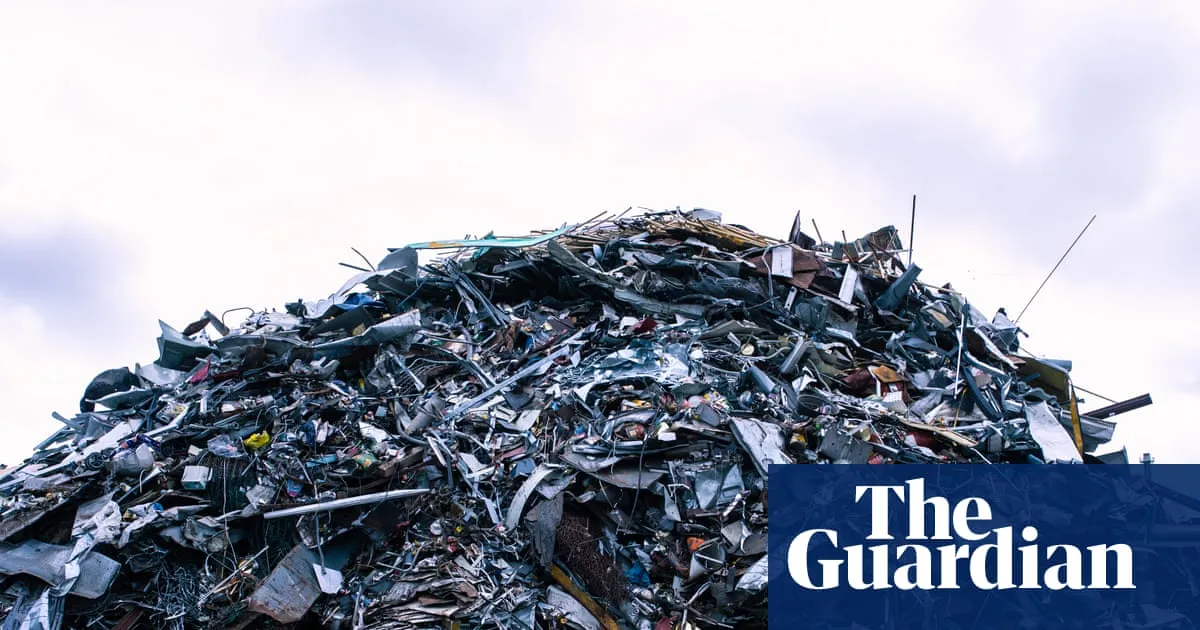
The Guardian - World NewsFIG 01
Reading time
3min
Word count
684words
Sources cited
2cited
Entities identified
10entities
Quality score
100%
§ 01
Briefing Summary
AI-generatedNEWSAR · AI
A new report by the Basel Action Network (BAN) projects that the global push to build datacenters for AI will lead to a "tsunami" of discarded electronics. This trend could triple annual toxic e-waste generation within 25 years, filling enough shipping containers to circle the globe six times. The waste contains hazardous materials like lead and mercury, alongside valuable metals that are difficult to reclaim. Experts note that current e-waste management is inadequate, with much of it ending up in landfills or improperly disposed of overseas. The report highlights that AI equipment, including servers and supporting infrastructure, will likely be replaced every two to five years, exacerbating the e-waste problem. This buildout is occurring amidst significant capital investment and growing environmental concerns regarding energy consumption and pollution.
Confidence 0.90Sources 2Claims 5Entities 10
§ 02
Article analysis
Model · rule-basedFraming
Environmental
Technology
Tone
Sensational
AI-assessed
CalmNeutralAlarmist
Factuality
0.70 / 1.00
Factual
LowHigh
Sources cited
2
Limited
FewMany
§ 03
Key claims
5 extracted01
Electronic waste is the fastest-growing waste stream, with only one-fifth properly managed.
statisticJim Puckett (BAN)
Confidence
0.90
02
AI-driven equipment will need to be completely replaced every two to five years and won't be designed for repair.
predictionBasel Action Network (BAN) report
Confidence
0.80
03
The campaign to build AI datacenters will create a 'tsunami' of discarded electronics, tripling toxic e-waste in 25 years.
predictionBasel Action Network (BAN) report
Confidence
0.80
04
AI datacenter equipment retirement could generate up to 13m metric tonnes of e-waste per year by 2030.
predictionBasel Action Network (BAN) report
Confidence
0.70
05
Electronic trash from AI in 25 years could fill enough shipping containers to encircle the globe six times.
statisticBasel Action Network (BAN) report
Confidence
0.70
§ 04
Full report
3 min read · 684 words§ 05
Entities
10 identifiedKey playerOppositionContextPositiveNeutralNegative
Organizations1
Locations1
§ 06
Keywords & salience
9 termse-waste
1.00
datacenter
0.90
artificial intelligence
0.90
toxic electronics
0.80
electronic trash
0.70
basel action network
0.60
waste stream
0.50
repair and reuse
0.40
computing power
0.40
§ 07
Topic connections
Interactive graph Network visualization showing 2 related topics
View Full Graph Person Organization Location Event|Click node to navigate|Edge numbers = shared articles