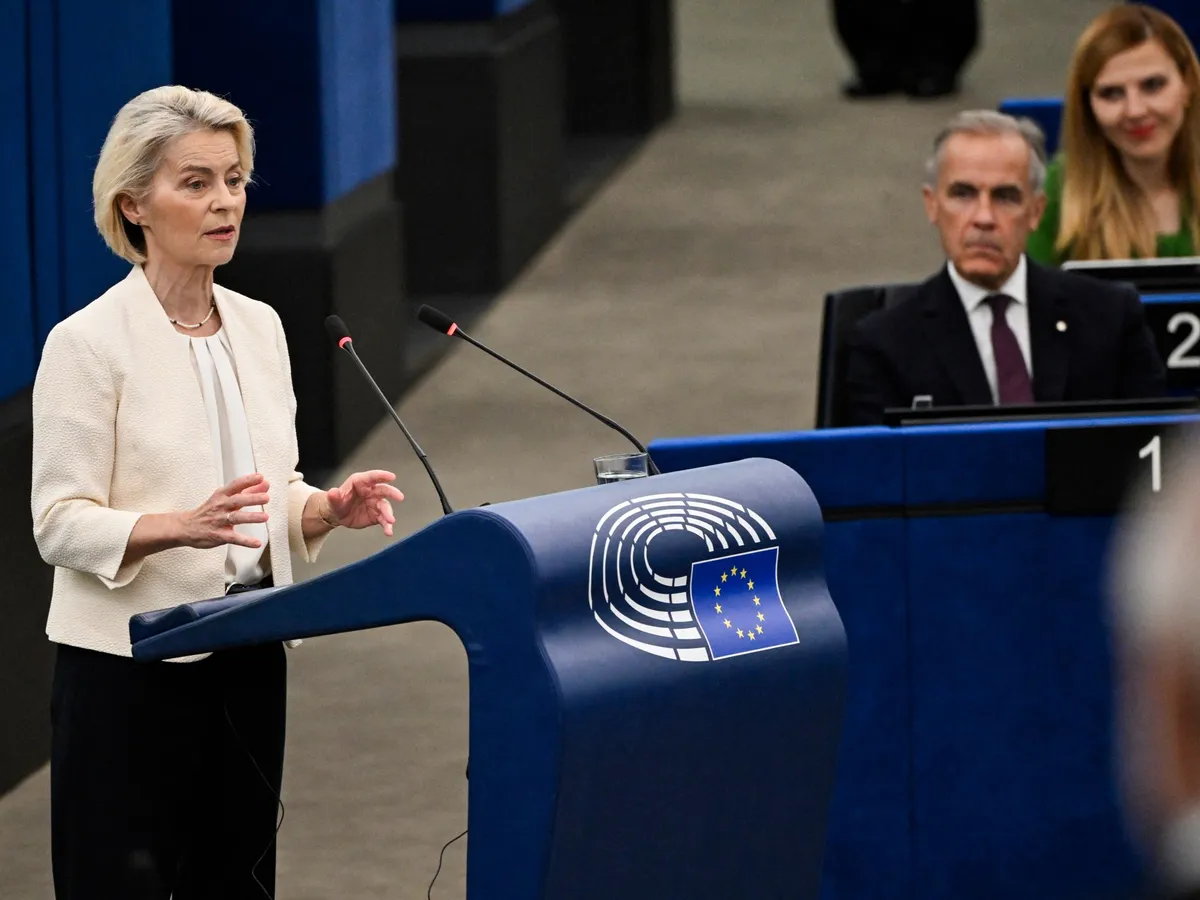
Prime Minister Mark Carney said earlier this week that Canada was seeking a ‘unique alliance’ with the European Union.European Commission President Ursula von der Leyen has raised the prospect of Canada becoming the 27-nation European Union’s first “associate member”, a striking overture as both seek to pivot away from a hostile United States under President Donald Trump.Von der Leyen’s statement on Wednesday came after Prime Minister Mark Carney said earlier this week that Canada was seeking a “unique alliance” with the EU, but not membership.Recommended Stories list of 3 itemslist 1 of 3Europe, Canada condemn Israeli plans for new West Bank settlementlist 2 of 3Five key takeaways from the NATO summit in Ankaralist 3 of 3‘A global rupture’: Carney calls for Canada-EU unity before G7 summitend of listVon der Leyen told the European Parliament in Strasbourg that, as democracies are facing a “fracture in the international rules-based system”, Brussels and Ottawa needed to pull closer together.“I would like to work with you on opening the door for Canada to be the first associate member of the EU,” von der Leyen told Carney, who was attending her annual keynote speech.The first foreign head of government to attend the annual “State of the European Union” address, his visit comes in advance of an EU-Canada summit in Montreal next month. Carney will deliver his own address to the European Parliament on Thursday.Von der Leyen said it was time to move from cooperation based on a trading relationship to a broader “alliance for the future” and “bring the relationship with Canada to the highest level possible”.She said that the EU and Canada would work together on sectors ranging from manufacturing to AI, critical minerals and energy.“This is a partnership not against anyone else, but for our common strength,” she added.EU treaties do not envision the possibility of becoming an “associate member”. But the idea was first proposed by German Chancellor Friedrich Merz this year regarding Ukraine.
SRCAl Jazeera
LANGEN
LEANCenter
WORDS322
ENT11
WED · 2026-09-16 · 13:18 GMTBRIEF NSR-2026-0916-111730
NSR-2026-0916-111730News Report·EN·Political Strategy
EU chief von der Leyen proposes ‘associate member’ status for Canada
European Commission President Ursula von der Leyen has proposed that Canada become the European Union's first "associate member." This overture follows Canadian Prime Minister Mark Carney's earlier statement that Canada was seeking a "unique alliance" with the EU. Von der Leyen stated that closer ties are needed as democracies face a "fracture in the international rules-based system." The proposed alliance aims to move beyond a trading relationship to a broader "alliance for the future," focusing on collaboration in sectors like manufacturing, AI, critical minerals, and energy.
By AFP and ReutersAl JazeeraFiled 2026-09-16 · 13:18 GMTLean · CenterRead · 2 min
Al JazeeraFIG 01
Reading time
2min
Word count
322words
Sources cited
3cited
Entities identified
11entities
Quality score
100%
§ 01
Briefing Summary
AI-generatedNEWSAR · AI
European Commission President Ursula von der Leyen has proposed that Canada become the European Union's first "associate member." This overture follows Canadian Prime Minister Mark Carney's earlier statement that Canada was seeking a "unique alliance" with the EU. Von der Leyen stated that closer ties are needed as democracies face a "fracture in the international rules-based system." The proposed alliance aims to move beyond a trading relationship to a broader "alliance for the future," focusing on collaboration in sectors like manufacturing, AI, critical minerals, and energy. This development comes ahead of an EU-Canada summit in Montreal next month, and while EU treaties do not currently envision associate membership, the concept has been previously suggested for Ukraine.
Confidence 0.90Sources 3Claims 4Entities 11
§ 02
Article analysis
Model · rule-basedFraming
Political Strategy
Diplomatic
Tone
Measured
AI-assessed
CalmNeutralAlarmist
Factuality
0.70 / 1.00
Factual
LowHigh
Sources cited
3
Well sourced
FewMany
§ 03
Key claims
4 extracted01
Canadian Prime Minister Mark Carney stated Canada was seeking a 'unique alliance' with the EU.
quoteMark Carney
Confidence
1.00
02
EU Commission President Ursula von der Leyen proposed Canada become the first 'associate member' of the EU.
quoteUrsula von der Leyen
Confidence
1.00
03
The EU and Canada will work together on sectors including manufacturing, AI, critical minerals, and energy.
factualUrsula von der Leyen
Confidence
0.90
04
EU treaties do not currently envision the possibility of 'associate member' status.
factual
Confidence
0.80
§ 04
Full report
2 min read · 322 words§ 05
Entities
11 identifiedKey playerOppositionContextPositiveNeutralNegative
People4
Organizations1
Locations5
§ 06
Keywords & salience
9 termsassociate member
1.00
unique alliance
0.90
european union
0.90
canada
0.90
international rules-based system
0.80
hostile united states
0.70
alliance for the future
0.60
ai
0.50
eu treaties
0.40
§ 07
Topic connections
Interactive graph Network visualization showing 51 related topics
View Full Graph Person Organization Location Event|Click node to navigate|Edge numbers = shared articles