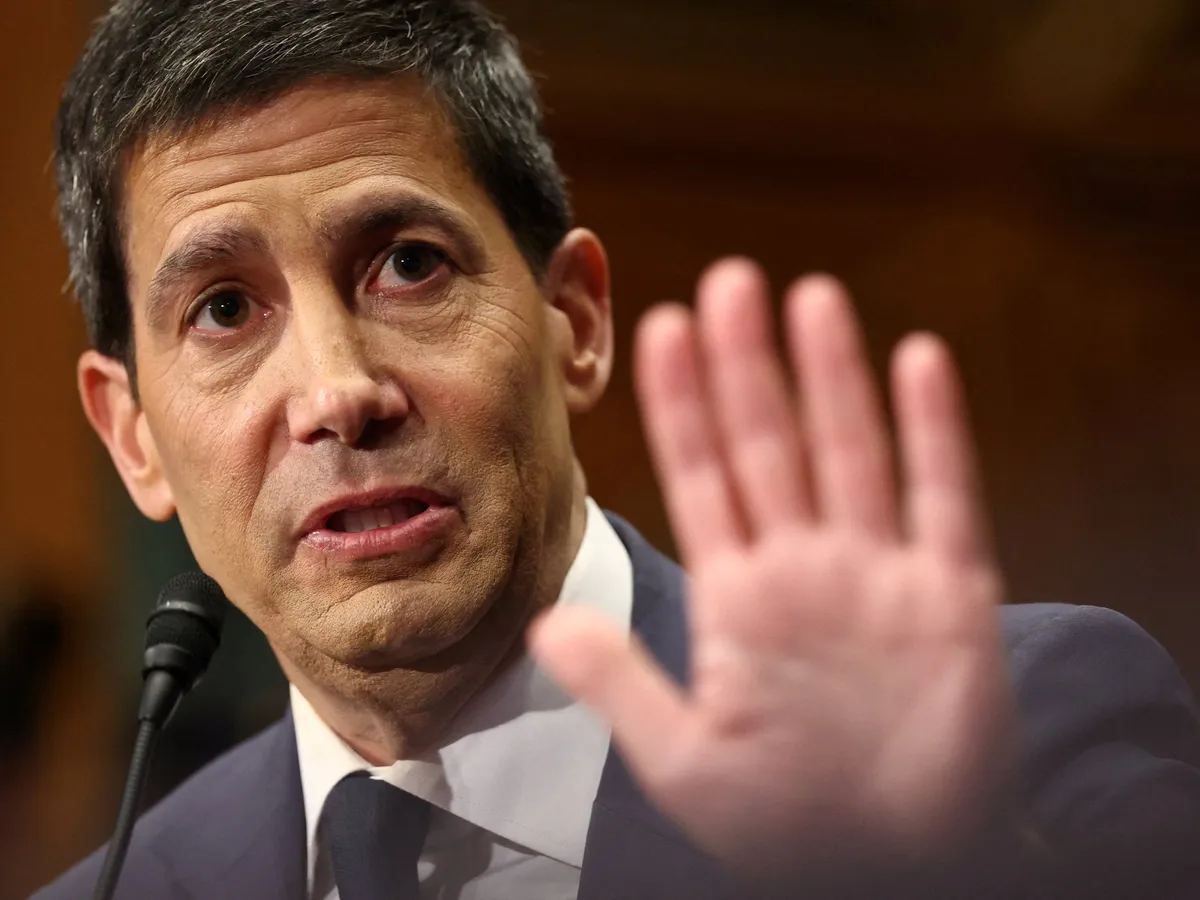
The 25 basis-point hike is the first raise in three years and comes before critical midterm elections in the United States.US Federal Reserve Chairman Kevin Warsh has been under pressure to increase interest rates as inflation continues to stay high [File: Kevin Lamarque/Reuters]Published On 16 Sep 2026The United States Federal Reserve has said it will raise interest rates by a quarter of a percentage point as inflation, driven by soaring fuel prices amid the US-Iran war, continues to weigh on the economy.The Fed, which is the central bank of the US, said on Wednesday that it will hike interest rates by 25 basis points to 3.75 percent to 4 percent.Recommended Stories list of 4 itemslist 1 of 4Mbappe, Vinicius and Konate court controversy with Ceuta solidarity shirtslist 2 of 4Iran war has cost the US $38bn: How will it impact US economy, politics?list 3 of 4Poll shows Americans are increasingly alarmed by AI’s ecological footprintlist 4 of 4UK trade unions back motion to boycott and sanction Israelend of listIt is the first hike in more than three years and comes just weeks before the US midterm elections, despite repeated demands from US President Donald Trump to lower rates.“Economic activity is expanding at a solid pace. While uncertainty remains elevated owing, in part, to geopolitical developments, domestic spending has been resilient,” the Fed said in a statement on Wednesday.“inflation remains elevated. Today’s policy action will support a timelier return to the Committee’s 2 percent goal. The Committee will deliver price stability.”After Wednesday’s hike, Fed officials expect one more rate increase this year, according to their quarterly projections, and expect rates to remain unchanged through next year.CME FedWatch, which tracks the likelihood of monetary policy decisions, forecast a 92.3 percent chance of the Fed increasing rates to 3.75 to 4 percent. A week ago, that forecast was a 40 percent chance of a quarter-percent rate increase.Stress on economyBut in the days since, a slew of data shifted those expectations.For one, consumer prices jumped in August by 0.4 percent, the highest increase in four months. Trump’s tariffs and capital spending to feed the artificial intelligence boom have also pressed prices.On an annual basis, prices rose 3.4 percent, matching the increase recorded in July, while the job market remains healthy.Since then, benchmark crude oil prices have continued to soar as strikes in the US-Israel war on Iran have intensified. Brent crude hovered near $109 per barrel on Tuesday.The average price for a gallon of petrol is $4.36 ($1.15 per litre), up 14 cents in the past week, and up from $4.06 ($1.07 per litre) last month, according to the American Automobile Association (AAA), which tracks daily petrol prices.Diesel, on the other hand, was at $6.31 ($1.67 per litre), the highest recorded average and roughly double from a year ago. That, in turn, is expected to further stoke prices as diesel is used in trucks to haul everything from fruits and vegetables to steel and cement.At the same time, the benchmark 10-year Treasury yield broke above the psychologically important 5 percent threshold on Tuesday, hitting 5.02 percent, its highest level in 19 years. The yield serves as a benchmark for borrowing costs, including car loans and home mortgages, and is a bellwether for inflation.“The economy is in an unusual place,” Michael Klein, professor of international economic affairs at Tufts University’s Fletcher School and executive editor of EconoFact, a nonpartisan economic and social policy publication, as unemployment remains at a comfortable level while higher prices continue to stick, sending inflation beyond the Fed’s target of 2 percent.“There [has been] a lot of pressure on Chairman Warsh to raise interest rates because of inflation coming in high, and that has been compounded by concerns about Trump’s pressure” as the president has continued to demand that interest rates be lowered, Klein said.“Higher interest rates tend to weaken the economy … but if the market believes that there’s going to be a rate increase, it’s priced in already as prices move on news, so this won’t be news,” Klein said, adding that should help steady yields.The White House did not immediately respond to Al Jazeera’s request for comment on the rate increase.Trump repeatedly berated Warsh’s predecessor, Jerome Powell, for not lowering rates. The government even launched a criminal probe into Powell, which he said at the time were “pretexts” to undermine the independence of the Fed.
SRCAl Jazeera
LANGEN
LEANCenter
WORDS727
ENT10
WED · 2026-09-16 · 18:03 GMTBRIEF NSR-2026-0916-111819
NSR-2026-0916-111819News Report·EN·Economic Impact
US Fed raises interest rates for first time in three years
The US Federal Reserve has raised interest rates by 25 basis points to a range of 3.75 to 4 percent, marking the first increase in three years. This decision comes as inflation remains elevated, driven by soaring fuel prices amid the US-Iran war and compounded by tariffs and capital spending.
Megha BahreeAl JazeeraFiled 2026-09-16 · 18:03 GMTLean · CenterRead · 3 min
Al JazeeraFIG 01
Reading time
3min
Word count
727words
Sources cited
3cited
Entities identified
10entities
Quality score
100%
§ 01
Briefing Summary
AI-generatedNEWSAR · AI
The US Federal Reserve has raised interest rates by 25 basis points to a range of 3.75 to 4 percent, marking the first increase in three years. This decision comes as inflation remains elevated, driven by soaring fuel prices amid the US-Iran war and compounded by tariffs and capital spending. The Fed stated that this action will support a return to its 2 percent inflation goal. Officials anticipate one more rate increase this year, with rates expected to remain unchanged through next year. The hike occurs shortly before the US midterm elections, despite President Donald Trump's repeated calls for lower rates.
Confidence 0.90Sources 3Claims 5Entities 10
§ 02
Article analysis
Model · rule-basedFraming
Economic Impact
Political Strategy
Tone
Measured
AI-assessed
CalmNeutralAlarmist
Factuality
0.80 / 1.00
Factual
LowHigh
Sources cited
3
Well sourced
FewMany
§ 03
Key claims
5 extracted01
This is the first interest rate hike by the US Federal Reserve in over three years.
factual
Confidence
1.00
02
The US Federal Reserve has raised interest rates by 25 basis points to 3.75 percent to 4 percent.
statisticUS Federal Reserve
Confidence
1.00
03
Consumer prices jumped in August by 0.4 percent, the highest increase in four months.
statistic
Confidence
0.90
04
Inflation remains elevated, driven by soaring fuel prices amid the US-Iran war.
factualUS Federal Reserve
Confidence
0.90
05
Benchmark crude oil prices have continued to soar as strikes in the US-Israel war on Iran have intensified.
factual
Confidence
0.80
§ 04
Full report
3 min read · 727 words§ 05
Entities
10 identifiedKey playerOppositionContextPositiveNeutralNegative
Organizations1
Locations1
Events4
§ 06
Keywords & salience
10 termsus federal reserve
1.00
interest rates
1.00
inflation
0.90
economy
0.80
us midterm elections
0.70
fuel prices
0.60
monetary policy
0.50
us-iran war
0.50
donald trump
0.40
artificial intelligence
0.40
§ 07
Topic connections
Interactive graph Network visualization showing 51 related topics
View Full Graph Person Organization Location Event|Click node to navigate|Edge numbers = shared articles