The country’s most deprived neighbourhoods will have higher crime rates and worse unemployment by the end of the parliament, according to a report written at the request of N 10.The forecasts from the Independent Commission on Neighbourhoods (Icon) show crime rates and unemployment will rise until the next election in England’s 613 most deprived neighbourhoods, despite the government’s promises to invest in local communities.The report’s authors warn the extra money ministers have pumped in is not enough to counteract longer-term trends such as the increase in antisocial behaviour and the problems facing the retail and hospitality sectors.Crime rate chartThe findings will add to growing unrest among many northern MPs about the government’s changes to local government funding, which they say will suck money away from northern towns.And they will make for grim reading for Keir Starmer, who has promised to fight the political threat of Reform UK by investing in local communities and regenerating deprived neighbourhoods.Ross Mudie, Icon’s head of research analysis and the author of the report, said: “In many of the areas that have disadvantaged neighbourhoods, such as Blackpool or Knowsley, we are seeing real terms cuts.“The best we are doing is closing the gap on some cuts, the worst is that we are actually leaving councils with historically high levels of deprivation in an even weaker financial position.”Former minister Justin Madders, the Labour MP for Ellesmere Port, said: “This is a stark warning that the many positive plans the government have will not be enough for us to reverse the years of decline many northern towns have suffered under the Tories.“The fact that No 10 is asking the question is a good start, but now they know the scale of the challenge and the implications of not acting, it is incumbent on them to come up with a proper plan, with the funding, so that at the next election Labour MPs can point to tangible improvements in their area.“This shows we have to go further and faster to show the positive difference a Labour government can make. Failing to do so will open the door to the populists.”Economic inactivity chartMudie said the government’s flagship Pride in Place scheme, under which 250 areas will get £20m over 10 years for local regeneration, would not be enough to undo the damage being done to disadvantaged neighbourhoods.“The Pride in Place programme gets us to the starting line to change disadvantaged communities, but as these forecasts show, we are going to need be much bolder if we are to reverse a decade of austerity, deep structural decline, and decaying high streets,” he said.Mudie analysed trends in neighbourhoods across England, classifying their levels of depravation by how far away they are from meeting the targets Starmer has set out under his five core “missions”.Neighbourhoods where more people are waiting more than 18 weeks for planned NHS treatment, for example, or where fewer children are ready to learn when they start school, are counted as being more deprived.The 613 most deprived neighbourhoods – defined as “mission critical” by Icon – are home to 1 million people and are clustered across the former industrial heartlands of the Midlands and the north. They are the areas that gave Boris Johnson his majority in 2019, then went Labour in 2024, and are now being targeted heavily by Reform UK.Mudie’s analysis of public data shows that these neighbourhoods have much higher crime and economic inactivity than English averages, with both set to deteriorate over the next four years.The average crime rate in these areas is 275 per 1,000 people – over double the English average – but in four years’ time it is forecast to be more than 300. The economic inactivity rate, meanwhile, is set to rise from 45% this year to 46% by 2030.The one area due to improve is health outcomes, with the number of people classified as being “in poor health” due to fall slightly from 10.6% this year to 10.3% by 2030.In a separate report released on Wednesday, Icon argues the government should commit as much as £2.5bn a year extra for disadvantaged neighbourhoods.Miatta Fahnbulleh, the local government minister, said: “The commission is right that communities are impatient for change and we don’t have a moment to lose. That is why we are getting behind 244 communities across the country through our Pride in Place programme, backed by £5bn over the next decade.”
SRCThe Guardian - World News
LANGEN
LEANCenter-Left
WORDS731
ENT6
WED · 2026-01-28 · 05:00 GMTBRIEF NSR-2026-0128-11192
NSR-2026-0128-11192News Report·EN·Economic Impact
England’s most deprived areas to get worse by next election, report for No 10 finds
A report commissioned by Downing Street forecasts worsening conditions in England's most deprived areas by the next election. The Independent Commission on Neighbourhoods (Icon) predicts rising crime rates and unemployment in 613 disadvantaged neighborhoods, despite government investment promises.
Kiran Stacey Policy editorThe Guardian - World NewsFiled 2026-01-28 · 05:00 GMTLean · Center-LeftRead · 3 min
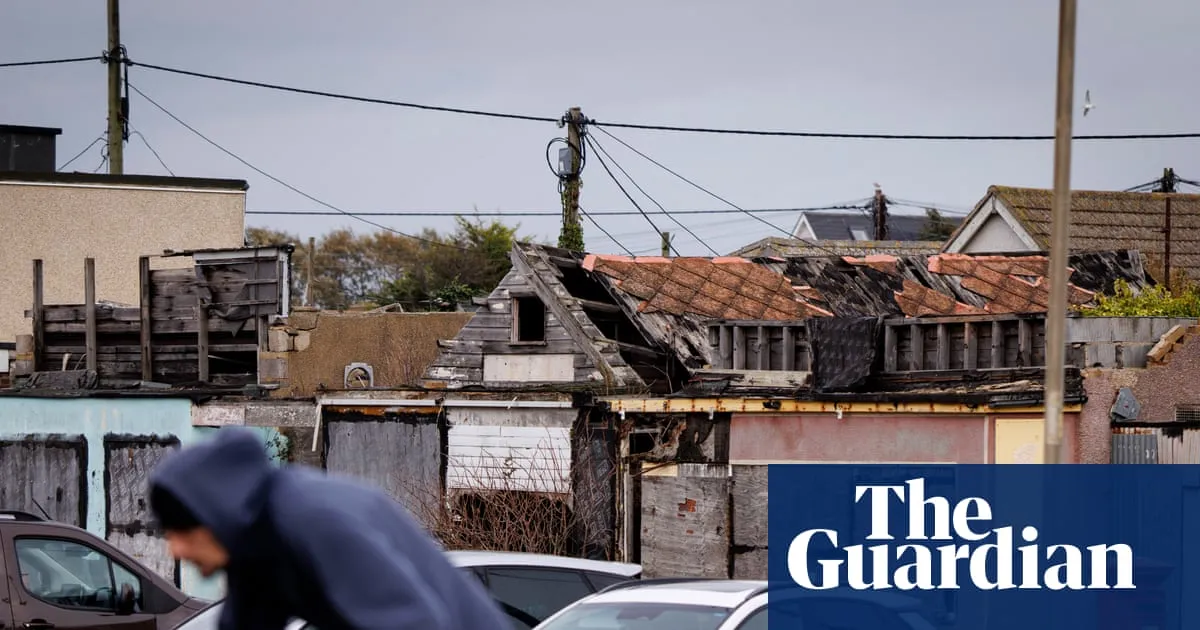
The Guardian - World NewsFIG 01
Reading time
3min
Word count
731words
Sources cited
3cited
Entities identified
6entities
Quality score
100%
§ 01
Briefing Summary
AI-generatedNEWSAR · AI
A report commissioned by Downing Street forecasts worsening conditions in England's most deprived areas by the next election. The Independent Commission on Neighbourhoods (Icon) predicts rising crime rates and unemployment in 613 disadvantaged neighborhoods, despite government investment promises. The report attributes this to long-term trends and insufficient funding to counteract issues like antisocial behavior and challenges in the retail and hospitality sectors. Critics, including northern MPs and Labour's Keir Starmer, express concern over local government funding changes and the need for more effective regeneration plans. Icon suggests current initiatives, like the Pride in Place scheme, are inadequate to reverse the decline in these communities.
Confidence 0.90Sources 3Claims 5Entities 6
§ 02
Article analysis
Model · rule-basedFraming
Economic Impact
Political Strategy
Tone
Measured
AI-assessed
CalmNeutralAlarmist
Factuality
0.70 / 1.00
Factual
LowHigh
Sources cited
3
Well sourced
FewMany
§ 03
Key claims
5 extracted01
250 areas will get £20m over 10 years for local regeneration under the Pride in Place scheme.
factualnull
Confidence
1.00
02
In many of the areas that have disadvantaged neighbourhoods, we are seeing real terms cuts.
quoteRoss Mudie, Icon’s head of research analysis
Confidence
0.90
03
England’s 613 most deprived neighbourhoods will have higher crime rates and worse unemployment by the next election.
predictionIndependent Commission on Neighbourhoods (Icon)
Confidence
0.90
04
Extra money ministers have pumped in is not enough to counteract longer-term trends.
factualreport’s authors
Confidence
0.80
05
The Pride in Place programme gets us to the starting line to change disadvantaged communities.
quoteRoss Mudie
Confidence
0.70
§ 04
Full report
3 min read · 731 words§ 05
Entities
6 identifiedKey playerOppositionContextPositiveNeutralNegative
Locations1
§ 06
Keywords & salience
10 termsdeprived neighbourhoods
0.90
crime rates
0.70
unemployment
0.70
local communities
0.60
local government funding
0.60
next election
0.60
economic inactivity
0.50
antisocial behaviour
0.50
pride in place scheme
0.50
government investment
0.40
§ 07
Topic connections
Interactive graph Network visualization showing 51 related topics
View Full Graph Person Organization Location Event|Click node to navigate|Edge numbers = shared articles