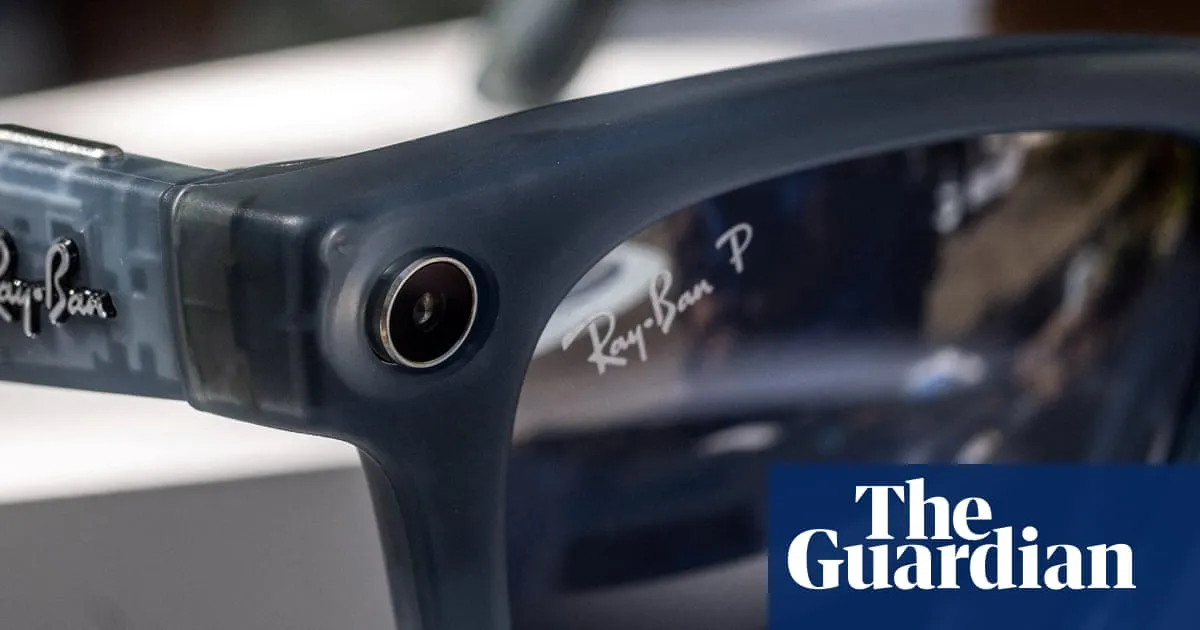
The Albanese government is considering a “world-leading” ban on smart glasses in its offices and service centres as councils around Australia push the technology out of public spaces over privacy fears.The government has avoided a sweeping ban on the import of the camera-equipped technology and encouraged individual workplaces to set their own rules.The public service minister, Katy Gallagher, said on Thursday she had asked the Australian public service for advice on whether the glasses should be prohibited.“We need clear and consistent guidance for public servants,” Gallagher said.“Smart glasses can raise legitimate privacy and security concerns, particularly because of their ability to record and capture information.”Commonwealth-run workplaces range from bureaucrats’ offices to Centrelink service centres and CSIRO laboratories.Schools and hospitals run by state governments would be left to set their own rules over the technology, which have grown increasingly popular but raised public outcry.A University of Sydney study of smart glasses-filmed videos posted on Instagram found 60% of a sample could be classified as potential harassment.The Albanese government said it was seeking to set a world-leading standard. So far, no national government has banned the glasses’ use across their agencies.Courts in England and Wales in the UK and New York state in the US have banned the technology, while the US Immigration and Customs Enforcement (ICE) agency reportedly classified them as body-worn cameras and barred them from the “federal workspace”.A local council in Sydney on Tuesday became the latest to issue a targeted bans on the use of the technology. Canterbury-Bankstown’s mayor, Bilal El-Hayek, decried what he called “pervert glasses” as the council barred the wearable tech from public pools.In August, Brisbane city council became the first to ban the glasses from pools and Melbourne’s Yarra city council has banned them from playgrounds, childcare centres and gyms.The City of Sydney and the Blacktown city councils have prohibited pool patrons from using smart glasses to record.Speaking to Channel Seven earlier this month, the federal attorney general, Michelle Rowland, praised councils’ decisions and said she would consult businesses on their approach.“Businesses know that good privacy is good business,” Rowland said.“But … we want to make sure we get the balance right and we don’t unfairly discriminate against people who are using this technology to better participate in society.”Vision Australia and some people living with disabilities have praised the technology as a support for people who are blind or have low vision. Rowland said the government was not pursuing a ban but had not “ruled anything out”.Could Meta’s ‘pervert glasses’ be banned across the UK? - The LatestGallagher said she wanted the Australian public service to set the national standard as a “model employer”.“Technology is changing rapidly and as a major employer the Commonwealth needs to make sure our workplace policies keep pace,” Gallagher said.Pending restrictions on smart glasses would be the federal government’s latest workplace technology reform after it issued guidance on the use of AI in the public service last week.The guidelines indicate employees would not need to be consulted on every new tool but should be consulted for major initiatives or changes to how they carry out work.Major businesses will contribute to new national guidelines on AI in workplaces, with Commonwealth Bank, Microsoft, AGL, Telstra, Kmart, Blackmores Group and Ramsay Health Care to attend a roundtable on Friday.Amanda Rishworth, the employment minister, said the government wanted to use the roundtable to take on the lessons of businesses already using AI.“Workers and businesses need the capability to adopt new technologies with confidence that appropriate safeguards are in place,” Rishworth said.Additional reporting from Caitlin Cassidy
SRCThe Guardian - World News
LANGEN
LEANCenter-Left
WORDS592
ENT11
THU · 2026-09-17 · 12:00 GMTBRIEF NSR-2026-0917-111998
NSR-2026-0917-111998News Report·EN·Technology
Albanese government considers ‘world-leading’ ban on smart glasses in public offices and buildings
The Australian government is considering a ban on smart glasses in Commonwealth-run offices and service centres due to privacy and security concerns. Public Service Minister Katy Gallagher has requested advice on prohibiting the devices, which can record information, in workplaces like Centrelink and CSIRO labs.
Luca IttimaniThe Guardian - World NewsFiled 2026-09-17 · 12:00 GMTLean · Center-LeftRead · 3 min
The Guardian - World NewsFIG 01
Reading time
3min
Word count
592words
Sources cited
7cited
Entities identified
11entities
Quality score
100%
§ 01
Briefing Summary
AI-generatedNEWSAR · AI
The Australian government is considering a ban on smart glasses in Commonwealth-run offices and service centres due to privacy and security concerns. Public Service Minister Katy Gallagher has requested advice on prohibiting the devices, which can record information, in workplaces like Centrelink and CSIRO labs. This potential ban aims to establish a "world-leading" standard, as no national government has yet implemented such a widespread restriction across its agencies. While the government is not pursuing a complete import ban, it encourages individual workplaces to set their own rules. This move follows similar targeted bans by local councils on smart glasses in public spaces like pools and playgrounds.
Confidence 0.90Sources 7Claims 5Entities 11
§ 02
Article analysis
Model · rule-basedFraming
Technology
Legal & Judicial
Tone
Mixed Tone
AI-assessed
CalmNeutralAlarmist
Factuality
0.70 / 1.00
Factual
LowHigh
Sources cited
7
Well sourced
FewMany
§ 03
Key claims
5 extracted01
Smart glasses can raise legitimate privacy and security concerns, particularly because of their ability to record and capture information.
quoteKaty Gallagher
Confidence
1.00
02
Courts in England and Wales and New York state have banned the technology.
factualarticle
Confidence
0.90
03
The Albanese government is considering a ban on smart glasses in its offices and service centres.
factualAlbanese government
Confidence
0.90
04
Vision Australia and some people living with disabilities have praised the technology as a support for people who are blind or have low vision.
factualVision Australia and people living with disabilities
Confidence
0.80
05
A University of Sydney study found 60% of smart glasses-filmed videos posted on Instagram could be classified as potential harassment.
statisticUniversity of Sydney study
Confidence
0.80
§ 04
Full report
3 min read · 592 words§ 05
Entities
11 identifiedKey playerOppositionContextPositiveNeutralNegative
Organizations5
§ 06
Keywords & salience
10 termssmart glasses
1.00
privacy fears
0.90
government ban
0.80
public offices
0.70
recording technology
0.60
albanese government
0.50
security concerns
0.50
public spaces
0.40
harassment
0.40
wearable tech
0.40
§ 07
Topic connections
Interactive graph Network visualization showing 22 related topics
View Full Graph Person Organization Location Event|Click node to navigate|Edge numbers = shared articles