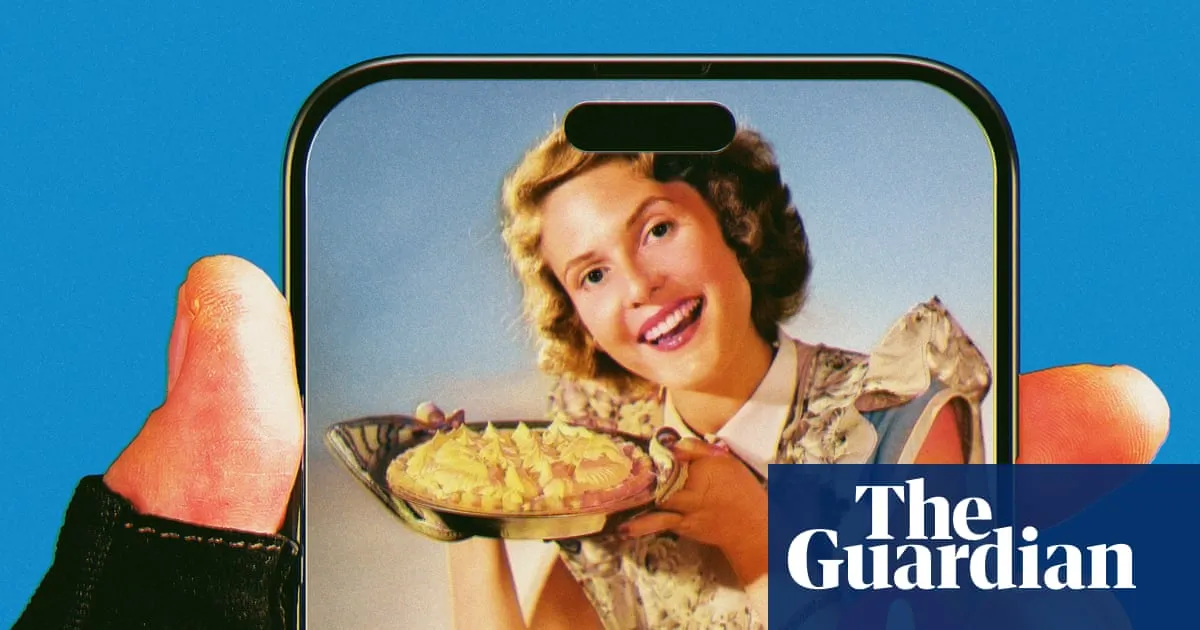
The FBI internally warned that a group of women were creating fake online dating accounts with “tradwife” aesthetics in an effort to lure US immigration agents and “dox” them.The FBI in Chicago disseminated a brief memo to other law enforcement officials across the US on the potential threat to agents in February, warning that “as of late January 2026, a small group of women allegedly were creating fictitious online dating profiles with the purpose of attracting and then doxxing law enforcement participating in immigration enforcement”. The report, which was shared with the Guardian, provided few details about the alleged scheme and did not explain the source of the information.“These profiles were incorporating imagery of a ‘traditional wife’ aesthetic and listing specific interests in an attempt to appeal to … individuals in law enforcement,” the FBI continued. “The objective was to lure affiliated law enforcement personnel into an online or in-person interaction under the guise of a date, after which the individuals would be publicly exposed and doxed online. The tactic is intended to generate public embarrassment and deter immigration enforcement activity.”Property of the People, a government-transparency non-profit, obtained the document through a public records request, one of many internal records the group has collected revealing internal law enforcement concerns about activists organizing against Immigration and Customs Enforcement (ICE).The FBI’s “situational information report” did not list the dating sites allegedly used by the women or where they were located, nor did it specify whether agents had actually been exposed. The memo aimed “to raise awareness” about this doxing “technique”, the FBI wrote, adding a disclaimer that the report was “not finally evaluated intelligence”.The FBI’s “tradwife” comments were a reference to the trend popularized in recent years by influencers promoting traditional gender roles, with women romanticizing domesticity. “doxing” generally refers to publishing someone’s private information online without their consent, though the administration has used the term loosely, claiming doxing includes posting videos of officers.The FBI declined to answer detailed questions about the memo, saying the bureau doesn’t generally comment on intelligence briefings. A spokesperson added in an email: “The FBI regularly shares information with our law enforcement partners to assist in protecting the communities they serve as well as protecting those who serve and protect communities. The FBI is committed to ensuring that law enforcement officers are safe from threats or violence while performing their duties.”The Department of Homeland Security (DHS) did not respond to requests for comment.The memo was sent weeks after the New York Post, a conservative outlet, ran a story saying that “lefty TikTokkers” were “orchestrating groups of women” to “chase dick picks and selfies of ICE agents in a twisted scheme to dox them”. That story cited Libs of TikTok, a rightwing account that had posted a screenshot of someone claiming to be part of a Facebook group dedicated to going on dates with agents to expose them. The article listed a handful of posts and videos from users discussing this tactic, though it did not include interviews with anyone who claimed to be duping agents and there was no evidence agents had been tricked.The news coverage did not mention women using “tradwife” imagery, so it’s unclear whether the FBI may have received direct accounts from targeted agents or was simply summarizing social media trends.“It’s absurd the FBI issued a thinly-sourced security alert about ICE agents’ online dating troubles,” Ryan Shapiro, executive director of Property of the People, said in a statement. “It’s equally ludicrous the FBI is spending taxpayer dollars to protect ICE agents from possible ‘embarrassment’ at the hands of a supposed ‘small group of women’ who might name and ridicule them online.”Mike German, a former FBI agent and longtime civil liberties advocate, reviewed the document for the Guardian and said it was odd the briefing did not have footnotes or citations. The briefing said the intelligence came from a “collaborative source”.“The rightwing echo chamber creates threats and the government’s intelligence apparatus just repeats those threats without any context, more detail or any instruction of how agents or officers should respond,” said German, arguing it seemed likely the briefing was inspired by the New York Post story. “They must have run out of other threats.”The document, German added, “reinforces the paranoid ‘us versus them’ mentality within law enforcement”.The briefing comes as US law enforcement has raised increasing alarms about officials, and ICE agents in particular, being “doxed”. More than a dozen internal law enforcement reports, obtained via records requests by Property of the People, include similar warnings about doxing.An October 2025 report from the US army said there was “credible intelligence” that “cartels” had offered to pay gang members and others in the US to dox, assault or kidnap immigration officers. That report cited charges against a man accused of a murder-for-hire plot targeting a top border patrol leader, but the man was found not guilty months later.In a November 2025 report, the FBI warned that AI, facial-recognition and automated data-scraping tools had “increased the scale and accuracy of doxxing attacks” targeting ICE officers. The alert said people had published ICE officers’ names, photos, license plates, locations and family details, citing various crowdsourced efforts by activists to report ICE sightings.In a January 2026 New York police department “terrorism brief”, the NYPD warned of “violent rhetoric” and “extremist messaging” on social media after the killing of Renee Good, including “calls to ‘hunt down’, ‘dox’, and kill ICE personnel”. The report cited a small number of online posts that appeared to call for violence.And a May 2026 alert from Customs and Border Protection (CBP), a branch of DHS, warned that smart glasses, which have cameras, could be used to surveil, record and potentially dox CBP personnel. A CBP spokesperson did not comment directly on the document, but said in an email that smart glasses “pose unique security and intelligence risks because of their ability to discreetly capture audio and video” and the agency continues to monitor technology trends. Property of the People shared records with the Guardian earlier this month showing law enforcement across the US have grown increasingly concerned that smart glasses could be used against officers.Other law enforcement agencies that have raised concerns about ICE agents being doxed in internal records include the FBI in Los Angeles, the Amtrak police department, an Idaho law enforcement consortium, a Florida fusion center of local and federal agencies, and the Federal Protective Service, which is also part of DHS.There can be safety concerns if agents’ home addresses or family information is exposed, and two activists were convicted of “stalking” in California after prosecutors said they followed an agent home and publicly disclosed the location.But German argued law enforcement’s claims about doxing were misguided, noting that ICE officers are domestic servants, not “secret agents” whose identities must be shielded: “These are agents working on the public dime. The public has a right to know who they are and what their qualifications and training are.”
SRCThe Guardian - World News
LANGEN
LEANCenter-Left
WORDS1 154
ENT10
THU · 2026-09-17 · 14:00 GMTBRIEF NSR-2026-0917-112044
NSR-2026-0917-112044News Report·EN·National Security
FBI warned ICE agents could be targeted by fake ‘tradwife’ dating profiles, memo reveals
An internal FBI memo, disseminated in February, warned law enforcement about a group of women allegedly creating fake online dating profiles with a "tradwife" aesthetic. The purpose, according to the memo, was to lure US immigration agents into interactions and then "dox" them, intending to cause public embarrassment and deter immigration enforcement.
Sam Levin in Los AngelesThe Guardian - World NewsFiled 2026-09-17 · 14:00 GMTLean · Center-LeftRead · 5 min
The Guardian - World NewsFIG 01
Reading time
5min
Word count
1 154words
Sources cited
2cited
Entities identified
10entities
Quality score
100%
§ 01
Briefing Summary
AI-generatedNEWSAR · AI
An internal FBI memo, disseminated in February, warned law enforcement about a group of women allegedly creating fake online dating profiles with a "tradwife" aesthetic. The purpose, according to the memo, was to lure US immigration agents into interactions and then "dox" them, intending to cause public embarrassment and deter immigration enforcement. The FBI memo, obtained by The Guardian, provided few details about the scheme, including the specific dating sites used or if any agents had been targeted. This warning was shared to raise awareness of this doxing technique, though it was noted as not "finally evaluated intelligence." The FBI declined to comment on the memo, stating they regularly share information with partners to ensure officer safety.
Confidence 0.90Sources 2Claims 5Entities 10
§ 02
Article analysis
Model · rule-basedFraming
National Security
Political Strategy
Tone
Mixed Tone
AI-assessed
CalmNeutralAlarmist
Factuality
0.70 / 1.00
Factual
LowHigh
Sources cited
2
Limited
FewMany
§ 03
Key claims
5 extracted01
The FBI's report was not finally evaluated intelligence and provided few details about the alleged scheme or its source.
factualFBI memo
Confidence
0.95
02
Property of the People obtained the FBI document through a public records request, revealing internal law enforcement concerns about activists organizing against ICE.
factualProperty of the People
Confidence
0.95
03
The FBI memo was disseminated in February, warning about a scheme that was ongoing as of late January 2026.
factualFBI memo
Confidence
0.90
04
The FBI memo stated the objective was to publicly expose and dox law enforcement personnel to generate embarrassment and deter immigration enforcement.
factualFBI memo
Confidence
0.90
05
FBI internally warned that a group of women were creating fake online dating accounts with “tradwife” aesthetics to lure and dox US immigration agents.
factualFBI memo
Confidence
0.90
§ 04
Full report
5 min read · 1 154 words§ 05
Entities
10 identifiedKey playerOppositionContextPositiveNeutralNegative
People1
Organizations4
§ 06
Keywords & salience
10 termsdoxing
1.00
tradwife
0.90
fbi
0.80
ice agents
0.80
dating profiles
0.70
law enforcement
0.70
online security
0.60
activists
0.50
public embarrassment
0.50
immigration enforcement
0.40
§ 07
Topic connections
Interactive graph Network visualization showing 51 related topics
View Full Graph Person Organization Location Event|Click node to navigate|Edge numbers = shared articles