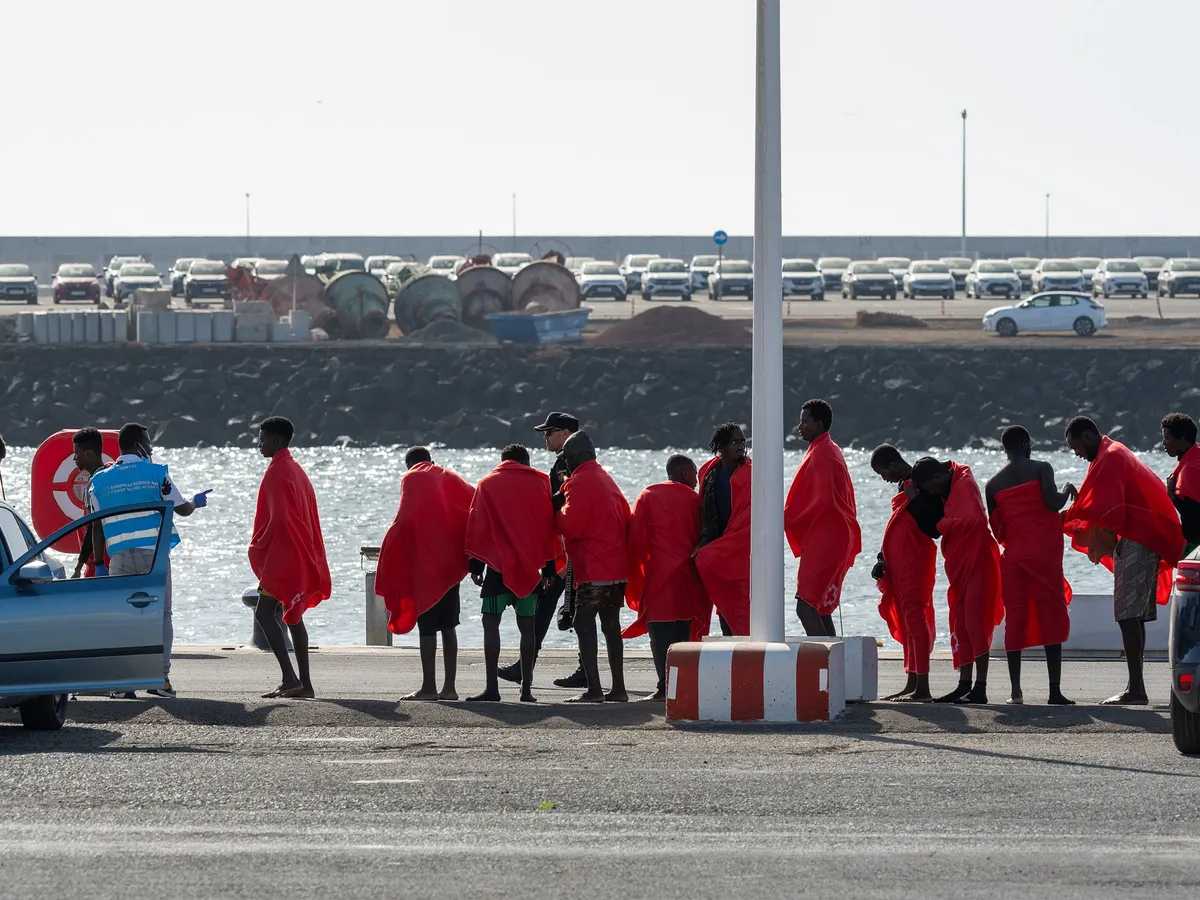
More than 2,200 migrants died or vanished at sea in 2026, despite declining crossings into Europe, says IOM.The number of migrants crossing to Europe via sea routes has dropped sharply since January this year, as the journey is becoming more dangerous, according to a new report by the International Organization for Migration (IOM).The agency said about 60,000 migrants and refugees reached Europe by boat so far in 2026, down 39 percent from roughly 98,000 over the same period last year.Recommended Stories list of 4 itemslist 1 of 4Spain asks EU for help to process 5,000 Ceuta migrants amid local unrestlist 2 of 4Spain’s Sanchez says Russia, Israel spread disinformation on Ceuta crisislist 3 of 4Five killed, dozens more feared dead in boat adrift off Canary Islandslist 4 of 4Five EU nations inch towards deal on migrant ‘return hubs’ by 2027end of listThe new report shows that, despite the decline, at least 2,292 people have died or gone missing attempting the crossing, up from 1,999 over the same period last year, many on overcrowded, ill-suited boats departing Libya’s coast.“These figures tell two stories at once,” IOM Director General Amy Pope said Thursday.“Fewer people are arriving by sea in Europe than at this point last year,” Pope said, noting that “people are still dying and going missing in alarming numbers trying to reach safety”.“Behind every number is a human being, a family, a community,” she added, calling for “sustained international cooperation that saves lives, protects people on the move, combats trafficking and exploitation, and expands safe, regular pathways”.“Nearly every death and disappearance at sea is preventable,” she said.The toll varies by route, but the Mediterranean and Atlantic routes are “the deadliest maritime routes in the world”, according to the IOM.A picture shows makeshift tents of migrants on Benitez beach in Ceuta, Spain, on September 13, 2026 [Antonio Sempere/AFP]Arrivals via the Central Mediterranean, the main crossing from North Africa to Italy, fell by more than half, yet deaths there still climbed from 844 to 996.
SRCAl Jazeera
LANGEN
LEANCenter
WORDS332
ENT12
THU · 2026-09-17 · 23:42 GMTBRIEF NSR-2026-0918-112142
NSR-2026-0918-112142News Report·EN·Human Interest
Migrant sea crossings to Europe drop sharply as deaths rise: IOM
The International Organization for Migration (IOM) reports a significant decrease in migrant sea crossings to Europe in 2026, with approximately 60,000 arrivals by boat, a 39% drop from the previous year. Despite fewer crossings, the number of deaths and disappearances at sea has risen to at least 2,292, an increase from 1,999 in the same period last year.
Al Jazeera StaffAl JazeeraFiled 2026-09-17 · 23:42 GMTLean · CenterRead · 2 min
Al JazeeraFIG 01
Reading time
2min
Word count
332words
Sources cited
2cited
Entities identified
12entities
Quality score
100%
§ 01
Briefing Summary
AI-generatedNEWSAR · AI
The International Organization for Migration (IOM) reports a significant decrease in migrant sea crossings to Europe in 2026, with approximately 60,000 arrivals by boat, a 39% drop from the previous year. Despite fewer crossings, the number of deaths and disappearances at sea has risen to at least 2,292, an increase from 1,999 in the same period last year. Many of these fatalities occurred on overcrowded boats departing from Libya. The IOM highlights that the Mediterranean and Atlantic routes are the deadliest maritime routes globally, with deaths increasing even as arrivals via the Central Mediterranean route fell by over half. The organization emphasizes that these deaths are preventable and calls for international cooperation to save lives and protect migrants.
Confidence 0.90Sources 2Claims 5Entities 12
§ 02
Article analysis
Model · rule-basedFraming
Human Interest
Social Justice
Tone
Measured
AI-assessed
CalmNeutralAlarmist
Factuality
0.80 / 1.00
Factual
LowHigh
Sources cited
2
Limited
FewMany
§ 03
Key claims
5 extracted01
Nearly every death and disappearance at sea is preventable.
quoteAmy Pope (IOM Director General)
Confidence
1.00
02
The Mediterranean and Atlantic routes are the deadliest maritime routes in the world.
statisticIOM
Confidence
1.00
03
At least 2,292 people have died or gone missing attempting the crossing, up from 1,999 over the same period last year.
statisticIOM
Confidence
1.00
04
About 60,000 migrants and refugees reached Europe by boat so far in 2026, down 39 percent from the same period last year.
statisticIOM
Confidence
1.00
05
More than 2,200 migrants died or vanished at sea in 2026, despite declining crossings into Europe.
statisticIOM
Confidence
1.00
§ 04
Full report
2 min read · 332 words§ 05
Entities
12 identifiedKey playerOppositionContextPositiveNeutralNegative
§ 06
Keywords & salience
10 termsmigrant deaths
1.00
migrant sea crossings
1.00
international organization for migration
0.90
europe
0.80
dangerous journey
0.70
mediterranean routes
0.60
atlantic routes
0.50
libya
0.40
ceuta
0.40
humanitarian crisis
0.40
§ 07
Topic connections
Interactive graph Network visualization showing 35 related topics
View Full Graph Person Organization Location Event|Click node to navigate|Edge numbers = shared articles