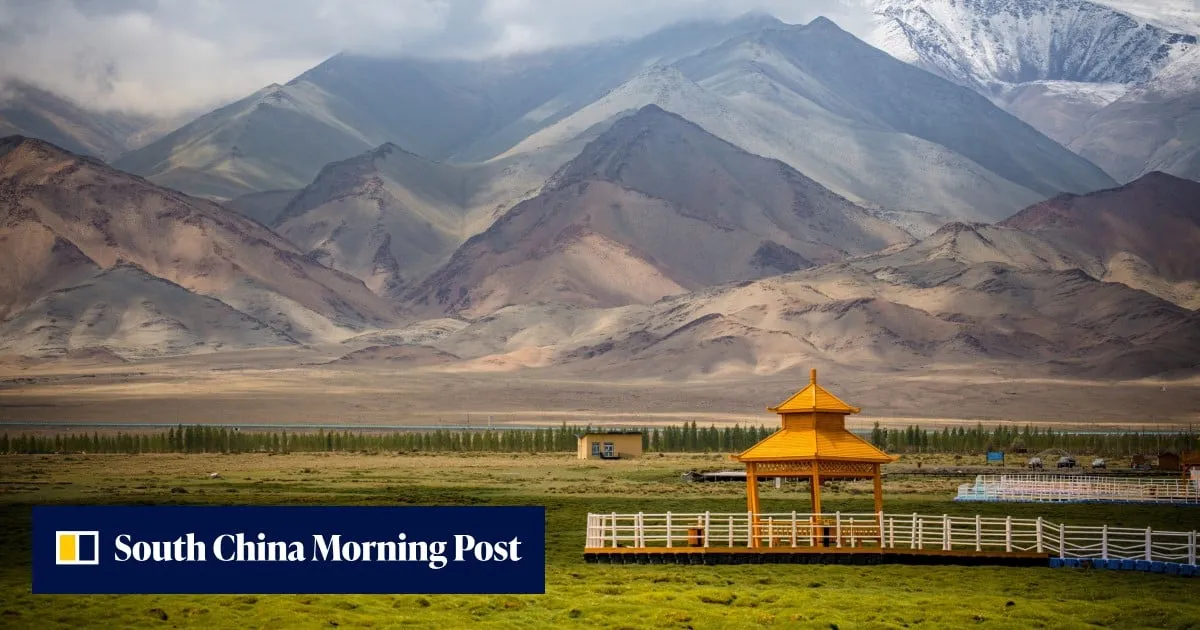
Nestled between the Tianshan Mountains and the Gobi Desert, the Hami oasis in Xinjiang Uygur autonomous region is a land of little rain, battered by wind and sand year-round.It is also home to the region’s oldest known burial site, the Tianshanbeilu cemetery, located around 500km (310 miles) east of Urumqi, the regional capital. More than 700 Bronze Age tombs have been unearthed here, long assumed to belong to Eurasian nomads who migrated eastward from the steppes.But a study published on Friday in the journal Science upends that view, revealing a previously unknown, genetically mixed population that lived in the eastern Tianshan region 3,600 years ago, during China’s Shang dynasty (1600-1050BC).
SRCSouth China Morning Post
LANGEN
LEANCenter-Right
WORDS110
ENT8
FRI · 2026-09-18 · 01:00 GMTBRIEF NSR-2026-0918-112151
NSR-2026-0918-112151News Report·EN·Human Interest
Scientists trace half the DNA in Xinjiang’s oldest tombs to Yellow River farmers
A new study published in the journal *Science* has revealed that the ancient population of the Tianshanbeilu cemetery in Xinjiang, China, was genetically mixed. Previously, these Bronze Age tombs, dating back 3,600 years to China's Shang dynasty, were believed to belong to Eurasian nomads.
Shi HuangSouth China Morning PostFiled 2026-09-18 · 01:00 GMTLean · Center-RightRead · 1 min
South China Morning PostFIG 01
Reading time
1min
Word count
110words
Sources cited
1cited
Entities identified
8entities
Quality score
100%
§ 01
Briefing Summary
AI-generatedNEWSAR · AI
A new study published in the journal *Science* has revealed that the ancient population of the Tianshanbeilu cemetery in Xinjiang, China, was genetically mixed. Previously, these Bronze Age tombs, dating back 3,600 years to China's Shang dynasty, were believed to belong to Eurasian nomads. However, genetic analysis shows that approximately half of the DNA found in these oldest tombs originates from farmers of the Yellow River region. This discovery challenges the long-held assumption about the origins of the people who lived in this eastern Tianshan region, indicating a more complex population history than previously understood.
Confidence 0.85Sources 1Claims 5Entities 8
§ 02
Article analysis
Model · rule-basedFraming
Human Interest
Technology
Tone
Measured
AI-assessed
CalmNeutralAlarmist
Factuality
0.90 / 1.00
Factual
LowHigh
Sources cited
1
Limited
FewMany
§ 03
Key claims
5 extracted01
This population lived in the region during China’s Shang dynasty (1600-1050BC).
factualstudy published in the journal Science
Confidence
1.00
02
A study reveals a previously unknown, genetically mixed population lived in eastern Tianshan 3,600 years ago.
factualstudy published in the journal Science
Confidence
1.00
03
More than 700 Bronze Age tombs have been unearthed at the Tianshanbeilu cemetery.
statistic
Confidence
1.00
04
The Tianshanbeilu cemetery in Xinjiang is the region’s oldest known burial site.
factual
Confidence
1.00
05
Half the DNA in Xinjiang’s oldest tombs originates from Yellow River farmers.
factualstudy published in the journal Science
Confidence
1.00
§ 04
Full report
1 min read · 110 words§ 05
Entities
8 identifiedKey playerOppositionContextPositiveNeutralNegative
Locations5
§ 06
Keywords & salience
9 termsxinjiang
1.00
yellow river farmers
1.00
dna
0.90
bronze age tombs
0.80
genetically mixed population
0.70
tianshanbeilu cemetery
0.70
shang dynasty
0.60
eurasian nomads
0.50
hami oasis
0.40
§ 07
Topic connections
Interactive graph No topic relationship data available yet. This graph will appear once topic relationships have been computed.