New sanctions highlight Israel’s isolation, yet analysts say they won’t sway voters before October’s elections.Israeli soldiers arrive in the village of Qusra, south of the city of Nablus in the Israeli-occupied West Bank [File: AFP]Published On 18 Sep 2026Israeli politicians reacted to sanctions by states including the United Kingdom, France, and Canada on the country’s illegal settlements in the occupied West Bank with self-righteous anger. But what is the latest example of Israel’s international isolation brought on by its treatment of the Palestinian people has not been influential in swaying the electorate in the run-up to October’s elections, analysts tell Al Jazeera.Responding to the UK Foreign Minister Ed Miliband’s accusation that Israelis were ethnically cleansing the occupied West Bank, Israel’s Gideon Saar accused his counterpart of spreading “outrageous lies” and attempting to interfere in the election through foreign pressure.Recommended Stories list of 4 itemslist 1 of 4How Israel systematically dismantles Palestinian life in occupied West Banklist 2 of 4UK trade unions back motion to boycott and sanction Israellist 3 of 4Pernicious states: Towards a new grammar of international relationslist 4 of 4UK charities, protest groups: Israeli ban threat ‘will not intimidate us’end of listIsraeli President Isaac Herzog also condemned the measures, branding them a “gross interference in the democratic elections” of Israel.But, in reality, the majority of Jewish Israelis have supported their country’s genocidal war in Gaza and the occupation of the West Bank.A poll from August, published as the death toll for Palestinians killed in the West Bank had already reached 76 this year, showed that more than half of Jewish Israelis supported retaining the illegal settlements as part of any future agreement on a Palestinian state, while nearly 40 percent supported annexing the territory in defiance of international law.“People just don’t care that settlements are illegal,” Israeli political analyst Ori Goldberg said.”Ed Miliband expressed a number of laudable sentiments when announcing the measures,” Goldberg said, referencing the UK foreign secretary’s references to his own Jewish heritage when announcing the cessation of trade with Israel’s illegal outposts. “But we’re at the stage where Israelis aren’t even interested in the truth so much as they are the sentiment.”Little political impactIsraeli Prime Minister Benjamin Netanyahu goes into the elections at serious risk of losing, with many polls predicting that a coalition of parties opposed to him could win the majority in Israel’s parliament.But it will not be issues like the settlement-related sanctions that will lose him votes, analysts said.Public backing for the “government and opposition blocs are pretty hardened, and nobody is going to switch from one side to the other over sanctions arising from [the settlements],” Michael Koplow, chief policy officer at the Israeli Policy Forum, said. He added that the sanctions were unlikely to weigh as heavily with the electorate as “this government’s record and the related feelings people have about Netanyahu”.“When people were asked what would determine their vote, security came first,” Israeli sociologist Yehouda Shenhav-Shahrabani said.“I think there are several mechanisms operating simultaneously,” he added.First, he said, is the normalisation of the settlements. In Israeli public discourse, the occupied West Bank is increasingly referred to by the biblical name “Judea and Samaria” – a shift he said was becoming institutionalised.“Second, external sanctions don’t necessarily translate into domestic political costs,” Shenhav-Shahrabani said. “And perhaps most importantly, politically foreign pressure can be absorbed into an existing Israeli narrative [of anti-Semitism] rather than [changing how the issue itself is understood].”No criticism of the votersNone of Israel’s most prominent politicians has criticised the government for its support of the settlements in defiance of international condemnation. Yair Lapid, a former prime minister and one of Netanyahu’s leading opponents, has, instead, focused his ire on the countries condemning Israel. “Imposing boycotts and sanctions on Israel is a grave mistake,” he said. “This is a wrong and dangerous policy, at the wrong time and for the wrong reasons.”Another of Netanyahu’s principal rivals, Gadi Eisenkot – whose Yashar Party manifesto does not mention either the West Bank or Gaza – has declined to speak on the sanctions directly. Netanyahu has also yet to comment on the sanctions publicly, despite his Likud party having championed settlement expansion for decades.“The sanctions haven’t particularly hurt Netanyahu, at least not as far as we can see in terms of direct influence on … polling,” said Dahlia Scheindlin, a pollster and public opinion researcher based in Tel Aviv.Instead, the focus has been on other elements of an eventful electoral cycle, including the emergence of new challengers to Netanyahu on the right.“We aren’t seeing any real backlash from the sanctions,” Scheindlin said. “Instead, it’s just getting filtered through what people already think of him – his critics dislike him even more, and his supporters basically say, ‘Well, the world hates us no matter what.'”
SRCAl Jazeera
LANGEN
LEANCenter
WORDS793
ENT12
FRI · 2026-09-18 · 06:48 GMTBRIEF NSR-2026-0918-112199
NSR-2026-0918-112199News Report·EN·Diplomatic
‘Outrageous lies’: How Israeli voters are shrugging off Western sanctions
Despite new sanctions imposed by the UK, France, and Canada on Israel's illegal settlements in the occupied West Bank, analysts believe these measures will not influence Israeli voters in the upcoming October elections. Israeli politicians have reacted with anger, calling the sanctions "outrageous lies" and interference in democratic elections.
Simon Speakman CordallAl JazeeraFiled 2026-09-18 · 06:48 GMTLean · CenterRead · 4 min
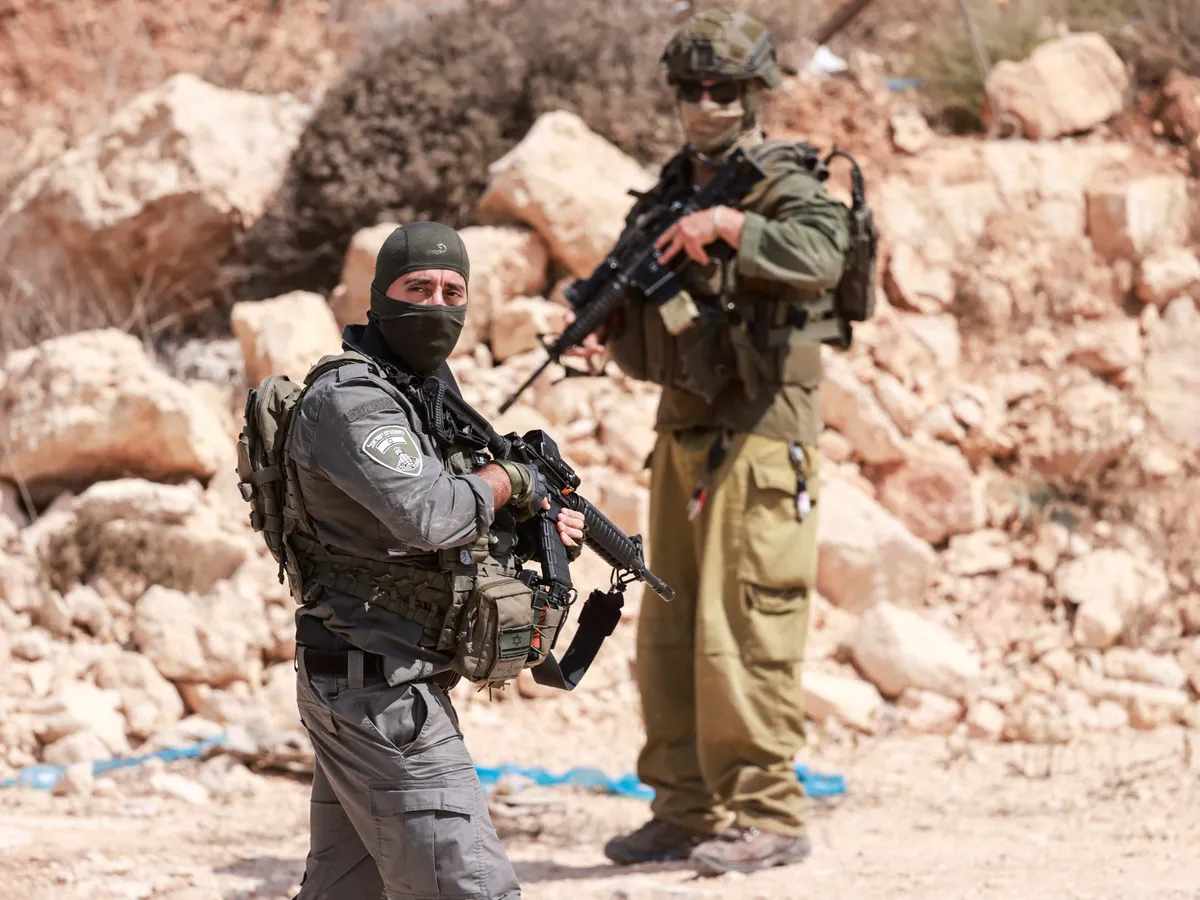
Al JazeeraFIG 01
Reading time
4min
Word count
793words
Sources cited
2cited
Entities identified
12entities
Quality score
100%
§ 01
Briefing Summary
AI-generatedNEWSAR · AI
Despite new sanctions imposed by the UK, France, and Canada on Israel's illegal settlements in the occupied West Bank, analysts believe these measures will not influence Israeli voters in the upcoming October elections. Israeli politicians have reacted with anger, calling the sanctions "outrageous lies" and interference in democratic elections. However, polls indicate a majority of Jewish Israelis support the settlements and the occupation. Analysts suggest that public opinion on settlements is hardened, and voters are more concerned with security and the government's overall record than with international sanctions. Foreign pressure is often absorbed into existing Israeli narratives, and prominent Israeli politicians, including opposition leaders, have criticized the sanctions rather than the government's settlement policy.
Confidence 0.90Sources 2Claims 5Entities 12
§ 02
Article analysis
Model · rule-basedFraming
Diplomatic
Political Strategy
Tone
Mixed Tone
AI-assessed
CalmNeutralAlarmist
Factuality
0.40 / 1.00
Mixed
LowHigh
Sources cited
2
Limited
FewMany
§ 03
Key claims
5 extracted01
Israeli politicians reacted to the sanctions with anger, accusing them of spreading 'outrageous lies' and interfering in elections.
quoteIsraeli politicians (Gideon Saar, Isaac Herzog)
Confidence
1.00
02
New sanctions have been imposed on Israel's illegal settlements in the occupied West Bank by the UK, France, and Canada.
factual
Confidence
1.00
03
A poll showed that more than half of Jewish Israelis supported retaining illegal settlements, and nearly 40 percent supported annexing the territory.
statisticAugust poll
Confidence
0.90
04
Analysts believe the sanctions will not sway Israeli voters in the upcoming October elections.
factualAnalysts (Ori Goldberg, Michael Koplow)
Confidence
0.80
05
The majority of Jewish Israelis have supported their country’s war in Gaza and the occupation of the West Bank.
factual
Confidence
0.70
§ 04
Full report
4 min read · 793 words§ 05
Entities
12 identifiedKey playerOppositionContextPositiveNeutralNegative
People5
Organizations1
Locations5
§ 06
Keywords & salience
10 termsoccupied west bank
1.00
western sanctions
1.00
israeli voters
0.90
october elections
0.80
international isolation
0.70
illegal settlements
0.70
palestinian people
0.60
foreign pressure
0.50
democratic elections
0.40
annexing the territory
0.40
§ 07
Topic connections
Interactive graph Network visualization showing 51 related topics
View Full Graph Person Organization Location Event|Click node to navigate|Edge numbers = shared articles