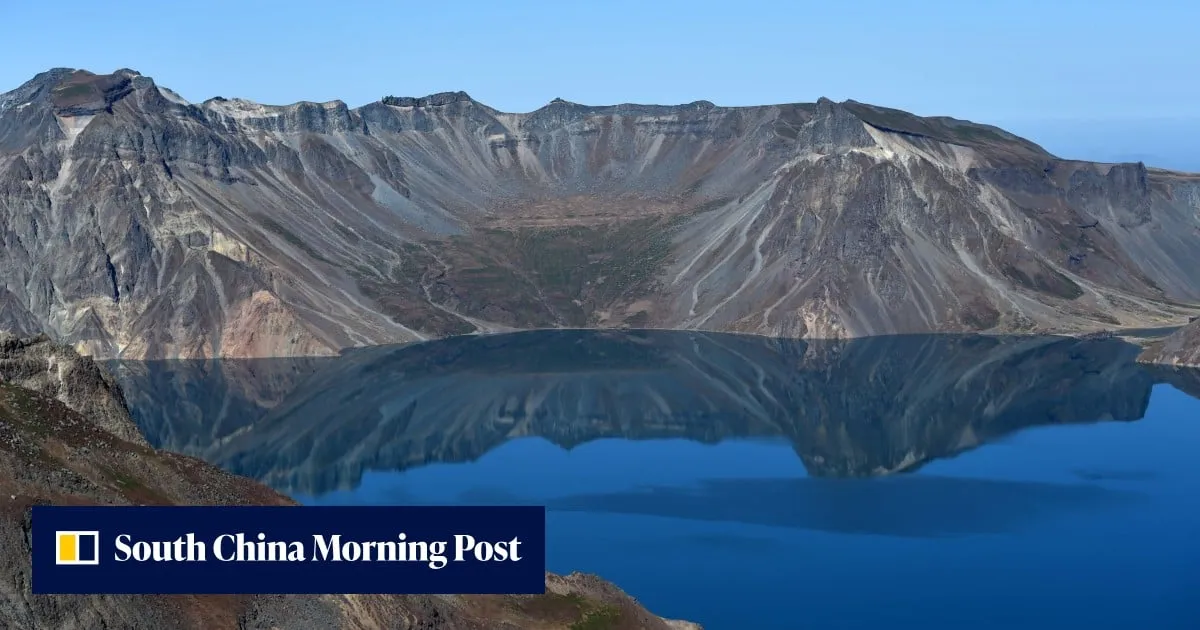
North Korea’s underground nuclear tests have triggered a chain of seismic events, activating ancient fault lines that stretch towards one of the most dangerous volcanoes on Earth, about 100km (62 miles) away, according to a paper published by the journal Science.The joint Chinese and South Korean study, which appeared on Thursday, found that the five nuclear explosions conducted between 2013 and 2017 at the Punggye-ri test site beneath Mount Mantap fundamentally altered the region’s geological stability.
SRCSouth China Morning Post
LANGEN
LEANCenter-Right
WORDS76
ENT10
FRI · 2026-09-18 · 08:51 GMTBRIEF NSR-2026-0918-112238
NSR-2026-0918-112238News Report·EN·Environmental
North Korea’s nuclear tests awaken fault lines pointing to huge volcano at China border
A joint Chinese and South Korean study published in the journal Science reveals that North Korea's underground nuclear tests between 2013 and 2017 at the Punggye-ri test site beneath Mount Mantap have fundamentally altered the region's geological stability. These five nuclear explosions triggered seismic events that activated ancient fault lines.
Shi HuangSouth China Morning PostFiled 2026-09-18 · 08:51 GMTLean · Center-RightRead · 1 min
South China Morning PostFIG 01
Reading time
1min
Word count
76words
Sources cited
1cited
Entities identified
10entities
Quality score
100%
§ 01
Briefing Summary
AI-generatedNEWSAR · AI
A joint Chinese and South Korean study published in the journal Science reveals that North Korea's underground nuclear tests between 2013 and 2017 at the Punggye-ri test site beneath Mount Mantap have fundamentally altered the region's geological stability. These five nuclear explosions triggered seismic events that activated ancient fault lines. These fault lines extend towards a dangerous volcano located approximately 100 kilometers away. The study highlights the significant geological impact of these tests.
Confidence 0.85Sources 1Claims 4Entities 10
§ 02
Article analysis
Model · rule-basedFraming
Environmental
National Security
Tone
Mixed Tone
AI-assessed
CalmNeutralAlarmist
Factuality
0.90 / 1.00
Factual
LowHigh
Sources cited
1
Limited
FewMany
§ 03
Key claims
4 extracted01
The volcano is approximately 100km away from the test site.
factual
Confidence
1.00
02
The five nuclear explosions between 2013 and 2017 altered the region's geological stability.
factualjoint Chinese and South Korean study
Confidence
1.00
03
The Punggye-ri test site is located beneath Mount Mantap.
factual
Confidence
1.00
04
North Korea's nuclear tests have triggered seismic events activating fault lines near a dangerous volcano.
factualjoint Chinese and South Korean study
Confidence
1.00
§ 04
Full report
1 min read · 76 words§ 05
Entities
10 identifiedKey playerOppositionContextPositiveNeutralNegative
Organizations1
Locations5
§ 06
Keywords & salience
8 termsnorth korea nuclear tests
1.00
mount mantap volcano
0.90
geological stability
0.80
fault lines
0.70
seismic events
0.60
punggye-ri test site
0.50
china border
0.40
science journal
0.40
§ 07
Topic connections
Interactive graph Network visualization showing 3 related topics
View Full Graph Person Organization Location Event|Click node to navigate|Edge numbers = shared articles