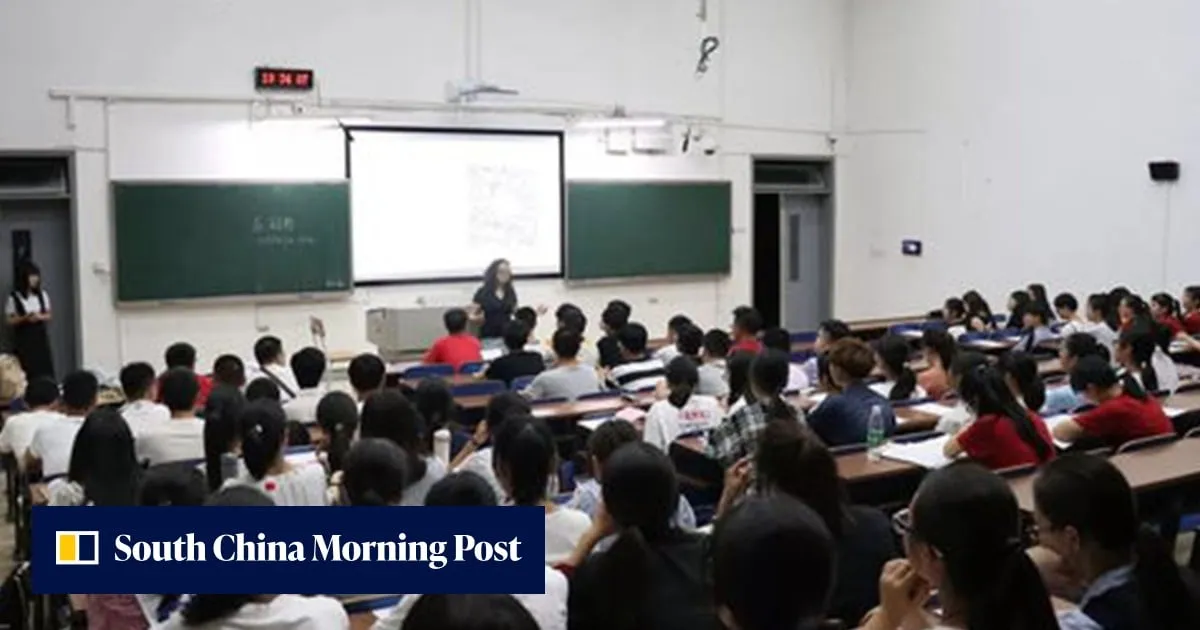
A Chinese professor has ignited controversy after asserting at a university conference that her extreme commitment to research involved sleeping less than two hours a day for a decade, investing two million yuan (US$300,000) of her own money, and completely sacrificing her personal and family life for over 20 years.The public health professor, Lu Chan, from the Xiangya School of Medicine at Central South University in Hunan province, sparked widespread debate after presenting these extraordinary claims to her research group on September 10.Lu, who became a professor immediately after earning her PhD in 2018, reportedly shared her remarkable undertakings during the China-national-teachers-day-commendation-conference" class="entity-link entity-event" data-entity-id="206340" data-entity-type="event">China National Teachers’ Day Commendation Conference held at her university.According to a presentation displayed on a large screen, which served as evidence of her dedication to research, Lu claimed to have slept “0 to 2 hours every day” without taking a day off since graduate school until December last year.The photo above shows Lu’s extreme claims of dedication, displayed on a large screen during her presentation. Photo: BaiduShe also revealed that she had “not met up with her parents for 23 years.” At the age of 44, she remains single and views her students as her children.Lu stated that she invested around two million yuan from her own finances, including 800,000 yuan from her parents’ pension, into her research group. Last week, she even allocated 200,000 yuan, originally earmarked for her mortgage, to support her students’ research.Lu was one of 10 teachers honoured during the China National Teachers’ Day on September 10. The university released a photo showcasing the content of her presentation, which a netizen subsequently shared on social media, inciting a wave of backlash.Critics have questioned the credibility of the presentation’s claims, expressing concerns about the university’s values in promoting what they perceive as “sadfishing.”“If she truly sleeps for less than two hours a day for over a decade, she should evaluate her own well-being,” commented one individual.“What she shared is not inspiring; it’s alarming,” remarked another.China’s academic job market has become hyper-competitive, driven by “publish or perish” pressures and the controversial “up or out” contract system. Photo: Shutterstock“If I were a student searching for a research group, I would avoid hers. Her work ethic seems excessively demanding,” a third observer noted.“Genuine scientific research and education should be rooted in rational inquiry and a commitment to humanistic care, rather than a competition of who can be harsher on themselves and their families,” one person commented.Some critics believe Lu’s presentation employed vague language to embellish the facts. One individual suggested it would make more sense if she had not met her parents for “two to three” years instead of “23,” and if she mentioned “naps 0 to 2 hours” rather than “sleeping 0 to 2 hours” a day.A staff member from the School of Medicine informed The Beijing News that Lu’s statements reflected her personal experiences and did not violate any rules or contain seriously inappropriate remarks. He mentioned that the school would investigate whether her claims regarding her sleeping patterns and familial interactions are exaggerated.The Xiangya School of Medicine at Central South University in Hunan province is widely recognised as one of China’s most prestigious medical institutions. Photo: HandoutThe SCMP reached out to Lu for comment but had not received a response at the time of writing.On a knowledge-sharing platform, a self-proclaimed university teacher noted that it is common to “embellish” details when competing for performance awards. However, he stressed that such embellishments should remain grounded in “basic human nature.”Several observers also commented on the intense pressure faced by many young university teachers in China.Due to the escalating competitiveness in the academic job market, many young educators are forced to sign “up or out” contracts, which require them to fulfil a series of demanding tasks – such as publishing in top journals, teaching, and securing grants – within a limited time frame to avoid termination.Further Reading
SRCSouth China Morning Post
LANGEN
LEANCenter-Right
WORDS649
ENT9
FRI · 2026-09-18 · 10:30 GMTBRIEF NSR-2026-0918-112274
NSR-2026-0918-112274News Report·EN·Human Interest
‘Sadfishing’: China teacher probed over sacrifice claims – 23 years away, US$300,000 spent
Chinese professor Lu Chan is under investigation after claiming at a university conference that she slept less than two hours daily for a decade, spent US$300,000 of her own money on research, and hadn't seen her parents in 23 years. The Xiangya School of Medicine at Central South University is examining the credibility of these statements, which were shared on Teachers' Day and subsequently went viral, sparking public debate and criticism.
Fran LuSouth China Morning PostFiled 2026-09-18 · 10:30 GMTLean · Center-RightRead · 3 min
South China Morning PostFIG 01
Reading time
3min
Word count
649words
Sources cited
4cited
Entities identified
9entities
Quality score
100%
§ 01
Briefing Summary
AI-generatedNEWSAR · AI
Chinese professor Lu Chan is under investigation after claiming at a university conference that she slept less than two hours daily for a decade, spent US$300,000 of her own money on research, and hadn't seen her parents in 23 years. The Xiangya School of Medicine at Central South University is examining the credibility of these statements, which were shared on Teachers' Day and subsequently went viral, sparking public debate and criticism. While some view her claims as alarming and potentially exaggerated, a school staff member stated her remarks reflected personal experiences and would be investigated for exaggeration. The controversy highlights the intense pressures within China's competitive academic job market.
Confidence 0.90Sources 4Claims 5Entities 9
§ 02
Article analysis
Model · rule-basedFraming
Human Interest
Social Justice
Tone
Sensational
AI-assessed
CalmNeutralAlarmist
Factuality
0.60 / 1.00
Mixed
LowHigh
Sources cited
4
Well sourced
FewMany
§ 03
Key claims
5 extracted01
China's academic job market faces hyper-competitive 'publish or perish' and 'up or out' pressures.
factualArticle
Confidence
0.90
02
Critics question the credibility of Lu Chan's claims and perceive her presentation as 'sadfishing'.
quoteNetizens/Critics
Confidence
0.90
03
Lu Chan has not met her parents for 23 years.
factualLu Chan
Confidence
0.80
04
Lu Chan invested approximately US$300,000 of her own money into her research group.
factualLu Chan
Confidence
0.80
05
Professor Lu Chan claimed to sleep 0-2 hours daily without days off for over a decade.
factualLu Chan
Confidence
0.80
§ 04
Full report
3 min read · 649 words§ 05
Entities
9 identifiedKey playerOppositionContextPositiveNeutralNegative
Organizations2
§ 06
Keywords & salience
8 termssadfishing
1.00
academic pressure
0.90
research dedication
0.80
personal sacrifice
0.70
china
0.60
publish or perish
0.50
university values
0.50
lu chan
0.40
§ 07
Topic connections
Interactive graph No topic relationship data available yet. This graph will appear once topic relationships have been computed.