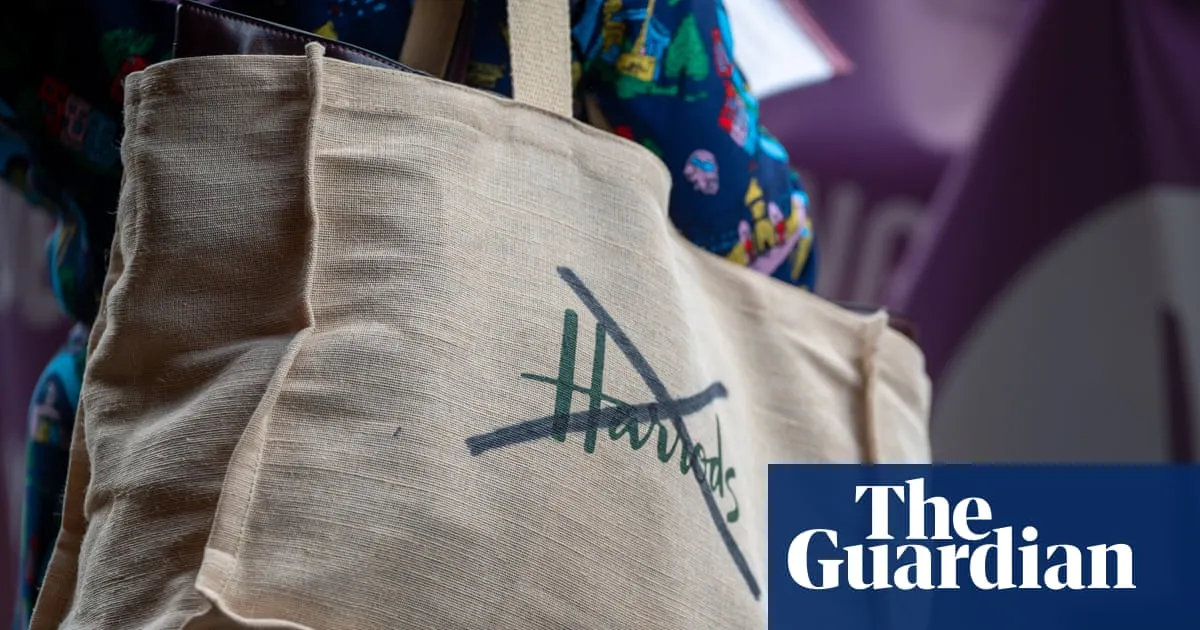
Harrods is seeking to recover the cost of the compensation paid to hundreds of women allegedly sexually abused by Mohamed Al Fayed from his estate, The Guardian understands.The luxury department store is seeking full indemnity from the late billionaire’s estate for any settlements it is required to pay, according to evidence seen by The Guardian.Survivors of Fayed’s alleged abuse said the retailer’s plan to recover its compensation costs was distressing and at odds with its public acceptance of responsibility.Lucy Traynor, a senior associate at KP Law, which represents the majority of known survivors, said: “Harrods publicly says that it accepts responsibility for the abuse suffered by survivors. However, its lawyers have confirmed that Harrods intends to seek a full indemnity from Mohamed Al Fayed’s estate for any compensation it is required to pay.“If successful, that would mean Harrods recovering the entirety of those compensation payments from the estate and bearing no ultimate financial consequence itself. Its present position is that, despite its statements about accepting responsibility, it intends to seek recovery from the estate of every pound it pays in compensation.”Traynor said Harrods’ intention to fully indemnify itself was “difficult to reconcile with its public statements about institutional responsibility and accountability”.She said the allegations concerning Harrods went beyond “Al Fayed as an individual who owned the business”.“Survivors have raised serious questions about the environment in which this was able to happen, the role of others within the organisation, what was known or ought to have been known, and whether institutional structures facilitated or failed to prevent his conduct,” she said.If Harrods were successful, the claims of survivors who were only seeking compensation from the estate could be affected, Traynor said.“Any attempt by Harrods to recover substantial sums from the estate could reduce the assets available to meet those survivors’ claims.”In a statement, Harrods said: “Our priority is to ensure all eligible survivors receive compensation for abuses perpetrated by Fayed, and Harrods continue to settle claims.”The store has previously accepted “vicarious liability” for the sexual abuse allegedly perpetrated by Fayed, and condemned it.Mohamed Al Fayed, pictured in 2003. His alleged actions include rape and human trafficking. Photograph: Murdo Macleod/The GuardianEarlier this week, KP Law said compensation claims against Harrods and the estate by 275 of the survivors it represents could reach up to £150m.Fayed, who died aged 94 in 2023, has been accused of rape, sexual assault, sexual exploitation and human trafficking from 1977 to 2014. Survivors claim that Harrods did not adequately address the allegations for years.Two years ago, Harrods opened an investigation into whether any of its current staff were “directly or indirectly involved” in the alleged sexual abuse of women by Fayed. An employee had left the business in 2025 in relation to that investigation, the store later said.The retailer created its own compensation scheme for survivors last year, which closed to new claims in March. Its latest accounts showed it had paid out £4.1m from the £57m it set aside for compensation in 2025. The store added that it had made settlements with 113 women to date, but did not disclose the total amount paid.In 2023 the Sunday Times reported that Fayed’s fortune was £1.69bn, making him the fourth richest person in Scotland at that time.Last year, Harrods made a passing-over application (POA) to appoint special executors to administer Fayed’s estate, replacing family members. The department store said this was necessary to protect assets and to ensure the estate could pay compensation “in a timely and appropriate manner”. A high court hearing is scheduled for November.Harrods’ statement added: “To our knowledge, the Fayed estate has not publicly acknowledged abuses, nor apologised or settled a single claim. The POA seeks the appointment of an independent executor to administer claims against the estate, therefore, any financial recovery for compensation to survivors of Fayed’s abuses remains a number of legal steps away.”Shanta Sundarason, who says she was sexually assaulted by Fayed in his office when she worked as a designer at Harrods, said the store’s plan to recover the costs of compensation was “deeply disturbing”.“My abuse did not happen in some separate world belonging only to Mohamed Al Fayed. Harrods was not simply the backdrop to what happened to me, it was the environment in which I was recruited, selected, controlled and ultimately abused,” she said.Shanta Sundarason called the store’s plan ‘deeply disturbing’. Photograph: KP Law“Harrods cannot tell me that it accepts institutional responsibility for what happened to me, while simultaneously seeking to ensure that the institution ultimately bears none of the financial consequence. For me, accountability is not simply writing a cheque and then recovering every penny from someone else.“What happened to me was not simply the act of one individual. My abuse existed within a system. From Mohamed Al Fayed’s security detail and office staff to management and the structures surrounding him, it took more than one person to create an environment in which abuse could occur and remain hidden.”A former employee named Catherine, who says she was sexually abused by Fayed when she worked as his personal assistant between 1990 and 1991, described Harrods’ plan to recover compensation costs from the estate as “truly sickening”.“Harrods have stated that they are sorry but [are] doing everything they can to escape paying anything and it’s simply not right,” she said.The estate was approached for comment.
SRCThe Guardian - World News
LANGEN
LEANCenter-Left
WORDS886
ENT11
SAT · 2026-09-19 · 06:23 GMTBRIEF NSR-2026-0919-112472
NSR-2026-0919-112472News Report·EN·Legal & Judicial
Harrods seeks to recover abuse compensation costs from Mohamed Al Fayed’s estate
Harrods is seeking to recover compensation costs paid to hundreds of women alleging sexual abuse by the late Mohamed Al Fayed from his estate. The luxury department store aims for full indemnity from the estate for any settlements it makes.
David BattyThe Guardian - World NewsFiled 2026-09-19 · 06:23 GMTLean · Center-LeftRead · 4 min
The Guardian - World NewsFIG 01
Reading time
4min
Word count
886words
Sources cited
2cited
Entities identified
11entities
Quality score
100%
§ 01
Briefing Summary
AI-generatedNEWSAR · AI
Harrods is seeking to recover compensation costs paid to hundreds of women alleging sexual abuse by the late Mohamed Al Fayed from his estate. The luxury department store aims for full indemnity from the estate for any settlements it makes. Survivors find this plan distressing, arguing it contradicts Harrods' public acceptance of responsibility. Lawyers representing survivors state that if Harrods is successful, it would bear no ultimate financial consequence for the compensation paid. This move could potentially reduce assets available for survivors seeking claims directly from Al Fayed's estate. Harrods maintains its priority is ensuring eligible survivors receive compensation and continues to settle claims.
Confidence 0.90Sources 2Claims 5Entities 11
§ 02
Article analysis
Model · rule-basedFraming
Legal & Judicial
Social Justice
Tone
Mixed Tone
AI-assessed
CalmNeutralAlarmist
Factuality
0.70 / 1.00
Factual
LowHigh
Sources cited
2
Limited
FewMany
§ 03
Key claims
5 extracted01
Harrods' intention to fully indemnify itself is difficult to reconcile with its public statements about institutional responsibility.
quoteLucy Traynor (KP Law)
Confidence
0.95
02
Mohamed al Fayed has been accused of rape, sexual assault, sexual exploitation and human trafficking from 1977 to 2014.
factualArticle
Confidence
0.95
03
Harrods intends to seek full indemnity from Mohamed Al Fayed’s estate for any compensation it is required to pay.
quoteLucy Traynor (KP Law)
Confidence
0.95
04
Compensation claims against Harrods and the estate by 275 survivors could reach up to £150m.
statisticKP Law
Confidence
0.90
05
Harrods is seeking to recover compensation costs for alleged abuse by Mohamed Al Fayed from his estate.
factualThe Guardian
Confidence
0.90
§ 04
Full report
4 min read · 886 words§ 05
Entities
11 identifiedKey playerOppositionContextPositiveNeutralNegative
Events1
§ 06
Keywords & salience
10 termsmohamed al fayed estate
1.00
harrods
1.00
abuse compensation
1.00
vicarious liability
0.80
institutional responsibility
0.70
survivors
0.70
compensation costs
0.60
sexual abuse
0.60
legal recovery
0.50
financial consequence
0.40
§ 07
Topic connections
Interactive graph Network visualization showing 7 related topics
View Full Graph Person Organization Location Event|Click node to navigate|Edge numbers = shared articles