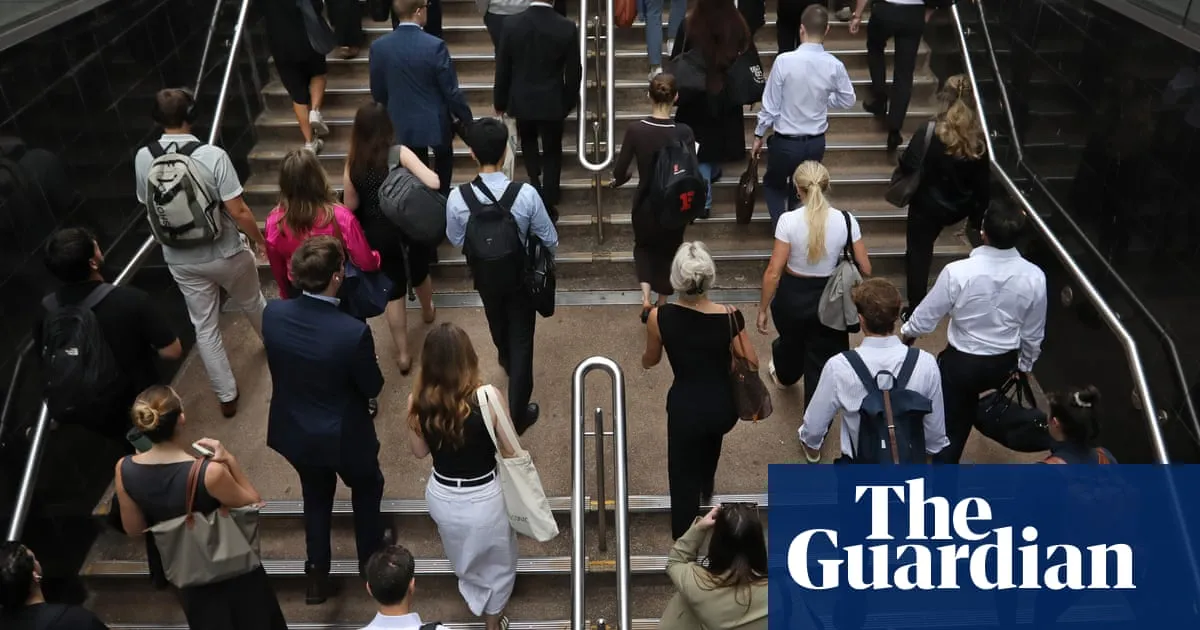
Australia’s population is expected to be slightly lower by the mid-2060s than forecast in the previous intergenerational report. Photograph: Lisa Maree Williams/Getty Images View image in fullscreen Australia’s population is expected to be slightly lower by the mid-2060s than forecast in the previous intergenerational report. Photograph: Lisa Maree Williams/Getty Images More Australians to live into their 90s as life expectancy forecast to rise over coming decades Treasury’s latest intergenerational report projects life expectancy at birth will reach 89 for women and 86 for men by 2066 Follow our Australia news live blog for latest updates Get our breaking news email, free app or daily news podcast Australian households will shrink but more people can expect to live well into their 90s, according to the latest update to forecasts of the country’s long-term future. Treasury’s latest intergenerational report, to be published in full on Monday, will project the impact of government policies 40 years into the future. An extract released on Sunday showed life expectancy at birth was forecast to reach almost 90 for women by 2065/66, up from about 86 years at present. The report will also reveal that Artificial Intelligence (AI) will become the “defining influence” on the economy over the next four decades, as the treasurer, Jim Chalmers, warned it would come with “very substantial risks”. life expectancy for men was predicted to rise to 86 years in the next four decades, up from 82 years. Australia’s universal healthcare system and the impact of medical research were the key drivers of rising life expectancy, Chalmers said. The report laid out the case for further investments in Medicare, the Pharmaceutical Benefits Scheme and the recent rollout of urgent care clinics, he said. But a growing and ageing population would also be at the centre of long-term budget pressures, Chalmers told News24’s Sunday Agenda program. “There are elements of the intergenerational report which are confronting, but it’s not a pessimistic report … because Australians are genuinely better placed and better prepared for all of this accelerating change that we are seeing,” he said. Australia’s population is expected to be slightly lower by the mid-2060s than forecast in the previous intergenerational report, released in 2023. Population growth was expected to slow to 0.9% a year over the next four decades, down from 1.4% annually in the previous 40 years, according to Treasury forecasts. The nation’s population was predicted to reach 39.3 million by 2065/66, 1.8 million lower than the 2023 forecast. Much of the slowdown in population growth was tied to lower fertility rates as women continued to have fewer children. “Almost half the decline in fertility rates is actually because fewer people are having three or more kids and what that reflects is mums having fewer kids later in life,” Chalmers said. “Our job is to make it a little bit easier for people to make that choice if they want to,” he said, noting Labor’s policies to subsidise childcare, increase paid parental leave and lift mandatory superannuation contributions. Future government debt is expected to be slashed by half a trillion dollars compared to forecasts in the 2023 report, but much of the economic progress relies on emerging technologies such as AI. “Overwhelmingly, the fiscal story is a little bit better; but still, lots, lots more work to do to manage some of these pressures and risks,” Chalmers said. Previous Treasury advice suggested AI could provide significant productivity gains across the public and private sectors if the nation kept pace with the global shift towards the technology. In a press conference on Sunday, Chalmers said AI would play a central role in Australia’s future but the government would work to “minimise the very substantial risks”. The prime minister, Anthony Albanese, is visiting the United States this week to discuss a “global framework” for the rollout of AI, urging the “big two giants” – the US and China – to work in the interest of humanity. “We want to see cooperation. We’ve seen that in the past with new technologies, even on nuclear weapons, for example, we saw agreements and protocols put in place through the nuclear non-proliferation treaty,” Albanese told ABC’s Insiders on Sunday. “So I think we want to see progress between those two countries, but … I think middle powers such as Australia have a role to play here as well.” The US president, Donald Trump, said he would appoint an AI tsar overnight and create an “AI Force” to help monitor the technology, though he gave almost no details about either plan. Explore more on these topics Australia news Australian politics Health AI (Artificial Intelligence) news Share Reuse this content
SRCThe Guardian - World News
LANGEN
LEANCenter-Left
WORDS773
ENT8
SUN · 2026-09-20 · 04:32 GMTBRIEF NSR-2026-0920-112624
NSR-2026-0920-112624News Report·EN·Public Health
More Australians to live into their 90s as life expectancy forecast to rise over coming decades
Treasury’s latest intergenerational report projects life expectancy at birth will reach 89 for women and 86 for men by 2066 Follow our Australia news live blog for latest updates Get our breaking news email , free app or daily news podcast Australian households will shrink but more people can expect
Australian Associated Press and Sarah Basford CanalesThe Guardian - World NewsFiled 2026-09-20 · 04:32 GMTLean · Center-LeftRead · 4 min
The Guardian - World NewsFIG 01
Reading time
4min
Word count
773words
Sources cited
1cited
Entities identified
8entities
Quality score
50%
§ 02
Article analysis
Model · rule-basedFraming
Public Health
Economic Impact
Tone
Measured
AI-assessed
CalmNeutralAlarmist
Factuality
0.70 / 1.00
Factual
LowHigh
Sources cited
1
Limited
FewMany
§ 03
Key claims
5 extracted01
The nation's population is predicted to reach 39.3 million by 2065/66.
statisticTreasury forecasts
Confidence
0.90
02
Australia's universal healthcare system and medical research are key drivers of rising life expectancy.
factualJim Chalmers
Confidence
0.90
03
Australia's population is expected to be slightly lower by the mid-2060s than forecast previously.
predictionTreasury's intergenerational report
Confidence
0.90
04
Life expectancy at birth is forecast to reach 89 for women and 86 for men by 2066.
predictionTreasury's intergenerational report
Confidence
0.90
05
Artificial intelligence (AI) will become the defining influence on the economy over the next four decades.
predictionTreasury's intergenerational report
Confidence
0.80
§ 04
Full report
4 min read · 773 words§ 05
Entities
8 identifiedKey playerOppositionContextPositiveNeutralNegative
Organizations3
Locations1