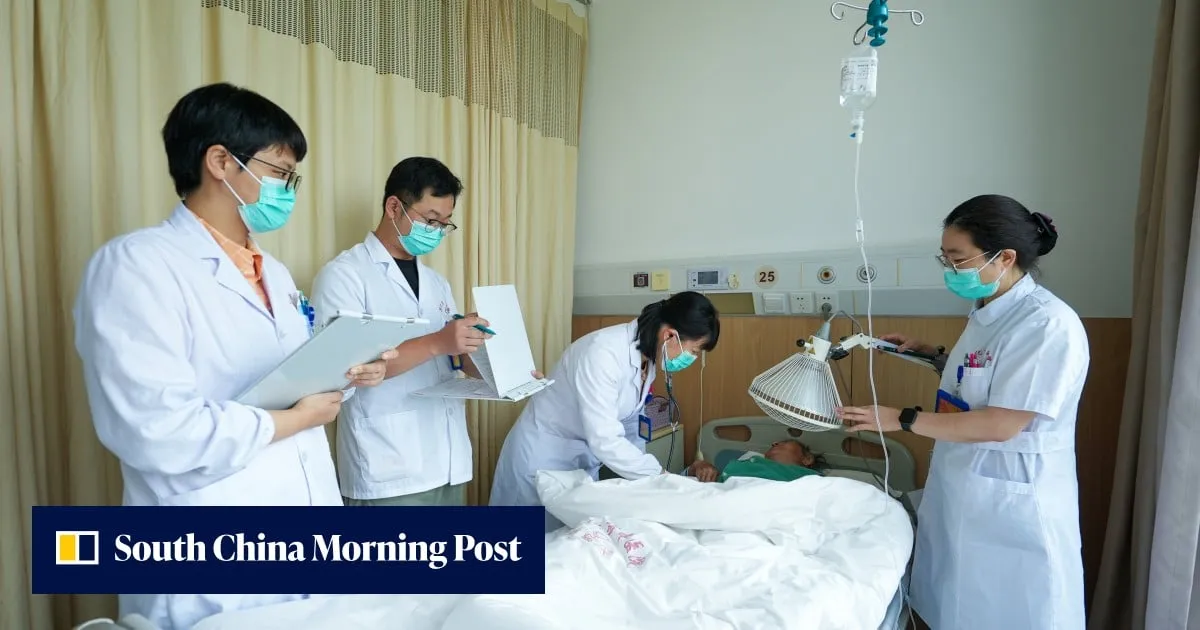
Huang Qiaoyuan has just a year to go before she completes her undergraduate medical training in southern China, but she is thinking of quitting the field and going into consulting.Huang, a fifth-year clinical medical student in Guangxi Zhuang autonomous region, said she was initially drawn to the idea of being a doctor during the Covid-19 pandemic, when the contributions of health workers came to the fore.She also thought it would be a financially secure choice in a country where the career has carried high prestige. “I truly believed that medicine was a skill-based career that would protect me from unemployment,” she said.But the reality of the work has made her reconsider her choice. Huang said that during the 12-month unpaid internship of the final year, the interns rarely performed procedures, instead spending most of their time on mundane administrative tasks. The risk of injury in medical disputes was also a factor, she said, but the main factor was everyday workplace pressures.“The main driver is the squeeze on young and mid-career doctors caused by ‘cost-cutting and efficiency-enhancing’ measures, namely the lack of job opportunities, low pay and heavy workloads,” she said.While medicine still attracts some of the nation’s best and brightest, the shine is coming off the career as general work conditions and competition from other industries encourage students to look elsewhere.
SRCSouth China Morning Post
LANGEN
LEANCenter-Right
WORDS221
ENT9
SUN · 2026-09-20 · 09:58 GMTBRIEF NSR-2026-0920-112654
NSR-2026-0920-112654News Report·EN·Human Interest
Low pay, job insecurity for China’s trainee doctors a turn-off for young talent
Chinese medical students like Huang Qiaoyuan, who is nearing the end of her undergraduate training, are reconsidering careers in medicine due to poor working conditions. Initially attracted by the perceived prestige and financial security of being a doctor, especially during the Covid-19 pandemic, students now face realities of unpaid internships, administrative tasks, and significant workplace pressures.
Caroline LinSouth China Morning PostFiled 2026-09-20 · 09:58 GMTLean · Center-RightRead · 1 min
South China Morning PostFIG 01
Reading time
1min
Word count
221words
Sources cited
1cited
Entities identified
9entities
Quality score
100%
§ 01
Briefing Summary
AI-generatedNEWSAR · AI
Chinese medical students like Huang Qiaoyuan, who is nearing the end of her undergraduate training, are reconsidering careers in medicine due to poor working conditions. Initially attracted by the perceived prestige and financial security of being a doctor, especially during the Covid-19 pandemic, students now face realities of unpaid internships, administrative tasks, and significant workplace pressures. Measures focused on cost-cutting and efficiency have led to a lack of job opportunities, low pay, and heavy workloads for young and mid-career doctors. Consequently, despite medicine still attracting bright students, the profession's appeal is diminishing as general work conditions and competition from other industries prompt students to seek alternative career paths.
Confidence 0.90Sources 1Claims 4Entities 9
§ 02
Article analysis
Model · rule-basedFraming
Human Interest
Economic Impact
Tone
Measured
AI-assessed
CalmNeutralAlarmist
Factuality
0.60 / 1.00
Mixed
LowHigh
Sources cited
1
Limited
FewMany
§ 03
Key claims
4 extracted01
Cost-cutting measures in China's healthcare system are squeezing young and mid-career doctors.
quoteHuang Qiaoyuan
Confidence
1.00
02
Unpaid internships for medical students in China involve mundane administrative tasks rather than procedures.
quoteHuang Qiaoyuan
Confidence
1.00
03
A medical student is considering quitting her field due to low pay, job insecurity, and heavy workloads.
quoteHuang Qiaoyuan
Confidence
1.00
04
Young talent is increasingly deterred from pursuing medical careers in China due to poor working conditions.
factual
Confidence
0.80
§ 04
Full report
1 min read · 221 words§ 05
Entities
9 identifiedKey playerOppositionContextPositiveNeutralNegative
§ 06
Keywords & salience
10 termstrainee doctors
1.00
job insecurity
1.00
low pay
1.00
medical training
0.90
young talent
0.80
workplace pressures
0.70
healthcare workers
0.60
unpaid internship
0.50
china
0.40
administrative tasks
0.40
§ 07
Topic connections
Interactive graph No topic relationship data available yet. This graph will appear once topic relationships have been computed.