The politician whose death leaves a vacuum in India's richest state2 hours agoZoya MateenMumbaiGetty ImagesAjit Pawar died in a plane crash on WednesdayThe sudden death of an influential leader has left a political vacuum in India's richest state.Ajit Pawar, the deputy chief minister of Maharashtra, died on Wednesday in a plane crash along with four others.Maharashtra's political landscape is notoriously complex - a web of shifting alliances, regional loyalties and rivalries. And for decades, Ajit Pawar navigated it with a mixture of pragmatism and shrewdness, swiftly rising through the ranks. Yet, beneath the public triumphs, his journey was also deeply personal: a struggle to emerge out of the formidable shadow of his uncle Sharad Pawar - the founder of the Nationalist Congress Party (NCP) and a dominant figure in Indian politics. Born in 1959, Ajit Pawar entered politics in the 1980s under his uncle's mentorship, particularly focusing on the Pawar family stronghold of Baramati, a rural area in western Maharashtra where sugar cooperatives, banks and local institutions helped secure both economic influence and political loyalty. From an early age, Ajit Pawar was seen as the uncle's visible heir. But he was determined to forge his own path. To many, Sharad Pawar represented old-school authority: patient and strategic, he was known for his coalition-building skills and political instincts. Ajit Pawar, on the other hand, focused on regional power, governance and control over local political networks.Getty ImagesAjit Pawar (left) with his uncle Sharad Pawar, founder of NCPHis style was also markedly different. Where Sharad Pawar spoke in measured tones, Ajit Pawar was blunt and practical, his mercurial personality earning him both loyal supporters and vocal critics.But as his authority grew, so did his frustration. Ajit Pawar had risen quickly through the ranks of NCP, yet he was often seen as a lieutenant rather than a leader. Decisions were still made by the elder Pawar.The tensions simmered for years before erupting in public. In 2019, Ajit Pawar shocked Maharashtra by briefly breaking ranks with his uncle and aligning with the rival Bharatiya Janata Party (BJP) to form the government and claim the deputy chief minister's post.His effort to strike out by himself collapsed within days, undone by Sharad Pawar who intervened to reclaim control of the party and help his allies form the governmentBut for the first time, the family rift was out in the open. Ajit Pawar returned to the party, but the breach never fully healed.Things finally came to head four years later in 2023, when Ajit Pawar broke away from his uncle's NCP party, joined a new governing coalition led by the BJP and claimed the post of the deputy chief minister once again. This time, he also managed to split his uncle's party and claim the name and electoral symbol of NCP as his own.Getty ImagesAjit Pawar (right) with Maharashtra Chief Minister Devendra Fadnavis (left) and Shiv Sena leader Eknath Shinde (centre) at a joint press conference after their victory in the 2024 Maharashtra state assembly electionsFrom then, family gatherings dwindled, public appearances were mostly separate, and the Pawar name, once seen as a single axis of power, fractured into two rival camps.For Ajit Pawar's supporters, the defection was long overdue and a courageous step, reflecting his ability to adapt in India's political system, where even bitter ideological opponents might join hands to come to power. To critics, he symbolised opportunistic politics.The rupture has since become one of the most remarked-upon political dramas in Maharashtra, one that transformed its fault lines.In recent days, after civic elections in Pune and Mumbai, conversations had begun about the possibility of a reconciliation between the two factions of the NCP, led by uncle and nephew. Some speculated that Ajit Pawar might even emerge as the leader of a united party.His sudden death has brought those possibilities to an abrupt halt. Questions now swirl about whether the lawmakers who had left with him will accept the authority of his cousin, Supriya Sule - Sharad Pawar's daughter - or his wife or son, and whether the fragile alliances he nurtured can endure.Ajit Pawar leaves behind him a divided political legacy - and a reminder of how personal ambitions and familial ties can shape politics in the most surprising ways.
SRCBBC News - World
LANGEN
LEANCenter
WORDS704
ENT7
WED · 2026-01-28 · 13:38 GMTBRIEF NSR-2026-0128-11284
NSR-2026-0128-11284News Report·EN·Political Strategy
The politician whose death leaves a vacuum in India's richest state
Ajit Pawar, the deputy chief minister of Maharashtra, died in a plane crash along with four others on Wednesday. He was a key figure in India's richest state, known for his pragmatic and shrewd approach to politics.
BBC News - WorldFiled 2026-01-28 · 13:38 GMTLean · CenterRead · 3 min
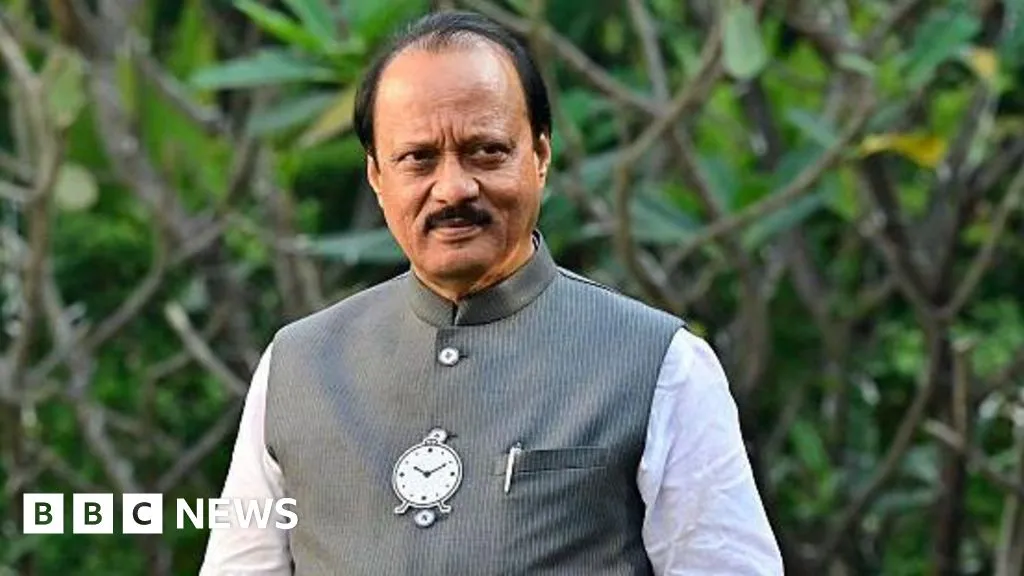
BBC News - WorldFIG 01
Reading time
3min
Word count
704words
Sources cited
0cited
Entities identified
7entities
Quality score
100%
§ 01
Briefing Summary
AI-generatedNEWSAR · AI
Ajit Pawar, the deputy chief minister of Maharashtra, died in a plane crash along with four others on Wednesday. He was a key figure in India's richest state, known for his pragmatic and shrewd approach to politics. Born in 1959, Pawar entered politics in the 1980s under his uncle Sharad Pawar's mentorship. Despite being seen as his uncle's visible heir, Pawar forged his own path, focusing on regional power and governance. He briefly broke ranks with NCP in 2019 to form a government with the BJP, but this effort collapsed after just days. The sudden death of Ajit Pawar leaves a political vacuum in Maharashtra, which is known for its complex web of alliances and rivalries.
Confidence 0.90Claims 5Entities 7
§ 02
Article analysis
Model · rule-basedFraming
Political Strategy
Human Interest
Tone
Measured
AI-assessed
CalmNeutralAlarmist
Factuality
0.70 / 1.00
Factual
LowHigh
Sources cited
0
No named sources
FewMany
§ 03
Key claims
5 extracted01
In 2023, Ajit Pawar broke away from his uncle's NCP party and joined a new governing coalition led by the BJP.
factual
Confidence
1.00
02
In 2019, Ajit Pawar briefly broke ranks with his uncle and aligned with the rival Bharatiya Janata Party (BJP).
factual
Confidence
1.00
03
Ajit Pawar entered politics in the 1980s under his uncle's mentorship.
factual
Confidence
1.00
04
Ajit Pawar, the deputy chief minister of Maharashtra, died on Wednesday in a plane crash along with four others.
factual
Confidence
1.00
05
Maharashtra's political landscape is notoriously complex - a web of shifting alliances, regional loyalties and rivalries.
factual
Confidence
0.90
§ 04
Full report
3 min read · 704 words§ 05
Entities
7 identifiedKey playerOppositionContextPositiveNeutralNegative
Organizations2
§ 06
Keywords & salience
9 termsajit pawar
1.00
political vacuum
0.90
maharashtra politics
0.80
sharad pawar
0.70
indian politics
0.60
deputy chief minister
0.60
nationalist congress party
0.60
political alliances
0.50
political leadership
0.40
§ 07
Topic connections
Interactive graph No topic relationship data available yet. This graph will appear once topic relationships have been computed.