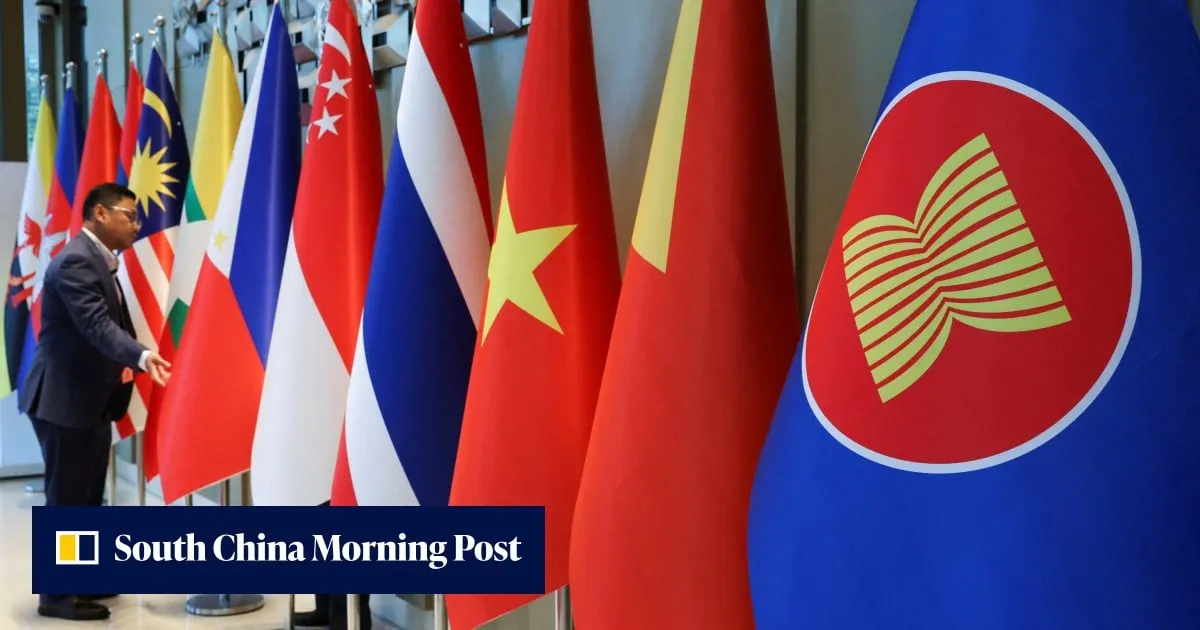
Southeast Asia remains comparatively confident in international cooperation even as scepticism grows over whether the United States or China should take a leading global role, a new survey has found.Analysts said the findings reflected a long-standing regional preference for keeping strategic options open, particularly among smaller and middle powers wary of an international order dominated by either Washington or Beijing.“Seeking Security and Opportunity in a Stormy World”, released this month by The Rockefeller Foundation, surveyed more than 35,000 people across 34 countries on their assessment of global affairs. Its Southeast Asian grouping covered Indonesia, the Philippines and Singapore.Southeast Asia was among the regions most positive about whether global cooperation was working effectively, scoring 63 per cent compared with 37 per cent for the US and Canada, 32 per cent for Oceania and 31 per cent for western Europe.At the same time, the survey suggested limited global appetite for either Washington or Beijing assuming a leading role, with 39 per cent comfortable with the US doing so and 37 per cent saying the same of China.Another 61 per cent supported countries working together to address global problems without either superpower taking the lead.The flags of the US, Asean, and China. A recent global survey shows Southeast Asian nations favour broad international cooperation while balancing relations between the two countries. Photo: ShutterstockThe combination pointed to “a more fragmented global order”, said Alejandro Reyes, a senior fellow at the China-and-the-world" class="entity-link entity-organization" data-entity-id="150218" data-entity-type="organization">Centre on Contemporary China and the World at the University of Hong Kong.“There is widespread recognition of both American and Chinese power, but much less willingness to accept either as the natural or dominant leader of the international system,” Reyes said.
SRCSouth China Morning Post
LANGEN
LEANCenter-Right
WORDS277
ENT12
MON · 2026-09-21 · 11:41 GMTBRIEF NSR-2026-0921-112882
NSR-2026-0921-112882News Report·EN·Political Strategy
Southeast Asia supports multilateralism, wary of US or China leadership: survey
A recent survey, "Seeking Security and Opportunity in a Stormy World," found that Southeast Asia remains optimistic about international cooperation. While confident in global collaboration, the region expresses skepticism about either the United States or China taking a leading global role.
Sam BeltranSouth China Morning PostFiled 2026-09-21 · 11:41 GMTLean · Center-RightRead · 2 min
South China Morning PostFIG 01
Reading time
2min
Word count
277words
Sources cited
2cited
Entities identified
12entities
Quality score
100%
§ 01
Briefing Summary
AI-generatedNEWSAR · AI
A recent survey, "Seeking Security and Opportunity in a Stormy World," found that Southeast Asia remains optimistic about international cooperation. While confident in global collaboration, the region expresses skepticism about either the United States or China taking a leading global role. This reflects a preference among Southeast Asian nations, including Indonesia, the Philippines, and Singapore, for maintaining strategic flexibility and avoiding an order dominated by either superpower. The survey, which polled over 35,000 people globally, indicated that 63% of Southeast Asians felt global cooperation was working effectively, significantly higher than other regions. Furthermore, a majority (61%) supported countries working together without a single superpower leading the way, with only 39% comfortable with US leadership and 37% with Chinese leadership.
Confidence 0.90Sources 2Claims 5Entities 12
§ 02
Article analysis
Model · rule-basedFraming
Political Strategy
Diplomatic
Tone
Measured
AI-assessed
CalmNeutralAlarmist
Factuality
0.70 / 1.00
Factual
LowHigh
Sources cited
2
Limited
FewMany
§ 03
Key claims
5 extracted01
61% of global respondents supported countries working together without either superpower taking the lead.
statisticThe Rockefeller Foundation survey
Confidence
1.00
02
Only 39% are comfortable with the US leading globally, and 37% with China leading.
statisticThe Rockefeller Foundation survey
Confidence
1.00
03
Southeast Asia was among the regions most positive about whether global cooperation was working effectively, scoring 63 per cent.
statisticThe Rockefeller Foundation survey
Confidence
1.00
04
Skepticism is growing over whether the US or China should take a leading global role.
factual
Confidence
0.90
05
Southeast Asia remains comparatively confident in international cooperation.
factual
Confidence
0.90
§ 04
Full report
2 min read · 277 words§ 05
Entities
12 identifiedKey playerOppositionContextPositiveNeutralNegative
Organizations3
Locations6
§ 06
Keywords & salience
8 termssoutheast asia
1.00
multilateralism
0.90
us leadership
0.80
china leadership
0.80
international cooperation
0.70
global order
0.60
strategic options
0.50
fragmented global order
0.40
§ 07
Topic connections
Interactive graph Network visualization showing 51 related topics
View Full Graph Person Organization Location Event|Click node to navigate|Edge numbers = shared articles