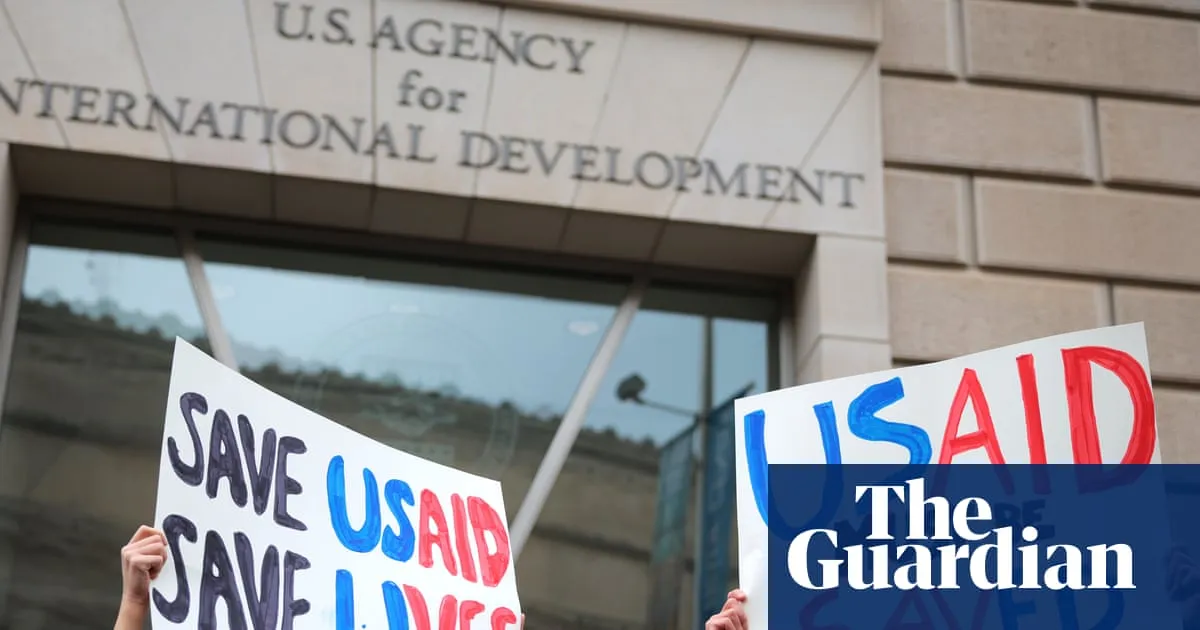
The United States’ withdrawal from key aid programs has put has put healthcare in Africa and the Global South “under growing strain” a new report warns.The report says the Trump administration’s cuts to programs such as US Agency for International Development (USAID), as well as the Covid-19 pandemic and rising costs of living globally have brought “new urgency” for the need to reform healthcare in the region.The report, titled A Sovereign Future For Health, was created by the Accra Reset, a global health initiative led by John Dramani Mahama, Ghana’s president, that believes countries in Africa and the wider Global South should have greater control over their health development rather than being dependent on aid from western countries and international institutions.A key statistic cited by Mahama and Accra Reset is that Africa produces less than 1% of its vaccines while carrying about 25% of the global disease burden.The report cites how abrupt changes to global health financing, such as the US withdrawal from several global health initiatives, forced countries within the Global South to urgently restructure their finances. The report points to the Trump administration’s decision to dissolve USAID, which pushed Nigeria to absorb the 28,000 health workers who were previously employed by the agency at a cost of $200m.External financing for health in Africa contracted by close to 70% between 2021 and 2025, the report notes, meaning that African countries historically dependent on aid were forced to adapt quickly.The withdrawal of the US Emergency Plan for Aids Relief (Pepfar) funding for South Africa, which provided over $400m a year annually and is credited with saving 26m lives globally since 2003, led to HIV clinics closing across the country. That left 1.4 million people living with HIV to face uncertainty about their treatment.Such funding cuts caused “severe and devastating” disruption globally, according to research presented at the 26th International Aids Conference in Brazil earlier this year.At the World Health Assembly in May, Mahama said Ghana lost $78m following the closure of USAID programs which affected maternal healthcare, the treatment of malaria, nutrition and HIV/Aids interventions.The initiative’s latest report, published on Monday, comes amid these major cuts to international aid and growing pressure on countries to take greater ownership of their health systems. Mahama refers to these aid cuts as a clear example that donor dependency is not sustainable.“The Accra Reset is not an argument for traditional donors to do less on global health. It is an argument for doing it differently and doing it better. As countries take greater ownership of their health futures, donor countries should step up to support that transition – following the lead of countries that set their own priorities, and work alongside them to determine where outside support is most valuable,” said Naveen Rao, senior vice-president of the health initiative at the Rockefeller Foundation. “The Accra Reset shows how we can evolve to back country-led solutions while advancing our shared health and economic interests.”Mahama notes in the report that the “past few years have shaken global health cooperation to its foundations”.“The Covid-19 pandemic exposed the risks created by concentrated production and unequal access to essential health products; rising debt and fiscal pressures have constrained national health budgets; and declining development assistance is placing programs and services under growing strain,” he continued, adding: “These shocks have brought new urgency to reform debates that have continued for years with limited progress. It was in this context that we launched the Accra Reset and its Sovereign Health Agenda – to give renewed political force to the reform agenda and place the agency of countries of the Global South at its centre.”The report comes alongside a recent survey revealing the progressive attitudes many US citizens have towards foreign aid. Some 75% of Americans – including more than one in two (52%) who primarily support Donald Trump – agree that the US should restore disease prevention aid to contain the Ebola virus, according to polling of over 2,000 US adults commissioned by the Rockefeller Foundation.The polling also revealed that 65% of US adults support international cooperation even if it means compromising some national interests; 64% also believe Americans have a shared responsibility to others, including people in other countries whom they do not know.The Guardian has contacted the Department of Health and Human Services (HHS) for comment.
SRCThe Guardian - World News
LANGEN
LEANCenter-Left
WORDS717
ENT12
MON · 2026-09-21 · 22:33 GMTBRIEF NSR-2026-0922-113021
NSR-2026-0922-113021News Report·EN·Economic Impact
Healthcare in Africa ‘under growing strain’ after US withdrawal from aid programs, report warns
A new report by the Accra Reset initiative warns that healthcare in Africa and the Global South is under increasing strain due to the withdrawal of key US aid programs, particularly under the Trump administration. This, combined with the COVID-19 pandemic and rising global costs, necessitates urgent healthcare reform.
Tobi Thomas health and inequalities correspondentThe Guardian - World NewsFiled 2026-09-21 · 22:33 GMTLean · Center-LeftRead · 3 min
The Guardian - World NewsFIG 01
Reading time
3min
Word count
717words
Sources cited
3cited
Entities identified
12entities
Quality score
100%
§ 01
Briefing Summary
AI-generatedNEWSAR · AI
A new report by the Accra Reset initiative warns that healthcare in Africa and the Global South is under increasing strain due to the withdrawal of key US aid programs, particularly under the Trump administration. This, combined with the COVID-19 pandemic and rising global costs, necessitates urgent healthcare reform. The report highlights that external financing for health in Africa contracted significantly between 2021 and 2025, forcing countries to restructure finances. For example, Nigeria absorbed 28,000 health workers previously employed by USAID, and South Africa faced uncertainty for 1.4 million people living with HIV after PEPFAR funding cuts. The Accra Reset advocates for greater control of health development by countries in the Global South, rather than dependence on aid.
Confidence 0.90Sources 3Claims 5Entities 12
§ 02
Article analysis
Model · rule-basedFraming
Economic Impact
Public Health
Tone
Mixed Tone
AI-assessed
CalmNeutralAlarmist
Factuality
0.70 / 1.00
Factual
LowHigh
Sources cited
3
Well sourced
FewMany
§ 03
Key claims
5 extracted01
US withdrawal from key aid programs has put healthcare in Africa and the Global South under growing strain.
factualA Sovereign Future For Health report
Confidence
0.90
02
US withdrawal from PEPFAR funding for South Africa led to HIV clinics closing, affecting 1.4 million people.
factualA Sovereign Future For Health report
Confidence
0.85
03
Africa produces less than 1% of its vaccines while carrying about 25% of the global disease burden.
statisticJohn Dramani Mahama / Accra Reset
Confidence
0.85
04
Ghana lost $78m following the closure of USAID programs.
factualJohn Dramani Mahama
Confidence
0.80
05
External financing for health in Africa contracted by close to 70% between 2021 and 2025.
statisticA Sovereign Future For Health report
Confidence
0.80
§ 04
Full report
3 min read · 717 words§ 05
Entities
12 identifiedKey playerOppositionContextPositiveNeutralNegative
Organizations4
Locations5
§ 06
Keywords & salience
10 termsus aid withdrawal
1.00
healthcare in africa
1.00
global health financing
0.90
donor dependency
0.80
health system reform
0.70
vaccine production
0.60
usaid
0.50
pepfar
0.50
disease burden
0.50
global south
0.40
§ 07
Topic connections
Interactive graph Network visualization showing 51 related topics
View Full Graph Person Organization Location Event|Click node to navigate|Edge numbers = shared articles