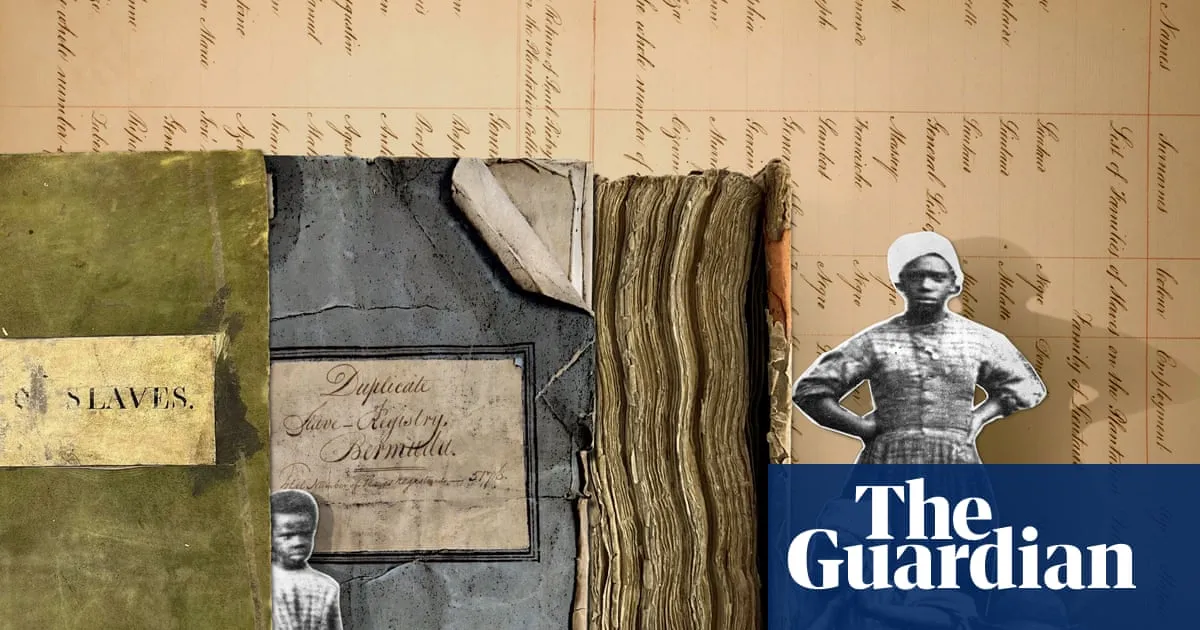
Nearly 4m records documenting the lives of enslaved people across 20 former British colonies have been made searchable online for the first time.The records have been digitised and indexed by the genealogy company Ancestry, which has partnered with the Centre for the Study of the Legacies of British Slavery at University College London.The global collection offers millions of descendants across the African-Caribbean and wider African diasporas access to one of the most extensive surviving archives of British enslavement, potentially helping them uncover family histories.The collection, known as the Former British colonies Enslavement Registers, contains about 300,000 pages recording enslaved people across former British colonial dependencies between 1813 and 1840, including the Bahamas, Barbados, the Cape of Good Hope in South Africa, Jamaica, Mauritius and Trinidad.The registers were created by the British government after the abolition of the transatlantic slave trade in 1807, and were designed to prevent illegal trading of enslaved people and to monitor the enslaved population.Researchers say people were recorded in the registers with chilling precision. Entries include names, ages, physical descriptions and family ties, as well as births, deaths and transfers of ownership. Some distinguish whether a person was born in Africa or in the Caribbean.Nicka Sewell-Smith, a professional genealogist and senior story producer at Ancestry, said it was not lost on her that records originally created to count enslaved people as property were now being used by their descendants to reconstruct their family histories.An 1817 Slave Return for Nathaniel Pearce Rugless of Jamaica, former British colonies.1 Name and position of persons making the return2 Date of return3 Fields for each return4 Names: often a single ‘slave name’. Vitally, here, most have new and old names, so a researcher might trace backward5 Colour: a range of colour definitions tracked degrees of blackness6 Age: usually reputed, unless it was a child born on the estate7 African or Creole8 Remarks: in Jamaica, this entry usually identified mothers 9 Number of enslaved people“When I use these records to unearth my enslaved ancestors, I’m using them for a purpose that was different than what it was initially intended for. Our product is restoring the humanity of a person.”In some cases, the level of detail is extraordinary. “You can pinpoint an exact birthday for an enslaved baby,” Sewell-Smith said.The digitisation also removes a practical barrier for those interested in delving into their family histories. Instead of needing to know how to navigate registers held at the National Archives in London, Sewell-Smith said, descendants would be able to search the collection simply by entering a name.“There are potentially millions of people who descended from the enslaved people in the archive,” Sewell-Smith said. “Oftentimes, one of the ways that people detach from enslavement is to make an insinuation that there’s nobody living connected to these people. That’s foundationally not true.”Prof Matthew J Smith, the director of the centre at UCL, described the registers as “the most systematic set of archival documents we have on enslavement in the British Caribbean and British colonial world”.The release of the collection follows the publication last week of the Register of British Slave Traders, a three-year research project that revealed the enormous scale of Britain’s involvement in the transatlantic trafficking of enslaved Africans. The register identified as many as 10,500 people who invested in the trafficking of enslaved Africans over nearly 250 years.But there have been growing calls for historians to shift the focus of research from the people and institutions that owned, trafficked and administered enslaved populations towards the lives of enslaved people themselves.“The biggest piece of the story of British slavery, and it’s also the most misunderstood piece, is the experience of the enslaved,” Smith said.The T71 collection, which takes its name from the National Archives series in which the records are held, could change that, he said. “When you start to see the names of those individuals, and their ages, and their children, and get these very fine glimpses into their lives, it transforms how you understand the system.”skip past newsletter promotionafter newsletter promotionHe said the records allowed researchers to begin recovering “family stories, community stories, stories of survival, stories of resistance, stories of the search for freedom”.Smith said researchers had been testing the data in their work on Jamaica, where they had been able to trace some families across six generations.“It is painstaking work, but the rewards are tremendous,” he said. “It opens up a whole new way for descendants of enslaved people in the Caribbean, across the African diaspora, to understand how their heritage came to the Caribbean and survived slavery.”Pages from the former British colonies Enslavement Registers (1813–1840). Photograph: National ArchivesFor Sewell-Smith, the archive creates possibilities extending beyond Britain and the Caribbean.Migration and the forced movement of people under enslavement mean descendants can be found across the African diaspora, including in the US and Latin America.“One of the things I’m very excited about is how much more interconnected it’s going to make those of us in the diaspora,” she said. “It almost makes the world smaller. It tightens us up in a way that I don’t think we even possibly considered.”She said the scale of the collection meant its full potential would probably only become apparent as descendants and researchers began connecting its records with other archives.“We’re in a new space, in a new place,” Smith said. “As hard as it is to look at this, it also makes me very excited for the descendants of all these people. They have a better chance to be able to get this information, to use it, and to connect with them.”The collection is free to search and accessible to anyone who creates an Ancestry account.
SRCThe Guardian - World News
LANGEN
LEANCenter-Left
WORDS940
ENT12
TUE · 2026-09-22 · 05:00 GMTBRIEF NSR-2026-0922-113070
NSR-2026-0922-113070News Report·EN·Human Interest
Nearly 4m records of enslaved people in 20 former British colonies now searchable online
Nearly four million records detailing the lives of enslaved people in 20 former British colonies are now searchable online, thanks to a partnership between genealogy company Ancestry and University College London's Centre for the Study of the Legacies of British Slavery. These digitized registers, created between 1813 and 1840, contain approximately 300,000 pages of information, including names, ages, physical descriptions, and family ties of enslaved individuals in locations such as Jamaica, Barbados, and South Africa.
Aamna Mohdin Community affairs correspondentThe Guardian - World NewsFiled 2026-09-22 · 05:00 GMTLean · Center-LeftRead · 4 min
The Guardian - World NewsFIG 01
Reading time
4min
Word count
940words
Sources cited
2cited
Entities identified
12entities
Quality score
100%
§ 01
Briefing Summary
AI-generatedNEWSAR · AI
Nearly four million records detailing the lives of enslaved people in 20 former British colonies are now searchable online, thanks to a partnership between genealogy company Ancestry and University College London's Centre for the Study of the Legacies of British Slavery. These digitized registers, created between 1813 and 1840, contain approximately 300,000 pages of information, including names, ages, physical descriptions, and family ties of enslaved individuals in locations such as Jamaica, Barbados, and South Africa. Originally intended by the British government to monitor the enslaved population and prevent illegal slave trading after the abolition of the transatlantic slave trade, these records are now being used by descendants to reconstruct their family histories. The collection offers unprecedented access to a crucial archive, allowing for a deeper understanding of the experiences of enslaved people and their descendants.
Confidence 0.90Sources 2Claims 5Entities 12
§ 02
Article analysis
Model · rule-basedFraming
Human Interest
Social Justice
Tone
Measured
AI-assessed
CalmNeutralAlarmist
Factuality
0.80 / 1.00
Factual
LowHigh
Sources cited
2
Limited
FewMany
§ 03
Key claims
5 extracted01
These records were originally created by the British government to prevent illegal slave trading and monitor the enslaved population after the abolition of the transatlantic slave trade in 1807.
factual
Confidence
1.00
02
Entries include names, ages, physical descriptions, family ties, and records of births, deaths, and transfers of ownership.
factual
Confidence
1.00
03
The collection, known as the Former British Colonies Enslavement Registers, contains about 300,000 pages recording enslaved people between 1813 and 1840.
statistic
Confidence
1.00
04
The records have been digitized and indexed by genealogy company Ancestry in partnership with University College London's Centre for the Study of the Legacies of British Slavery.
factual
Confidence
1.00
05
Nearly 4 million records documenting the lives of enslaved people across 20 former British colonies are now searchable online.
statistic
Confidence
1.00
§ 04
Full report
4 min read · 940 words§ 05
Entities
12 identifiedKey playerOppositionContextPositiveNeutralNegative
Organizations2
Locations8
§ 06
Keywords & salience
8 termsenslaved people records
1.00
british colonies
0.90
genealogy
0.80
online searchable archive
0.70
african diaspora
0.60
family histories
0.50
abolition of slave trade
0.40
digitised records
0.40
§ 07
Topic connections
Interactive graph No topic relationship data available yet. This graph will appear once topic relationships have been computed.