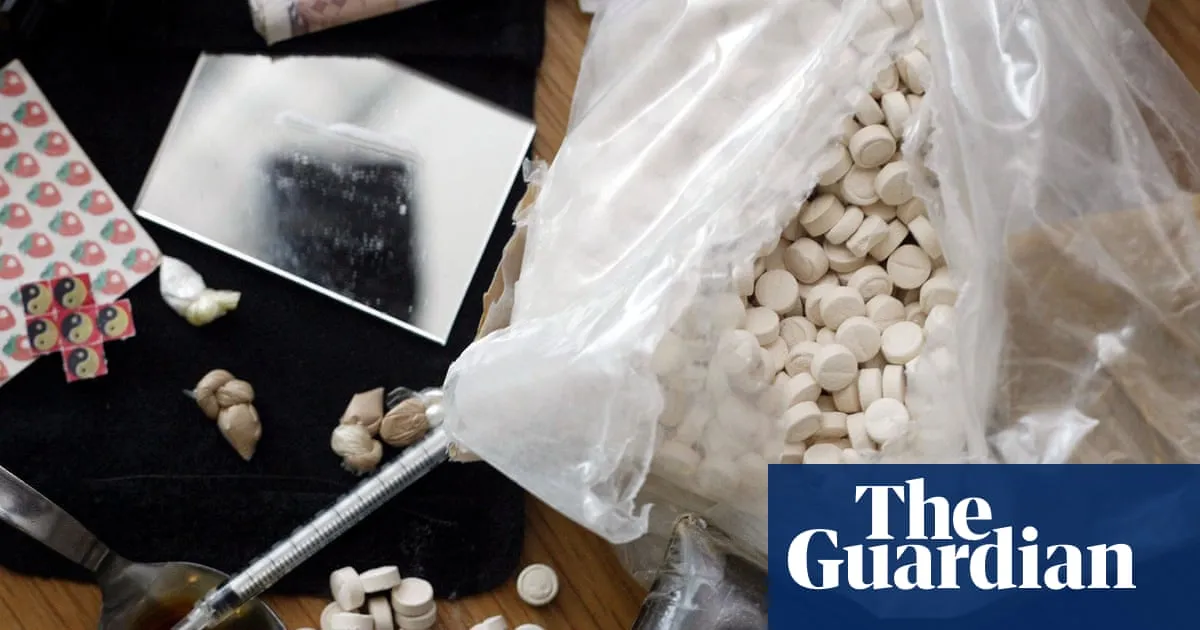
New forms of a powerful synthetic opioid have contributed to a sharp rise in Scottish drug deaths, with the latest data showing an 11% increase in fatalities last yearAnnual figures released by Scotland" class="entity-link entity-organization" data-entity-id="167078" data-entity-type="organization">National Records of Scotland (NRS) on Wednesday recorded 1,133 drug-related deaths in 2025, 116 more than the previous year. The 2025 figures are the sixth highest on record.Opiates and opioids, which include drugs such as Heroin, remain the most deadly drug types, implicated in 78% of all deaths. But the presence of Nitazenes – a highly potent type of synthetic opioid – rose by more than 200%, from 76 deaths in 2024 to 247 in 2025.Maree Todd, the minister for mental wellbeing, public health, sport, alcohol and drugs, said an “increasingly toxic and unpredictable drugs supply” required “more coordinated action across the country”.Last year’s data showed a decrease in Scotland’s drug deaths for the first time since 2017, but the charity Scottish Drugs Forum (SDF) warned at the time that this was most likely a blip, masking a recent surge in synthetic opioids in Scotland’s illicit drug market.Nitazenes are created in laboratories and can be hundreds of times stronger than traditional Opiates and opioids. Photograph: The Washington Post/Getty ImagesUnlike plant-derived drugs such as Heroin, Nitazenes are created in illegal laboratories and can be hundreds of times stronger than traditional Opiates and opioids. They are also often mixed with other drugs, increasing the risks to users who do not always know what is present in the supply.SDF’s chief executive, Kirsten Horsburgh, said the increase in drug deaths reflected a range of factors “including an increasingly unpredictable drugs supply”. The increased presence of Nitazenes was “a stark indication of [the] changing risks”, she addedHorsburgh said: “It is too simplistic to say that 1,133 people died because of the contaminated drug supply, or indeed because of drug use itself. The truth is that these deaths are shaped by a much wider set of factors, including poverty, trauma, deprivation, housing insecurity and mental health inequality.”The figures showed drug-related deaths were 15 times higher in Scotland’s most deprived areas than in the least deprived. There was a 19% rise in deaths among men, withthe average age of death 46.Todd said the government had funded more than 1,100 residential rehabilitation placements last year and widened access to treatment. But, she added, “despite these policy interventions, and the actions of our valued frontline workers, it is clear we need to do much more to reduce this tragic loss of life”.The new figures mean Scotland remains Europe’s “drug deaths capital”, with the worst fatality rate in the continent.Before the figures were published, the Scottish government announced that a new drug-checking service, which will allow users to submit drugs for rapid testing and provide harm reduction advice, would open early next month in Glasgow’s safer drug consumption facility. Similar drug-checking services have been approved in Aberdeen and Dundee, with a fourth expected in Edinburgh.
SRCThe Guardian - World News
LANGEN
LEANCenter-Left
WORDS487
ENT10
WED · 2026-09-23 · 13:12 GMTBRIEF NSR-2026-0923-113483
NSR-2026-0923-113483News Report·EN·Public Health
New powerful synthetic opioids behind sharp rise in Scottish drugs deaths
Scotland experienced an 11% increase in drug-related deaths in 2025, with 1,133 fatalities recorded. This rise is partly attributed to the increased presence of nitazenes, a highly potent synthetic opioid, which saw a more than 200% surge in its involvement in deaths.
Eve LivingstonThe Guardian - World NewsFiled 2026-09-23 · 13:12 GMTLean · Center-LeftRead · 2 min
The Guardian - World NewsFIG 01
Reading time
2min
Word count
487words
Sources cited
3cited
Entities identified
10entities
Quality score
100%
§ 01
Briefing Summary
AI-generatedNEWSAR · AI
Scotland experienced an 11% increase in drug-related deaths in 2025, with 1,133 fatalities recorded. This rise is partly attributed to the increased presence of nitazenes, a highly potent synthetic opioid, which saw a more than 200% surge in its involvement in deaths. While opiates and opioids remain the most common cause, nitazenes, which are hundreds of times stronger than traditional opioids and often mixed with other drugs, are contributing to an increasingly toxic and unpredictable drug supply. The Scottish government acknowledges the need for more action, despite providing rehabilitation placements and widening treatment access. The figures highlight that drug-related deaths are significantly higher in deprived areas and that Scotland continues to have the highest drug fatality rate in Europe.
Confidence 0.90Sources 3Claims 5Entities 10
§ 02
Article analysis
Model · rule-basedFraming
Public Health
Social Justice
Tone
Mixed Tone
AI-assessed
CalmNeutralAlarmist
Factuality
0.80 / 1.00
Factual
LowHigh
Sources cited
3
Well sourced
FewMany
§ 03
Key claims
5 extracted01
Scotland remains Europe’s “drug deaths capital” with the worst fatality rate.
factual
Confidence
1.00
02
Drug-related deaths were 15 times higher in Scotland’s most deprived areas than in the least deprived.
statistic
Confidence
1.00
03
Nitazenes are created in illegal laboratories and can be hundreds of times stronger than traditional opiates and opioids.
factual
Confidence
1.00
04
The presence of nitazenes rose by over 200% in 2025 compared to 2024, from 76 to 247 deaths.
statistic
Confidence
1.00
05
New forms of a powerful synthetic opioid, nitazenes, contributed to an 11% increase in Scottish drug deaths in 2025.
statistic
Confidence
1.00
§ 04
Full report
2 min read · 487 words§ 05
Entities
10 identifiedKey playerOppositionContextPositiveNeutralNegative
Organizations6
Locations1
§ 06
Keywords & salience
9 termsdrug deaths
1.00
synthetic opioids
1.00
nitazenes
0.90
scotland
0.80
drug supply
0.70
public health
0.60
toxicology
0.50
deprivation
0.40
mental health
0.40
§ 07
Topic connections
Interactive graph Network visualization showing 51 related topics
View Full Graph Person Organization Location Event|Click node to navigate|Edge numbers = shared articles