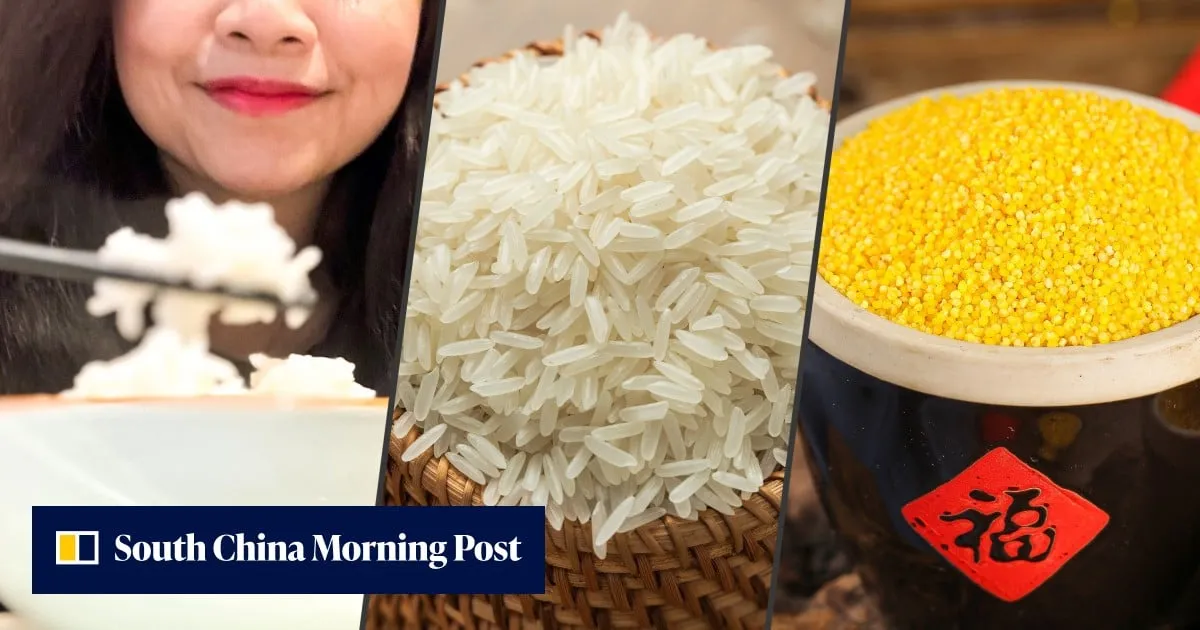
rice may be the most universal ingredient in the world, serving as a cornerstone of the diet for billions in Asia.However, for much of Chinese history, rice faced a serious competitor, and entire cultures developed around a different cereal grain, one that has since diminished in significance: millet.millet is a cereal grain that behaves and tastes similarly to rice but has a rounder form. It is often used in porridge, stir-fries, or even fritters. In certain regions of China, millet is favoured as a food for pregnant women, with millet porridge being particularly gentle on the stomach. Despite this, it cannot rival the cultural importance of rice.Yet, the domestication of millet, along with other cereals globally, stands as one of the most pivotal events in human history. Its domestication fundamentally altered natural landscapes and enabled humans to control the plants they consume, as opposed to surviving at the mercy of wild crops.In China" class="entity-link entity-location" data-entity-id="210183" data-entity-type="location">northern China, near the Yellow River, millet thrived in its dry, arid environment, while rice dominated the South, benefiting from the warm humidity and heavy rains.The photo above features Chifeng yellow millet in a wooden spoon, a traditional northeast Chinese staple for healthy cooking. Photo: Shutterstock“[millet] represents an early agricultural milestone in China" class="entity-link entity-location" data-entity-id="210183" data-entity-type="location">northern China, whereas rice signifies an early agricultural development in the middle and lower reaches of the Yangtze River in southern China,” remarked Jiang Leping from the Zhejiang Provincial Institute of Relics and Archaeology.“They emerged around 10,000 years ago, and there was no clear mutual substitution. The northern region later transitioned to wheat, while rice in the south later spread to Southeast Asia and numerous other parts of the world,” he told the SCMP.The emergence of millet is significant because the Yellow River is often regarded as the cradle of Chinese civilisation. However, recent research has illuminated a more nuanced understanding of China’s formation.If we adhere to the Yellow River narrative, one of the earliest cultures from that region, the Peiligang culture (7000 BC–5000 BC) , relied on millet as a vital component for their sustenance.Archaeological evidence indicates that the Peiligang culture engaged in agriculture while also processing wild seeds, marking a crucial transition in human history from hunter-gatherers to early-stage farmers.A 2020 study published in Vegetation History and Archaeobotany illustrated a domestication process spanning 2,000 to 3,000 years that was largely unconscious.The photo above features a young girl enjoying curry rice, a comforting dish that has become an incredibly popular staple across China and East Asia. Photo: ShutterstockDr Robert N. Spengler III, director of the Paleoethnobotany Laboratories at the Max Planck Institute for the Science of Human History in Germany and not involved in that study, noted: “What this looked like initially is still hotly debated. In my opinion, some of the first steps in the [domestication] process included keeping herbivores away from the fields (simply by hunting) and burning away competitive plants or cutting away bushes to open more area,” he said.“Much later in time, tilling, weeding, sowing, and most importantly, seed saving were adopted,” he said, adding that much of the domestication process remains unknown because of a lack of evidence.In a separate study published in Cell Genomics in October 2025, researchers depicted how communities of early millet-farming populations intertwined and how millet spread through population movements rather than cultural exchanges.“Evidence indicates that millet agriculture expanded significantly into neighbouring regions between 5,000 and 7,000 years ago,” the authors wrote.Ultimately, millet-based societies, such as the Yangshao culture (5000 BC–3000 BC), experienced major technological advancements, contributing to the rise of early Chinese civilisation.millet thrived during the Shang dynasty (1600 BC–1046 BC), with foxtail millet (Setaria italica) appearing in 93.24 per cent of crop remains analysed in a study published in the Journal of Archaeological Science in March 2025.Foxtail millet is an ancient, nutrient-rich grain that is the most widely grown millet in Asia and the second-most globally. Photo: ShutterstockThe decline in millet’s popularity unfolded over centuries, but its status as a secondary crop is a relatively recent development.A straightforward explanation for this decline is technological advancements, such as the water mill, which facilitated the rise of wheat.Further ReadingIn 1012, a new variety of rice known as “champa rice” was introduced to China, boasting a growing cycle of 100 days. Suddenly, rice could be harvested twice a year from the same plot of land, making it an appealing choice for farmers eager to boost production.However, millet remained a staple for many northern households for centuries, serving as an affordable ingredient in their diets. Eventually, the advent of industrialisation made it much easier to transport rice over long distances, and millet could no longer compete with the abundance of rice.During the post-industrial era, millet began to assume its modern status as a valuable ingredient, albeit not nearly as significant as its white-grained counterpart, which has become deeply embedded in the contemporary diet and shows no signs of waning popularity.
SRCSouth China Morning Post
LANGEN
LEANCenter-Right
WORDS812
ENT12
SUN · 2026-09-27 · 10:00 GMTBRIEF NSR-2026-0927-114452
NSR-2026-0927-114452Analysis·EN·Human Interest
The other crop that built China: how millet became foundation for Chinese civilisation
Millet was a foundational crop for early Chinese civilization, particularly in northern China near the Yellow River, where it thrived in arid conditions. Emerging around 10,000 years ago, millet domestication, alongside other cereals, was a pivotal event enabling settled agriculture.
Kevin McSpaddenSouth China Morning PostFiled 2026-09-27 · 10:00 GMTLean · Center-RightRead · 4 min
South China Morning PostFIG 01
Reading time
4min
Word count
812words
Sources cited
2cited
Entities identified
12entities
Quality score
100%
§ 01
Briefing Summary
AI-generatedNEWSAR · AI
Millet was a foundational crop for early Chinese civilization, particularly in northern China near the Yellow River, where it thrived in arid conditions. Emerging around 10,000 years ago, millet domestication, alongside other cereals, was a pivotal event enabling settled agriculture. Cultures like the Peiligang and Yangshao relied heavily on millet, contributing to technological advancements and the rise of early Chinese civilization. While rice dominated the south, millet was crucial in the north, with foxtail millet being prevalent during the Shang dynasty. Its significance later declined due to technological advancements like the water mill and the introduction of faster-growing rice varieties.
Confidence 0.90Sources 2Claims 5Entities 12
§ 02
Article analysis
Model · rule-basedFraming
Human Interest
Social Justice
Tone
Measured
AI-assessed
CalmNeutralAlarmist
Factuality
0.70 / 1.00
Factual
LowHigh
Sources cited
2
Limited
FewMany
§ 03
Key claims
5 extracted01
The Peiligang culture (7000 BC–5000 BC) relied on millet and engaged in agriculture, marking a transition from hunter-gatherers.
factual
Confidence
0.90
02
Millet thrived in the dry, arid environment of northern China near the Yellow River, while rice dominated the South.
factual
Confidence
0.90
03
The domestication of millet was a pivotal event in human history, altering landscapes and enabling human control over food sources.
factual
Confidence
0.90
04
Millet was a significant competitor to rice in Chinese history and entire cultures developed around it.
factual
Confidence
0.90
05
Millet domestication was a largely unconscious process spanning 2,000 to 3,000 years.
factual2020 study published in Vegetation History and Archaeobotany
Confidence
0.80
§ 04
Full report
4 min read · 812 words§ 05
Entities
12 identifiedKey playerOppositionContextPositiveNeutralNegative
People1
Organizations2
Locations6
§ 06
Keywords & salience
8 termsmillet
1.00
chinese civilisation
0.90
domestication
0.80
agriculture
0.70
yellow river
0.60
peiligang culture
0.50
rice
0.50
ancient china
0.40
§ 07
Topic connections
Interactive graph No topic relationship data available yet. This graph will appear once topic relationships have been computed.