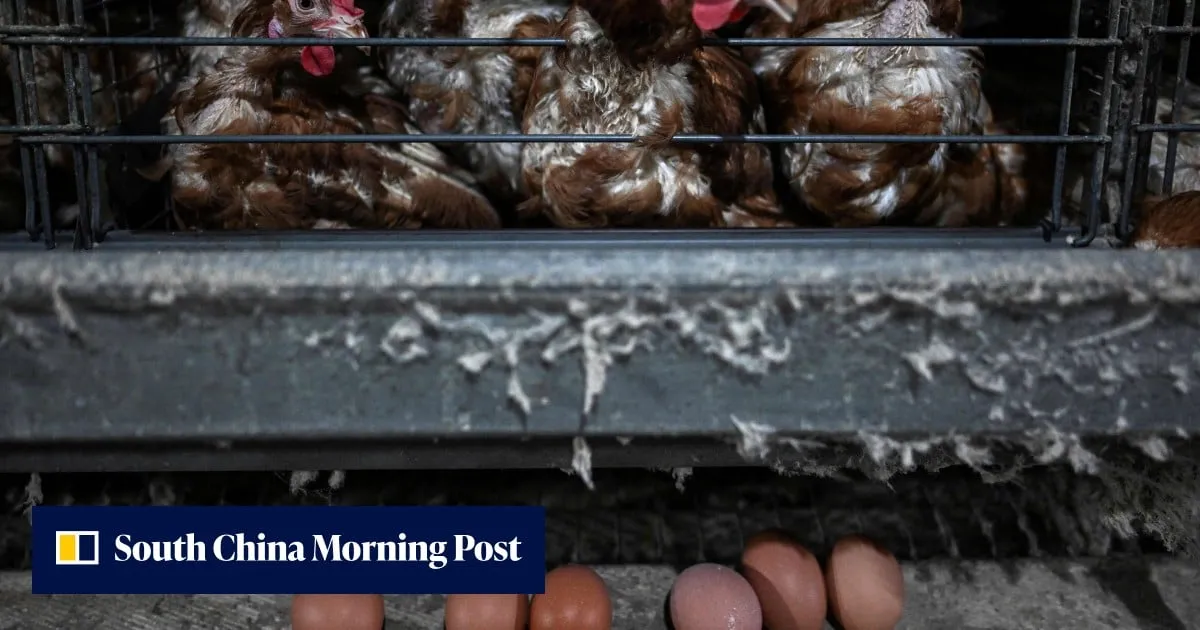
This year’s haze crisis has added to the heat woes squeezing livestock farmers in Malaysia and Indonesia, as they struggle to keep their animals cool, fed and productive.While it is difficult to separately assess the effects of haze-related smoke from heat, water shortages, feed and disease, farmers and industry groups say the cumulative strain is severely affecting animal health, productivity and their finances.In Selama, Perak, poultry keeper Zaiful Zakaria, 42, had begun installing ventilation fans at his open-sided chicken sheds before the haze hit Malaysia in August.The fans were meant to draw out heat accumulating inside the sheds and protect the well-being of his mainly ornamental and heritage-breed chickens. Zaiful later also began installing a water-misting system.
SRCSouth China Morning Post
LANGEN
LEANCenter-Right
WORDS117
ENT10
MON · 2026-09-28 · 01:30 GMTBRIEF NSR-2026-0928-114582
NSR-2026-0928-114582News Report·EN·Economic Impact
Chickens in Malaysia are producing fewer eggs. Is haze a leading cause?
Livestock farmers in Malaysia and Indonesia are facing challenges due to the current haze crisis, which exacerbates existing heat-related problems. While it's difficult to isolate the specific impact of haze smoke from other factors like heat, water shortages, feed issues, and disease, farmers and industry groups report that the combined stress is negatively affecting animal health, productivity, and finances.
Vincent TanSouth China Morning PostFiled 2026-09-28 · 01:30 GMTLean · Center-RightRead · 1 min
South China Morning PostFIG 01
Reading time
1min
Word count
117words
Sources cited
2cited
Entities identified
10entities
Quality score
100%
§ 01
Briefing Summary
AI-generatedNEWSAR · AI
Livestock farmers in Malaysia and Indonesia are facing challenges due to the current haze crisis, which exacerbates existing heat-related problems. While it's difficult to isolate the specific impact of haze smoke from other factors like heat, water shortages, feed issues, and disease, farmers and industry groups report that the combined stress is negatively affecting animal health, productivity, and finances. In Selama, Perak, poultry keeper Zaiful Zakaria took measures to mitigate heat stress for his chickens by installing ventilation fans and a water-misting system in his sheds. These efforts were initiated before the haze significantly impacted Malaysia in August, aiming to improve the well-being of his ornamental and heritage-breed chickens.
Confidence 0.85Sources 2Claims 4Entities 10
§ 02
Article analysis
Model · rule-basedFraming
Economic Impact
Environmental
Tone
Measured
AI-assessed
CalmNeutralAlarmist
Factuality
0.60 / 1.00
Mixed
LowHigh
Sources cited
2
Limited
FewMany
§ 03
Key claims
4 extracted01
Poultry keeper Zaiful Zakaria began installing ventilation fans and a water-misting system to protect his chickens.
factualZaiful Zakaria
Confidence
0.95
02
It is difficult to separately assess the effects of haze-related smoke from heat, water shortages, feed and disease.
factual
Confidence
0.90
03
This year’s haze crisis has added to the heat woes squeezing livestock farmers in Malaysia and Indonesia.
factual
Confidence
0.90
04
Farmers and industry groups say the cumulative strain is severely affecting animal health, productivity and their finances.
quotefarmers and industry groups
Confidence
0.80
§ 04
Full report
1 min read · 117 words§ 05
Entities
10 identifiedKey playerOppositionContextPositiveNeutralNegative
People1
Locations4
§ 06
Keywords & salience
9 termshaze crisis
1.00
egg production
0.90
livestock farmers
0.80
animal health
0.70
heat stress
0.60
productivity
0.50
malaysia
0.50
poultry keeper
0.40
ventilation fans
0.40
§ 07
Topic connections
Interactive graph Network visualization showing 51 related topics
View Full Graph Person Organization Location Event|Click node to navigate|Edge numbers = shared articles