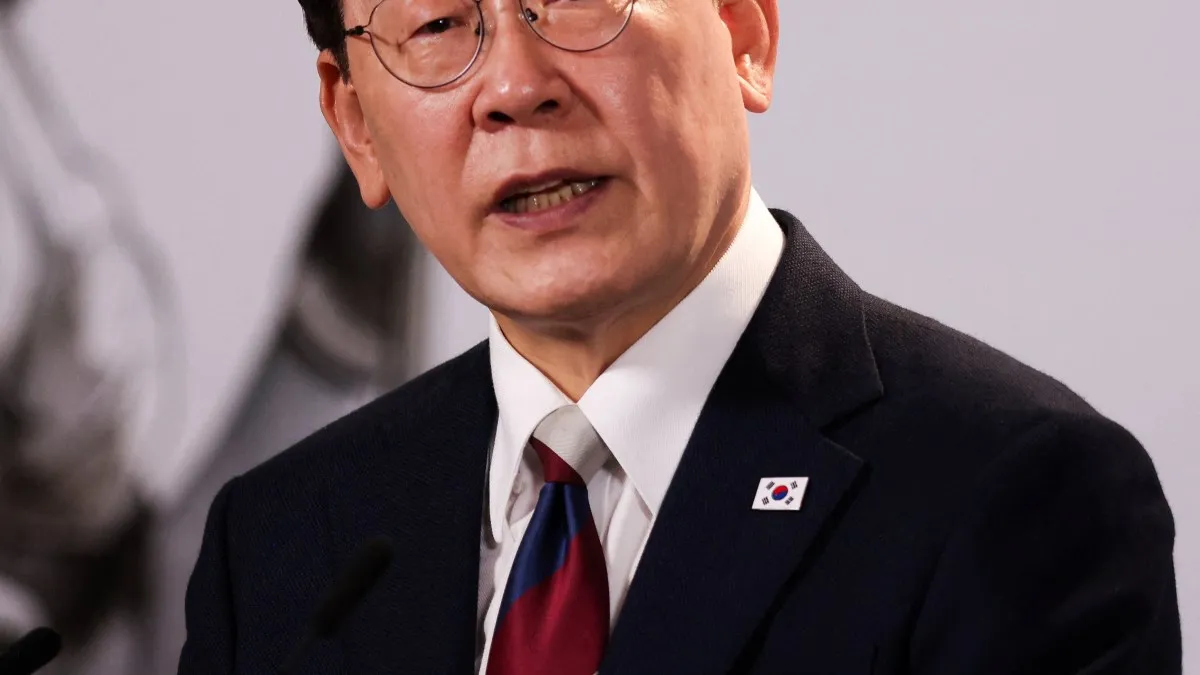
EXPLAINERSeoul says Kyiv agreed to a nondisclosure agreement over the prisoners but broke it.South Korean President Lee Jae Myung accused Ukraine of disclosing the information without regard to relations between the two Koreas or loss of life [File: Quetzalli Nicte-Ha/Reuters]Published On 28 Sep 2026South Korea has demanded an official apology and explanation from Ukraine after accusing Kyiv of disclosing the transfer of two North Korean prisoners of war to Seoul.Seong Ghi-hong, senior presidential secretary for public relations, said in a statement on Sunday that the president’s office expressed “strong regret over Ukraine’s unilateral disclosure and its subsequent false announcement that there had not been a non-disclosure agreement”.Recommended Stories list of 3 itemslist 1 of 3EU unlocks humanitarian aid for crises worldwidelist 2 of 3German, Russian foreign ministers hold rare talks amid rising tensionslist 3 of 3Russian strikes kill eight, injure dozens across Ukraineend of listHe said Ukraine had repeatedly discussed the prisoners’ transfer with Seoul through various channels and had requested secrecy.However, Kyiv has said no secrecy agreement existed.Here’s what we know:What happened?Speaking at the annual United Nations General Assembly last week, Ukrainian President Volodymyr Zelenskyy said Kyiv had transferred two captured North Korean soldiers to South Korea after they were caught fighting for Russia in the Kursk region. Ukraine seized large parts of the Russian border region in August 2024 but has since lost most of the territory.“These guys are not easy to capture alive. One of them, when he realised he was going to be taken prisoner, tried to kill himself, and he was shocked that fate did not let him die,” Zelenskyy said in his speech.He also condemned North Korea’s deployment of troops to support Moscow, saying: “This is madness too. Why should Koreans give their lives in a war against Ukraine? [North Korean leader] Kim Jong Un uses them like currency, and he gets something in return.”Zelenskyy said at the time that he would hand the captured soldiers over to Kim if he could facilitate their exchange for Ukrainians held captive in Russia.However, human rights groups had urged him to send them to South Korea, referring to possible risks of punishment that the soldiers faced.South Korean media also reported that the two captured soldiers had wanted to defect to Seoul.Ukraine captured the two North Koreans in January 2025.They became the first North Korean soldiers to be captured alive since Pyongyang began in 2024 to aid Moscow’s war efforts against Ukraine. North Korea is estimated to have deployed thousands of soldiers to support Russia’s war against Ukraine as part of a mutual defence treaty.What did South Korea say?South Korea previously declined to confirm the soldiers’ arrival, citing concerns about their safety and that of their family members still in North Korea.But Zelenskyy’s decision to announce the transfer surprised South Korea’s government.In a post on X, President Lee Jae Myung said the issue of repatriating North Korean prisoners of war was a “highly sensitive agenda”.“From the perspective of those who advertised the repatriation to the whole world with enthusiastic fanfare to show off their achievements – regardless of the impact on inter-Korean relations, the loss of life, or the damage to national interests – they likely not only cannot understand our government’s efforts to keep it confidential but may even wonder if there is something wrong with it,” Lee wrote.“I do not know the reasons behind Ukraine’s disclosure in violation of the non-disclosure agreement, but it is deeply regrettable,” he added.South Korea is technically still at war with North Korea because the two opponents in the 1950-1953 Korean War signed an armistice in 1953 and not a peace treaty. Thousands of US soldiers are stationed in South Korea, and the two allies hold military exercises regularly, which the North has denounced.According to Seong’s statement on Sunday, Zelenskyy disclosed the repatriation without sufficient prior consultation and later denied that any confidentiality agreement existed.He added that the denial had seriously damaged trust between the two governments and could harm their relations.At the same time, opposition politicians have condemned Lee’s government for failing to disclose the transfer.Last week, opposition politician Ahn Cheol-soo of the People Power Party asked on social media whether it was “fair” that the Korean public learned about North Korean POWs in the country through Zelenskyy.“President Lee, why did you hide it? Does North Korea have something that, if disclosed, would end your political career? Or were you planning to send the POWs back to North Korea?” Ahn asked.How many North Korean soldiers are fighting in Ukraine?According to Ukrainian and South Korean estimates, about 14,000 to 15,000 North Korean soldiers were sent to support Russia’s war efforts, and most were deployed to Russia’s Kursk region to fend off a Ukrainian incursion.As a close Russian ally, Pyongyang has also supplied Moscow with weapons, including artillery and mortar rounds, ballistic missiles, long-range artillery systems and multiple-launch rocket systems, according to Ukrainian and independent assessments.What happens to the soldiers now?The soldiers are expected to undergo questioning and security screening before South Korean authorities decide whether to grant them protection and begin resettlement.On Monday, Seoul’s Ministry of Unification said it would review their cases under relevant laws and past practices, including the North Korean Defectors Protection and Settlement Support Act.The ministry’s goal is to unify the two Koreas, which were partitioned shortly before the 1950-1953 war. Pyongyang opposes reunification.Under the law, the National Intelligence Service investigates applicants in temporary protective custody,Yu Yong-weon, an opposition lawmaker who met the soldiers in Ukraine in February 2025, said they served in North Korea’s special forces and could provide information on Pyongyang’s training, military capabilities and participation in the war.
SRCAl Jazeera
LANGEN
LEANCenter
WORDS934
ENT10
MON · 2026-09-28 · 12:09 GMTBRIEF NSR-2026-0928-114696
NSR-2026-0928-114696News Report·EN·Diplomatic
Why South Korea is demanding an apology from Ukraine over North Korean PoWs
South Korea has demanded an apology from Ukraine after Ukrainian President Volodymyr Zelenskyy announced the transfer of two captured North Korean soldiers to Seoul. South Korea claims Kyiv agreed to a non-disclosure agreement regarding the prisoners' transfer but subsequently broke it by publicly disclosing the information.
Edna MohamedAl JazeeraFiled 2026-09-28 · 12:09 GMTLean · CenterRead · 4 min
Al JazeeraFIG 01
Reading time
4min
Word count
934words
Sources cited
3cited
Entities identified
10entities
Quality score
100%
§ 01
Briefing Summary
AI-generatedNEWSAR · AI
South Korea has demanded an apology from Ukraine after Ukrainian President Volodymyr Zelenskyy announced the transfer of two captured North Korean soldiers to Seoul. South Korea claims Kyiv agreed to a non-disclosure agreement regarding the prisoners' transfer but subsequently broke it by publicly disclosing the information. Ukraine denies that such an agreement existed. The two North Korean soldiers were captured by Ukraine in January 2025 while fighting for Russia. South Korea had initially kept the transfer confidential due to concerns for the soldiers' safety and that of their families in North Korea. The disclosure has reportedly damaged trust between the two governments.
Confidence 0.90Sources 3Claims 5Entities 10
§ 02
Article analysis
Model · rule-basedFraming
Diplomatic
Conflict
Tone
Measured
AI-assessed
CalmNeutralAlarmist
Factuality
0.70 / 1.00
Factual
LowHigh
Sources cited
3
Well sourced
FewMany
§ 03
Key claims
5 extracted01
South Korea cited concerns about the soldiers' safety and their families in North Korea for initially declining to confirm their arrival.
factualarticle
Confidence
1.00
02
The two North Korean soldiers were captured by Ukraine in January 2025.
factualarticle
Confidence
1.00
03
Ukraine transferred two captured North Korean soldiers to South Korea after they were caught fighting for Russia.
factualVolodymyr Zelenskyy
Confidence
1.00
04
South Korea demanded an apology and explanation from Ukraine over the disclosure of North Korean prisoners of war.
factualSouth Korea
Confidence
1.00
05
Ukraine claims no non-disclosure agreement existed regarding the prisoners' transfer, while South Korea insists one did.
factualUkraine and South Korea
Confidence
0.90
§ 04
Full report
4 min read · 934 words§ 05
Entities
10 identifiedKey playerOppositionContextPositiveNeutralNegative
People3
Locations5
§ 06
Keywords & salience
8 termsnorth korean prisoners of war
1.00
south korea ukraine relations
0.90
non-disclosure agreement
0.80
kyiv disclosure
0.70
volodymyr zelenskyy
0.60
kim jong un
0.50
kursk region
0.40
un general assembly
0.40
§ 07
Topic connections
Interactive graph Network visualization showing 51 related topics
View Full Graph Person Organization Location Event|Click node to navigate|Edge numbers = shared articles